As an Amazon Associate, we earn from qualifying purchases. Some links on this site are affiliate links at no extra cost to you. Our recommendations are based on thorough research and editorial judgment.

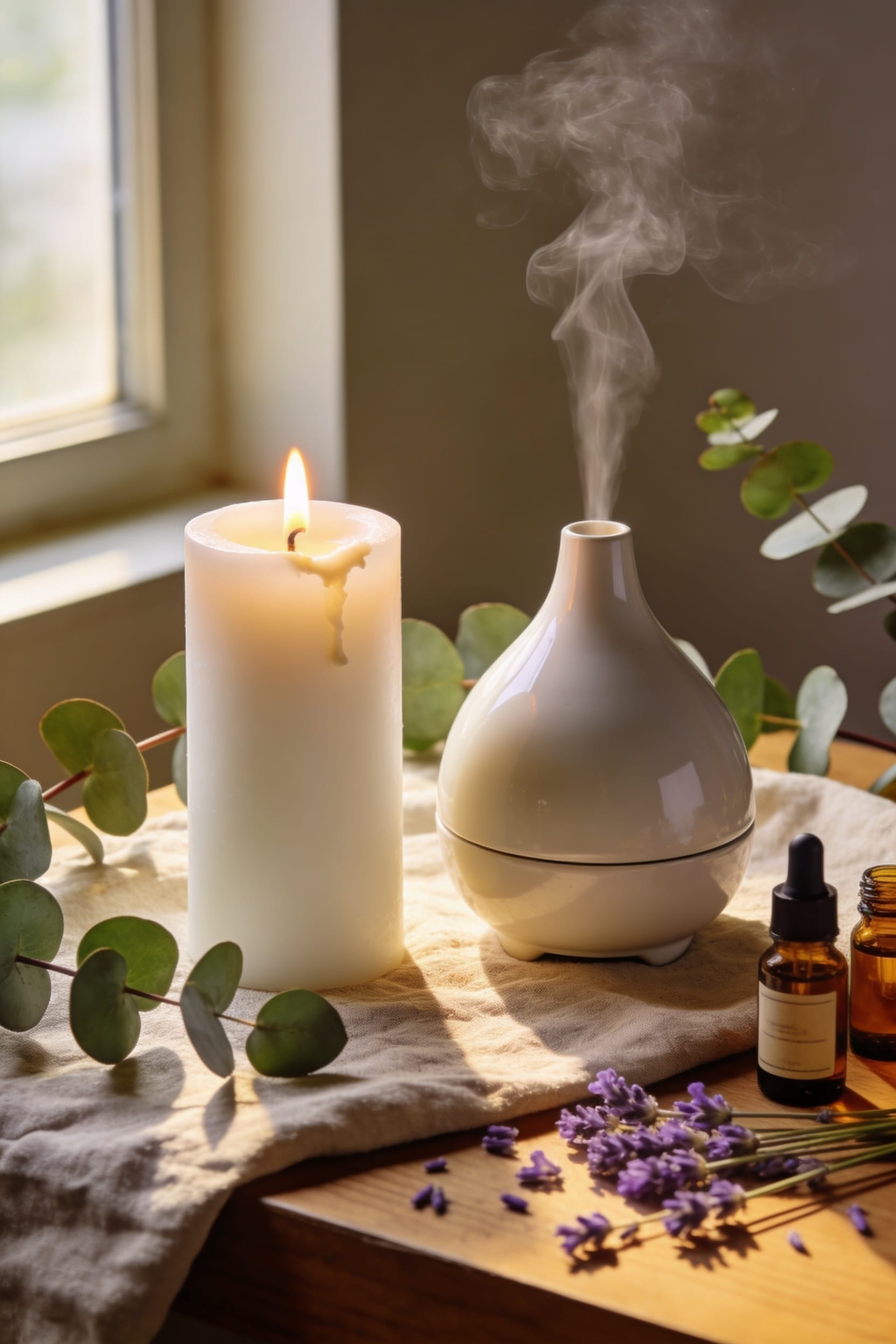
Candles vs Oil Diffusers: Which Is Healthier to Use?

All right, here’s the thing: diffusers win on pure air quality since they skip combustion entirely—no soot, no benzene, no toluene. But honestly, a clean-burning soy candle with a cotton wick produces minimal emissions compared to paraffin. The real health trade-off? Candles need supervision and burn out fast, while diffusers run unattended for weeks. If you’ve got asthma or allergies, diffusers with pure essential oils beat scented candles every time. Your best move depends on what matters most to you—safety, longevity, or that specific ambiance only flame can give.
Key Takeaways
- Oil diffusers avoid combustion byproducts like soot, particulate matter, and harmful VOCs that candles release into indoor air.
- Pure essential oil diffusers eliminate flame and heat hazards, allowing unattended operation for extended periods without fire risk.
- Scented candles emit over 100 volatile organic compounds, including toluene and benzene, potentially exceeding safe exposure limits.
- People with asthma or allergies should choose unscented candles with proper ventilation or hypoallergenic diffuser scents to avoid triggers.
- High-quality soy candles with cotton wicks produce fewer emissions than paraffin candles, but diffusers generally outperform both options.
Air Quality Impact: Combustion vs. Diffusion
When you light a candle, you’re initiating a chemical process that’s fundamentally different from what happens when you turn on a diffuser—and that difference matters more than you’d think if you’re concerned about what you’re actually breathing in your home. Candles produce combustion byproducts: soot, particulate matter, and nitrogen oxides that settle on your surfaces and into your lungs. Paraffin wax especially pumps out toluene and benzene. Diffusers work through diffusion dispersion instead—they’re silent chemical-free release with no flame, no soot, no combustion nastiness. That said, a well-maintained diffuser beats a poorly ventilated candle every time. But here’s the nuance: clean-burning soy candles with cotton wicks produce minimal emissions compared to their paraffin cousins. Ventilation is your real MVP regardless of which you choose.
Health Risks You Should Actually Know About
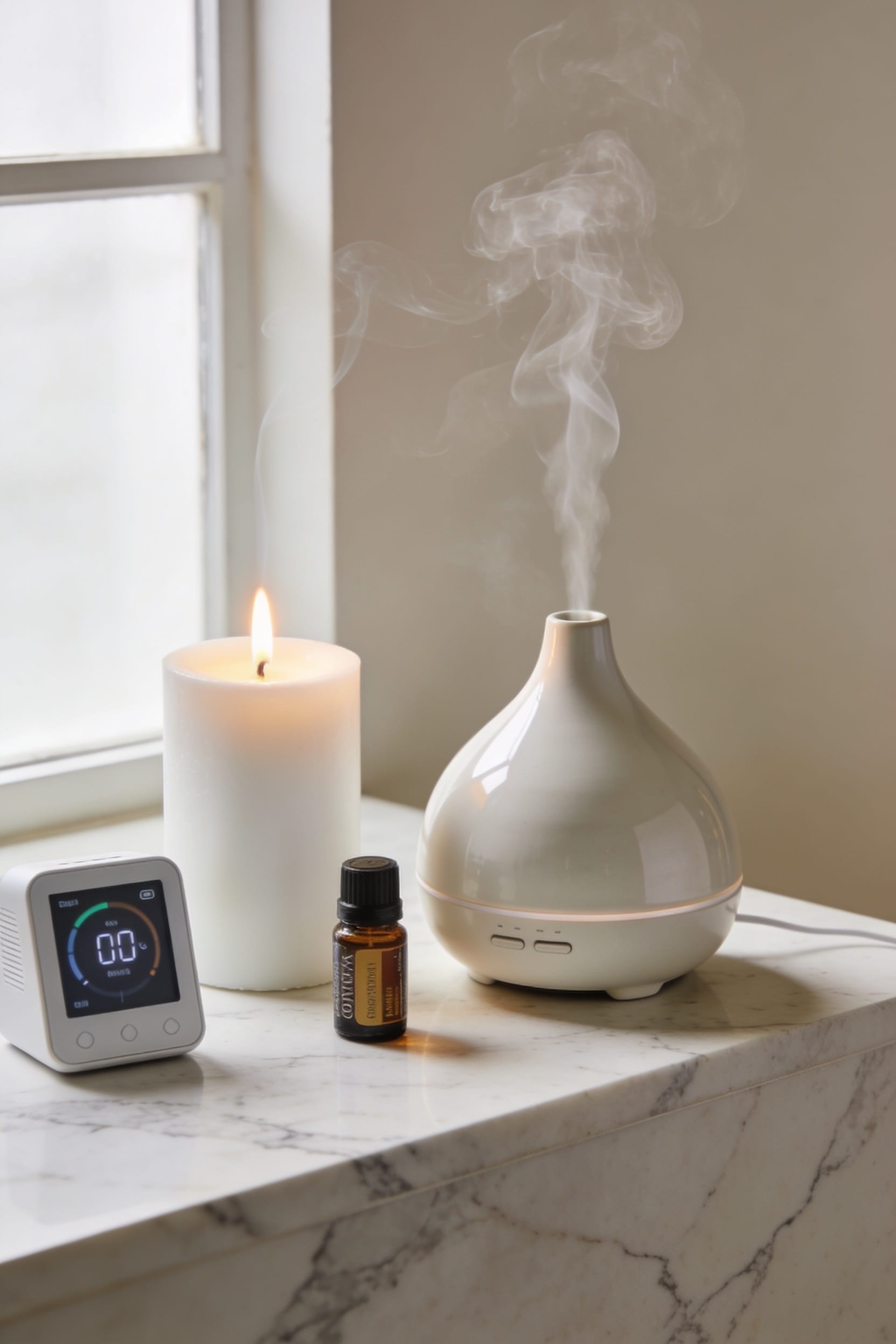
Now, here’s the thing—the stuff you’re actually breathing in matters way more than whether you picked the prettier candle or the trendier diffuser. With candles, you’re dealing with synthetic fragrances and paraffin emissions that release toluene and benzene—compounds you don’t want anywhere near your lungs. Scented candles pump out over 100 volatile organic compounds, some exceeding safe exposure limits. Diffusers carry their own concerns, especially with synthetic fragrance oils triggering headaches and respiratory issues. That said, pure essential oil diffusers avoid combustion byproducts entirely, while even “clean” candles produce soot and particulate matter. The real culprit? Synthetic ingredients. If you’re choosing between them, quality matters tremendously. Go for soy candles with cotton wicks or pure essential oil diffusers—your respiratory system will thank you.
Safety Hazards and Practical Differences
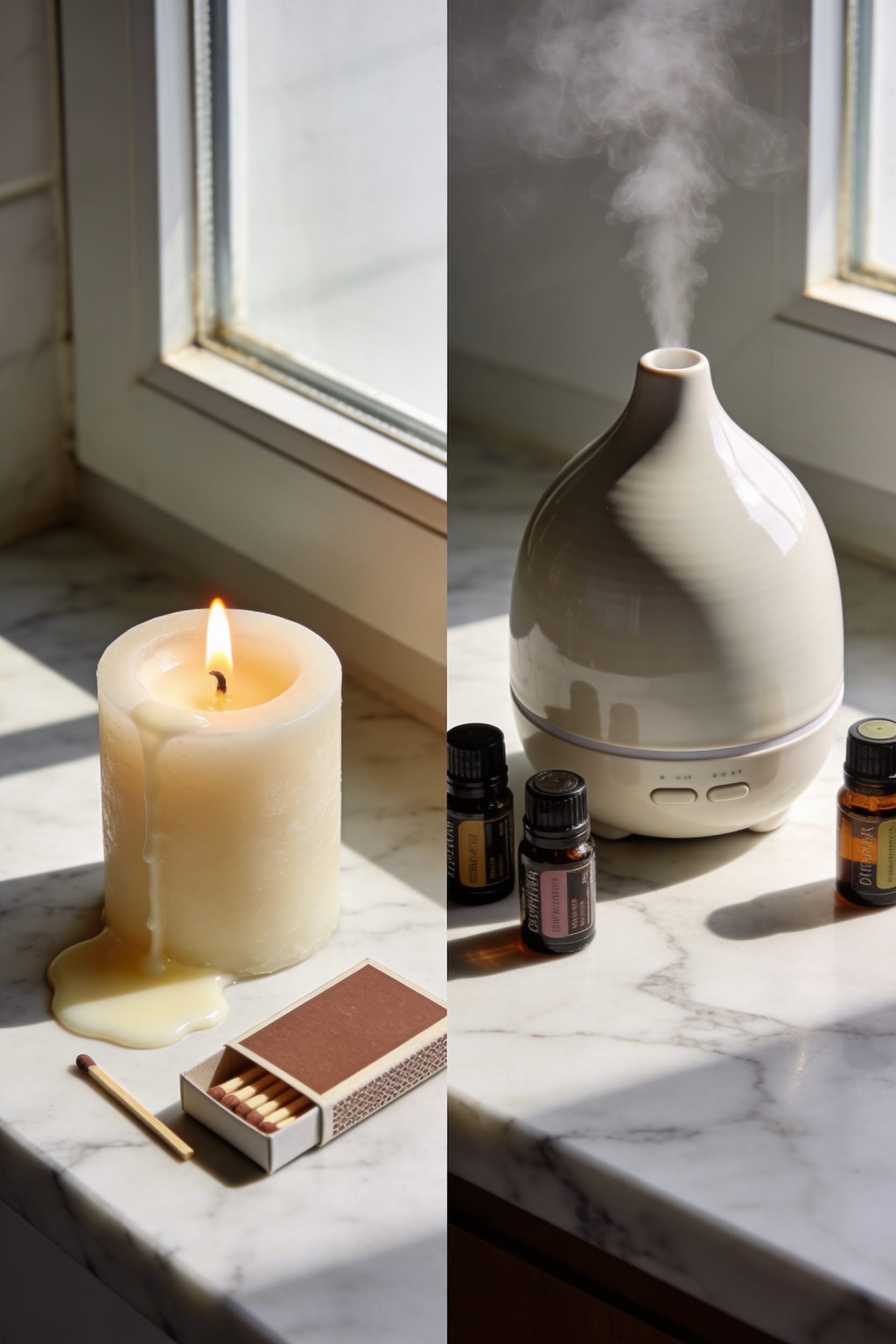
Beyond what’s floating around in the air you’re breathing, there’s a whole different category of risk that comes down to basic safety—and honestly, this is where candles and diffusers diverge pretty dramatically. Candles demand flame supervision. You’re managing an open heat source that requires constant attention, wick trimming, and strict burn-time limits. One distracted moment and you’ve got a fire hazard. Diffusers? They run for hours unattended without any flame or heat risk whatsoever. Then there’s refill logistics. Candles burn out in hours, demanding frequent replacements or refill purchases. Quality diffusers last weeks to months on a single fill. It’s not just convenience—it’s about reducing the mental load of remembering what needs replacing next.
Can Diffusers Purify Air Better Than Candles?
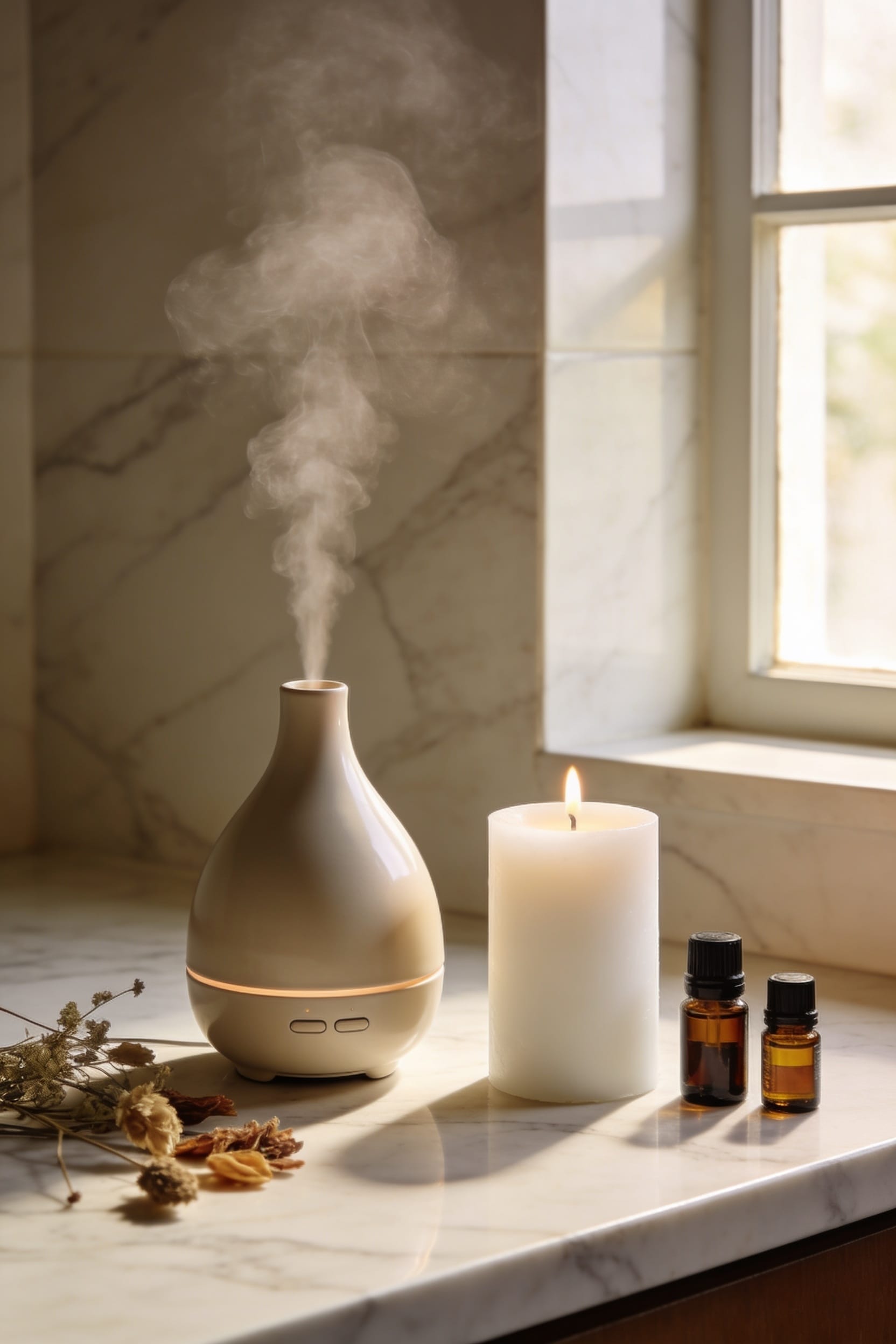
How’s this for a plot twist: while candles are actively fouling your indoor air with soot, particulate matter, and combustion byproducts, diffusers can actually work to clean it. Look, certain essential oils—eucalyptus and tea tree especially—have genuine antimicrobial properties that reduce airborne pathogens through particle filtration. You’re basically getting microbial reduction as a bonus feature.
Now, candles? They’re the opposite. They’re adding pollution to your space with toluene, benzene, and formaldehyde. Diffusers skip all that combustion nonsense entirely. When you’re using pure essential oils in a well-maintained diffuser, you’re not elevating those harmful VOCs at all.
That said, here’s the catch: a neglected diffuser breeding mold completely tanks any purification benefits. Keep it clean, and you’ve genuinely got air quality working in your favor.
Got Asthma or Allergies? Here’s What Works
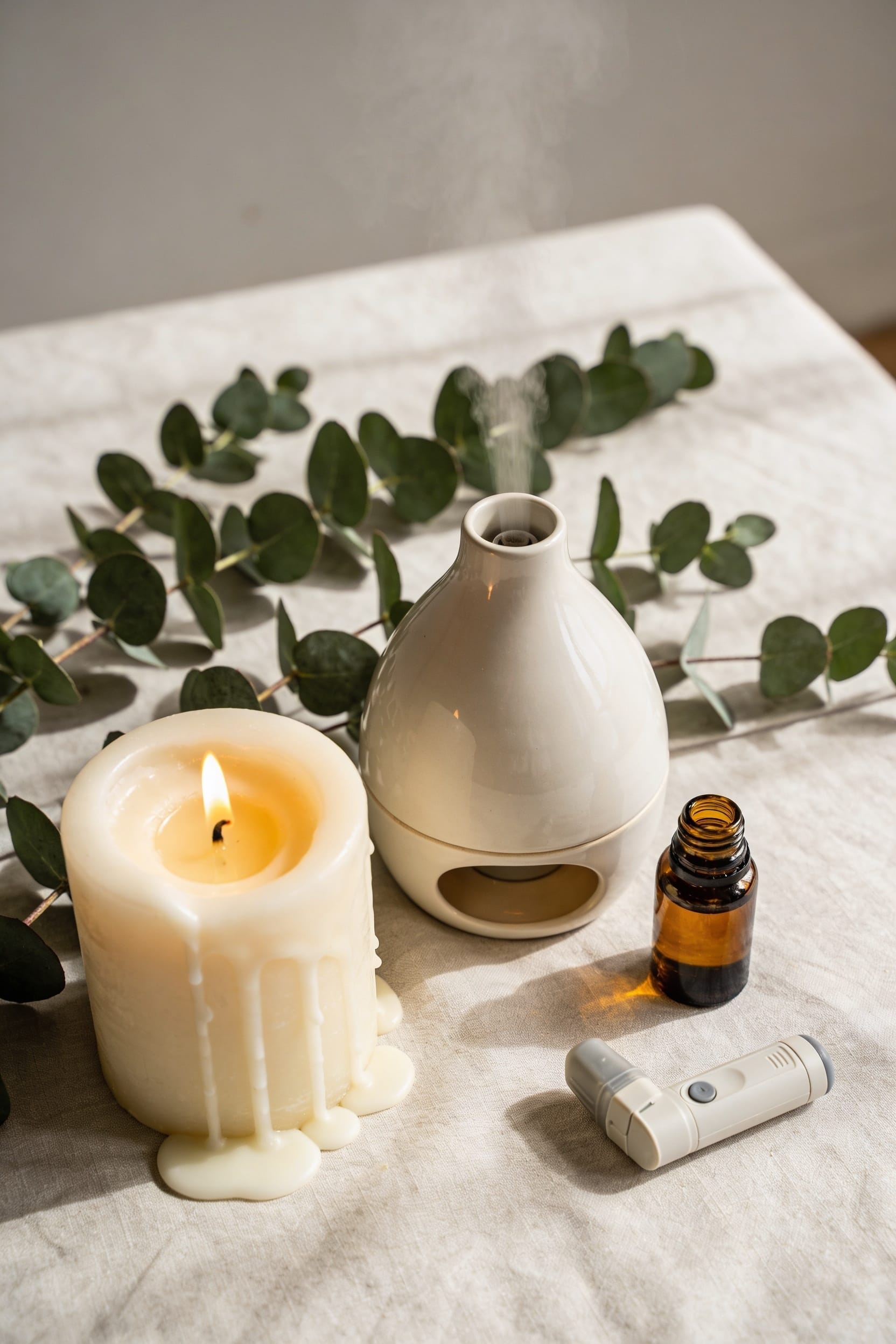
When you’ve got asthma or allergies, the air quality in your home stops being an abstract concern and becomes something you’re literally breathing in and out all day. Look, candles release particulate matter and volatile compounds that can trigger flare-ups. Diffusers present different challenges—synthetic fragrance oils often provoke reactions, while pure essential oils from reputable sources tend to be gentler. For trigger avoidance, I’d recommend unscented candles with proper ventilation over scented ones. If you’re considering diffusers, opt for hypoallergenic scents like chamomile or diluted eucalyptus. Honestly, your best bet? Test things gradually in small doses. Everyone’s respiratory system responds differently. Start conservative, monitor your symptoms closely, and don’t hesitate to skip fragrance entirely if your body tells you to.
Your Decision Matrix: Speed, Safety, and Health Priorities
So you’re standing at a crossroads trying to figure out what actually matters to you—and I get it, because the candle versus diffuser question isn’t really about candles or diffusers at all.
Here’s your quick tradeoffs priority checklist: Do you need immediate flame and ambiance, or can you wait for scent to build? Can you monitor an open flame safely, or do you need something running unattended for hours? Are respiratory concerns your main driver, or is aromatherapy benefit what you’re after?
Look, if speed and safety dominate your priority checklist, diffusers win hands down. No flame means no accidents. But if you’ve got clean-burning soy candles with cotton wicks and proper ventilation? You’re not compromising as much as you’d think.
Frequently Asked Questions
Do Essential Oils in Diffusers Provide Proven Aromatherapy Benefits Like Stress Reduction and Better Sleep?
I’ve found that essential oils show clinical efficacy for stress reduction and better sleep through aromatherapy mechanisms like limbic system activation. Lavender and frankincense particularly reduce stress hormones and improve relaxation when diffused properly.
How Long Do Diffusers Last Compared to Candles in Terms of Usage Hours?
I watch candle flames flicker and fade as diffusers hum steadily on. In my runtime comparison, diffusers last weeks to months versus candles’ mere hours of burn times, making them endlessly more practical for your lifestyle.
Are Soy Wax Candles With Cotton Wicks Genuinely Safer Than Paraffin Alternatives?
Yes, I’d say soy wax candles with cotton wicks are genuinely safer. They produce minimal emissions compared to paraffin, which releases carcinogenic toluene and benzene. You’re avoiding harmful synthetic compounds when choosing soy alternatives.
What Maintenance Is Required to Prevent Mold Growth in Water-Based Electric Diffusers?
I’ve found that diffuser maintenance isn’t optional—it’s essential. You’ll need regular filter maintenance and thorough reservoir drying between uses to prevent mold. I recommend cleaning weekly and ensuring complete dryness to maintain air quality.
Which Option Is Safer Around Pets, Particularly Cats Sensitive to Essential Oils?
I’d recommend you avoid diffusers around cats since essential oils—particularly lavender and tea tree—are toxic to them. Instead, I’d suggest pet safe candles with soy wax and cotton wicks for a safer alternative.
Conclusion
Here’s what I’ve found: studies show diffusers reduce airborne particles by up to 70% compared to candles’ negligible impact. So if you’re weighing health, diffusers win hands down—especially if you’ve got asthma or allergies. But I’m not telling you to toss your candles. You’re making a choice between ambiance with minor air quality costs versus pure functionality. Pick what fits your priorities.
—
The Complete Candle Hub
All right, let’s talk candles—because there’s way more to this than just lighting a wick and calling it a day.
I’ve been neck-immersed in the candle world long enough to know that people either think candles are simple (they’re not) or impossibly complicated (they’re also not). The truth lives somewhere in the middle, and I’m here to walk you through every corner of it.
Scented Candles: How to Actually Choose One
Look, the fragrance industry wants you confused. They’ll throw terms like “top notes,” “heart,” and “base” at you without explaining what any of it means in practical terms.
Here’s the thing: when you light a candle, you’re not smelling everything at once. Top notes hit first—they’re bright, zingy, they fade fast. Citrus, pepper, and herbs live here. Then the heart notes emerge. These are your middle players, the ones that stick around and define the scent. Floral and spice notes typically sit here. Finally, the base notes anchor everything. Think vanilla, musk, cedarwood, amber. They’re subtle but they’re what you smell two hours in.
You’re not buying a single scent when you buy a candle. You’re buying a timeline.
When you’re shopping, burn time matters. A candle that claims 40 hours but uses cheap paraffin wax might actually give you 25. I’ve learned this the hard way. Check the wax type—it affects both performance and how the fragrance releases. Soy and coconut blends tend to throw scent more gradually and cleanly. Paraffin cranks it out faster but sometimes with a chemical edge. Beeswax burns longest and cleanest, though it costs more.
Buy from makers who list their fragrance concentration. Most quality candles sit around 8-10% fragrance load. Anything above 12% and you’re often getting a headache-inducing overpour.
Candle Making Supplies and Process Basics
Now, if you want to make your own candles, I’m not going to pretend it’s complicated—but I will tell you that tiny decisions compound.
You need wax, fragrance, a wick, a container, and heat. That’s it structurally. But which wax? Soy burns slower and cleaner. Paraffin holds color and fragrance better but doesn’t perform as well for the environment. Coconut-paraffin blends split the difference. Beeswax is premium—expensive, long-burning, naturally purifying the air as it burns.
Wicks come in different sizes and materials. Cotton works for most home setups. The wick size needs to match your container diameter, or you’ll get tunneling (where the candle burns down the center and wastes wax on the sides). I’ve ruined batches by guessing on wick size instead of testing.
Fragrance oils and essential oils aren’t interchangeable. Essential oils evaporate and don’t mix well with wax. Fragrance oils are formulated for candle making. Add them around 180°F, never hotter.
Pour your wax around 170-180°F into containers that can handle heat. Let it cool naturally—don’t rush it or you’ll get sinkholes and uneven surfaces.
The whole process takes a few hours from start to finish, and your first batch will teach you humility.
Candle Accessories: The Stuff That Actually Matters
Look, candle accessories aren’t just decoration, though they can be.
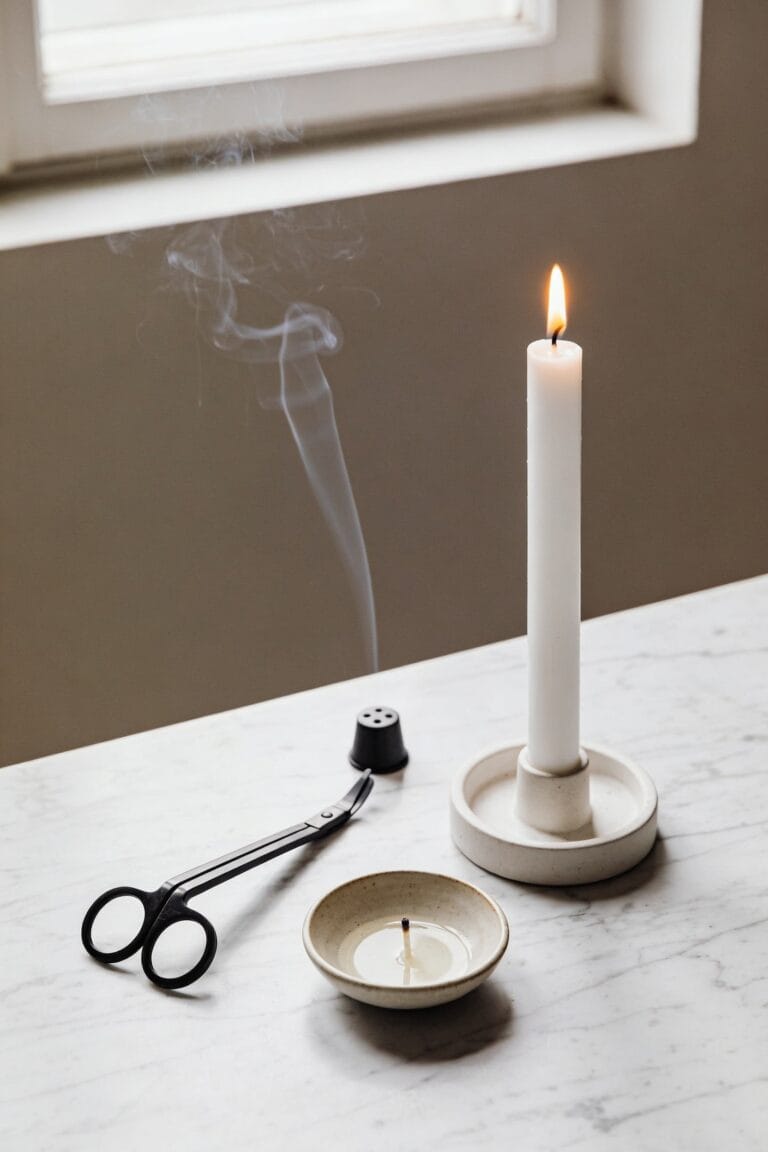
A wick trimmer keeps your wick to about quarter-inch length. This prevents smoking and mushrooming (when the wick top gets dark and puffy). You don’t need a fancy one—I have a $6 version that works perfectly. Trim before every burn, and you’ll notice immediate difference in how clean your candle performs.
Candle snuffers are gentler than blowing out your flame. Blowing creates hot soot particles that escape into the air. A snuffer smothers the flame without that mess. They’re pretty, functional, and honestly one of my favorite small investments.
Candle holders do real work. They catch dripping wax and protect your furniture. They also control airflow around the flame. A good holder sits just slightly wider than your candle’s diameter.
Matches designed for candles are longer and burn slower than regular matches, so you’re less likely to burn your fingers. Worth the small upcharge.
A candle warmer—the kind with a heated plate—gives you flameless burning. Heat rises and melts the wax pool without a wick. You get longer burn time and no soot. Some people swear by them.
Wax Types In-Depth
All right, let’s break down each wax because this genuinely matters.
Soy wax comes from soybean oil. It’s renewable, biodegradable, and burns slower than paraffin. Soy candles have a softer appearance and throw scent more gently. They’re better for the environment, though I’ll admit they’re not perfect—soy farming has its own issues. Expect to pay more.
Paraffin wax is the industry standard. Cheap, holds color brilliantly, releases fragrance quickly and strongly. It’s a petroleum byproduct though, so if you’re environmentally conscious, this isn’t your pick. It performs well in every other way.
Beeswax is the premium option. It’s expensive, burns longest (up to 3x longer than paraffin), and actually purifies air by releasing negative ions. It smells subtly sweet on its own. Real beeswax has a creamy, natural appearance. The catch? Cost. You’re looking at double or triple the price of soy.
Coconut wax is newer and trendy. It’s sustainable, burns slowly, and holds scent well. It’s often blended with paraffin because pure coconut wax can be finicky. I like it, but it’s not revolutionary.
Blends are where most quality candles live. Soy-paraffin, coconut-paraffin, soy-coconut. You get the performance strengths of multiple waxes without the extreme cost or drawbacks of any single type.
Fragrance Notes and Scent Families
Scents organize into families, and knowing them helps you find what you actually like.
Fresh/citrus: Lemon, grapefruit, bergamot. Bright, energizing, fade fast. Great for mornings or kitchens.
Floral: Rose, lavender, peony, lilac. Range from delicate to heady. Some people find strong florals headache-inducing. I’d test before committing to a large candle.
Oriental/amber: Vanilla, musk, sandalwood, amber, oud. Warm, sensual, long-lasting. These tend to linger in rooms.
Herbal/green: Basil, mint, sage, rosemary. Crisp and slightly medicinal. They work well in bathrooms.
Woody: Cedarwood, pine, vetiver, sandalwood. Earthy, grounding, masculine-coded but not exclusively. These pair well with other scent families.
Gourmand: Vanilla, caramel, chocolate, coffee. Sweet, comforting, indulgent. Popular but easy to overdo.
You’ll find candles that blend multiple families. A “forest walk” might combine pine (woody), lavender (floral), and earth (musky). Understanding the architecture helps you predict whether you’ll actually like it.
Burn Care Tips That Actually Work
Here’s the thing: how you burn your candle matters as much as the candle itself.
Trim that wick to a quarter-inch before every burn. I mentioned this already but it’s worth repeating. Most candle problems stem from wick neglect.
Burn your candle long enough that the entire top melts into a liquid pool. This takes patience—sometimes an hour or more depending on diameter. If you blow it out before the pool reaches the edges, you’ll get tunneling. You’re training the candle’s memory.
Keep candles away from drafts and ceiling fans. Moving air makes flames flicker erratically, which increases soot and uneven burning.
Burn for no more than 4 hours at a time, then let it cool for 2 hours before relighting. This protects the container and prevents overheating.
Never leave a burning candle unattended. I know people who do anyway, but you’re gambling.
If soot accumulates on the container walls, wipe it gently with a damp cloth before the next burn.
Don’t burn multiple candles too close together. They’ll heat each other and burn too fast.
Candle Holders and Décor
Holders are functional and decorative, which is why I genuinely enjoy this category.
Glass holders protect furniture and look clean. They show off the candle’s color. Make sure there’s at least a quarter-inch of space between the candle and holder walls for proper airflow.
Ceramic and metal holders offer more aesthetic range. Brass looks sophisticated. Wood feels warm and casual. Concrete feels modern and industrial.
Hurricane-style holders protect the flame from drafts while still allowing airflow. They’re practical for outdoor spaces.
Candle vessels themselves count as décor. A beautiful three-wick candle in a ceramic jar works as standalone decoration even when unlit. Size matters here—a tiny votive looks lost on a large shelf, while an oversized pillar candle dominates a small space.
Cluster odd numbers of candles together when decorating. Three or five candles create visual interest better than pairs or even numbers.
Gift Ideas Across Every Budget
Candles are universally good gifts because they’re consumable—people actually use them and then buy more.
Under $15: Single-wick candles from solid mid-tier brands. Stock up and make a small bundle with a matches box or wick trimmer.
$15-30: Quality scented candles from specialty makers. Two-wick candles. Candle accessories like snuffers or holders bundled with a single candle.
$30-60: Three-wick candles from luxury brands. Candle-making kits if the person is crafty. High-end holders paired with mid-tier candles.
$60+: Multi-candle sets from premium makers. Subscription boxes. Beeswax candles. Artisanal pieces from local chandlers who charge for craftsmanship and quality materials.
The best gift depends on what you know about the person. Someone with allergies appreciates an unscented or lightly scented option. A person who loves ambiance wants three-wicks. Someone who never buys themselves candles might need permission in the form of a luxury purchase.
Personalization goes a long way. “I remembered you mentioning you liked lavender” beats generic gifting every time.
—
You now have the foundational knowledge to shop smarter, make candles if you want, and troubleshoot when things go wrong. You know wax types, scent architecture, how accessories actually function, and why burn technique matters. You’re not just lighting candles—you’re equipped to be intentional about it.