As an Amazon Associate, we earn from qualifying purchases. Some links on this site are affiliate links at no extra cost to you. Our recommendations are based on thorough research and editorial judgment.

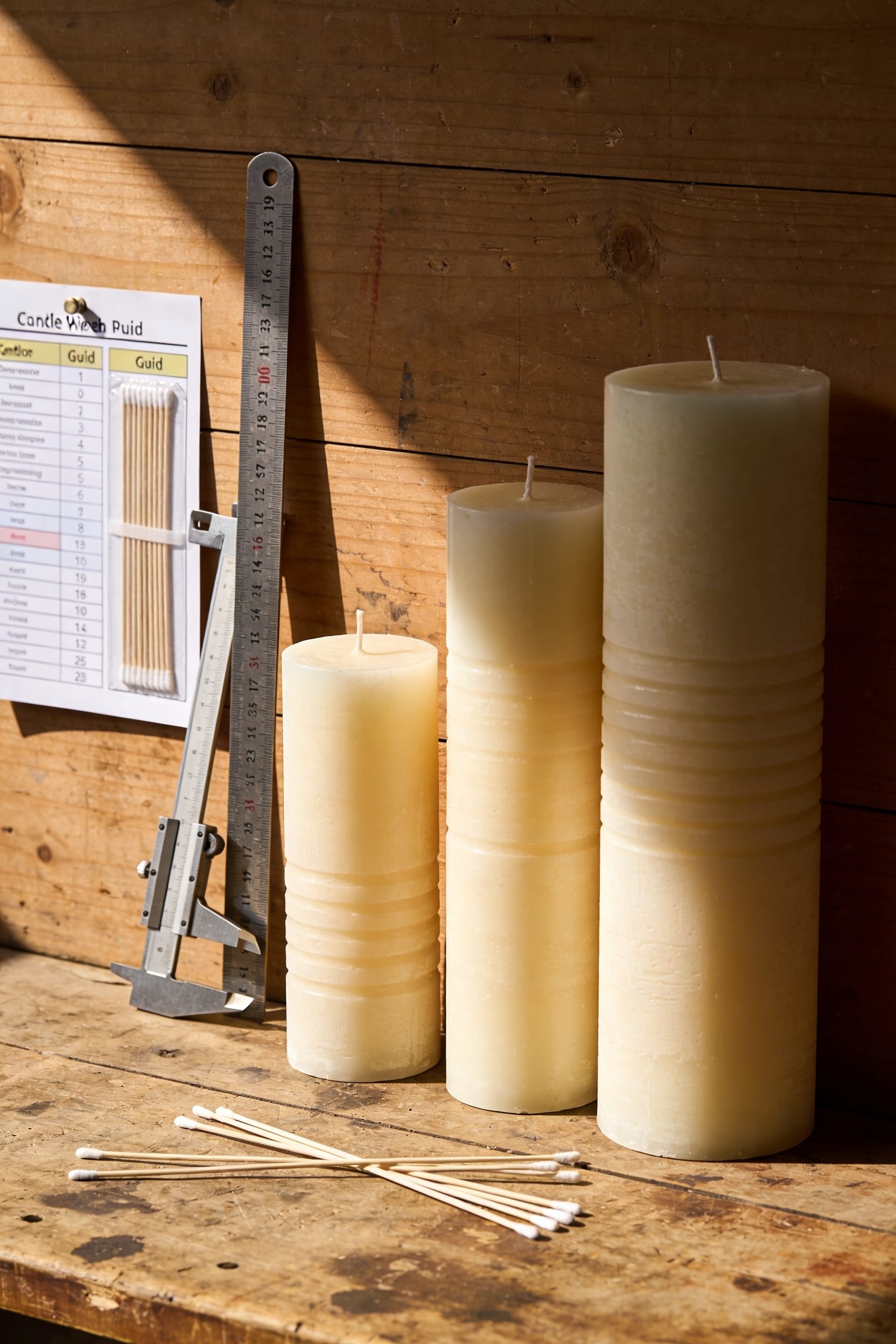
Candle Diameter Guide: Why Width Matters More Than You Think

Look, candle diameter does the heavy lifting—it controls how evenly your wax melts, whether you’ll actually smell that expensive fragrance, and how long the thing actually burns. A wider base creates better thermal balance, prevents tunneling, and lets wick size sync up properly for that perfect mushroom flame. Room scale matters too: pair your space with the right width, and suddenly that candle justifies its price tag instead of becoming decorative waste. Stick around to nail down exactly which diameter works for your setup.
Key Takeaways
- Wider candle bases distribute heat evenly, preventing tunneling and maximizing wax efficiency and lifespan.
- Larger diameters produce superior scent throw and illumination compared to narrower candles of equal height.
- Proper diameter-to-wick ratio creates ideal flame characteristics and prevents overheating or incomplete burning.
- Room and furniture scale demand proportional candle diameters; match width to space before purchasing.
- Diameter signals perceived value and luxury, influencing pricing strategy and consumer purchase decisions significantly.
How Candle Width Affects Burn Quality and Lifespan
All right, here’s the thing: candle diameter is doing way more work than you might think. A wider base means your wax melts more evenly, creating a consistent pool instead of tunneling down the middle—which absolutely tanks your burn time. That’s because diameter directly impacts thermal gradients across the surface. When heat distributes unevenly, you’re wasting wax and fragrance.
Wick sizing matters here too. A candle that’s too narrow for its wick will burn too hot and fast. Too wide, and you’re fighting to maintain an even melt pool. I’ve learned this the hard way. The sweet spot? Match your diameter to proper wick thickness so you get that ideal mushroom-shaped tip, steady flame, and maximum lifespan. Bigger candles just burn longer and cleaner when everything’s proportioned right.
Recommended Products

Religious Supply Center

Approximately 5" x 11.5" x 11.5".

Practical Decoration Set: you will get 36 pieces of glass candle vases and 36 pieces of ivory white pillar candles, easy for you to use in daily life or other important occasions that need some romantic atmosphere
Sizing Candles: Standards by Type
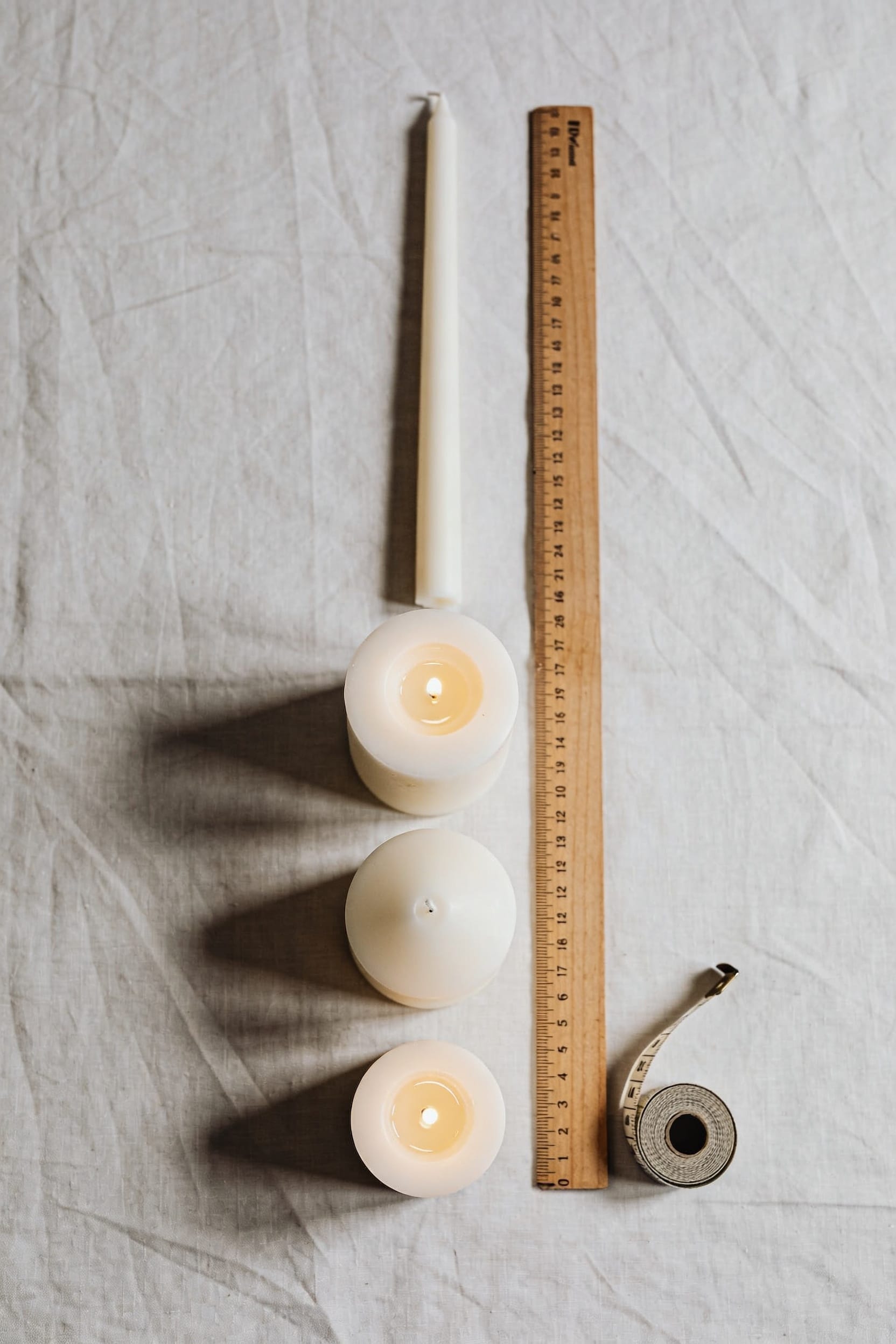
Now that you understand how diameter drives burn quality, let’s talk about what you’re actually going to encounter when you’re shopping or making candles yourself. Standard tapers clock in at 7/8″ to 1″ diameter—they’re designed for traditional candlestick holders and won’t wobble around. Votives sit at 1.5″, while pillar candles range anywhere from 1.5″ to 6″ depending on your material choices and intended use. When you’re selecting diameter, wick placement matters tremendously. A 3″ pillar needs different wick positioning than a narrow taper. Glass vessels constrain you naturally—you can’t exceed the jar’s width. Tealights standardize around 1.5″ to 1.625″. The container you choose dictates your diameter possibilities, so always coordinate between wax width and vessel size first.
Recommended Products

High-Quality Beeswax Embossing Mold: Crafted from premium aluminum alloy, our Beeswax Embossing Mold ensures durability and longevity. This high-quality material offers excellent heat dissipation for efficient operation, making it an ideal choice for your beekeeping supply needs

100% Pure Beeswax Candle: Hand-poured from naturally filtered beeswax for a rich, golden glow. These clean burning candles are free from paraffin, soy, and synthetic fragrances. Each 1-wick dripless pillar candle features natural cotton candle wicks and pure candle wax for a long-lasting burn and warm, cozy candle light.

Pick the Right Candle Diameter for Your Space
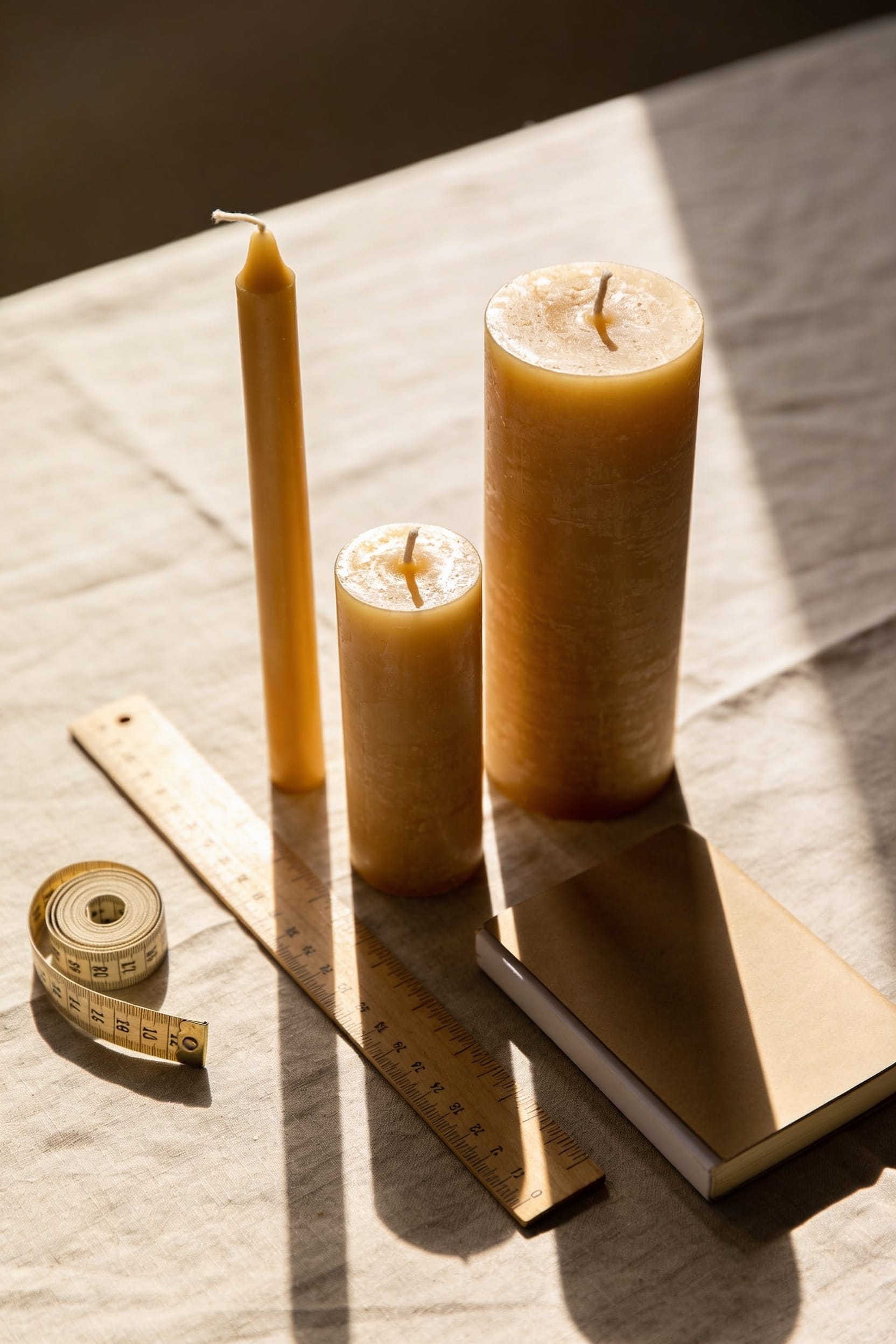
Knowing your candle’s diameter matters way less if you don’t match it to the room you’re actually burning it in. Here’s the thing: a 6-inch pillar candle looks ridiculous on a nightstand, just like a skinny taper gets swallowed by your living room’s visual balance.
Start by evaluating room scale. Larger spaces need wider candles—they emit more light and anchor the room. Smaller bedrooms do better with 1.5- to 2.25-inch options that won’t overwhelm.
Your placement strategy should consider furniture scale too. A 3-inch floating candle works beautifully in a generous centerpiece bowl; it’d disappear in a coffee table arrangement. For seasonal decor, think proportionally. Holiday displays demand bolder diameters, while spring calls for dainty votives.
Measure twice, buy once.
Recommended Products

Practical Decoration Set: you will get 30 pieces of candle vases and 30 pieces of ivory candles, easy for you to use in daily life or other important occasions that need some romantic atmosphere

Practical Decoration Set: you will get 54 pieces of candle vases and 54 pieces of ivory white candles, easy for you to use in daily life or other important occasions that need some romantic atmosphere

Set includes 36 Slim Pillars (12 of each size: 2.25"D x 3", 5",7"H) and 36 Cylinders (12 of each size: 3.5"D x 6", 7.5",9"H) and 1 Stick Um
Diameter’s Role in Scent and Light
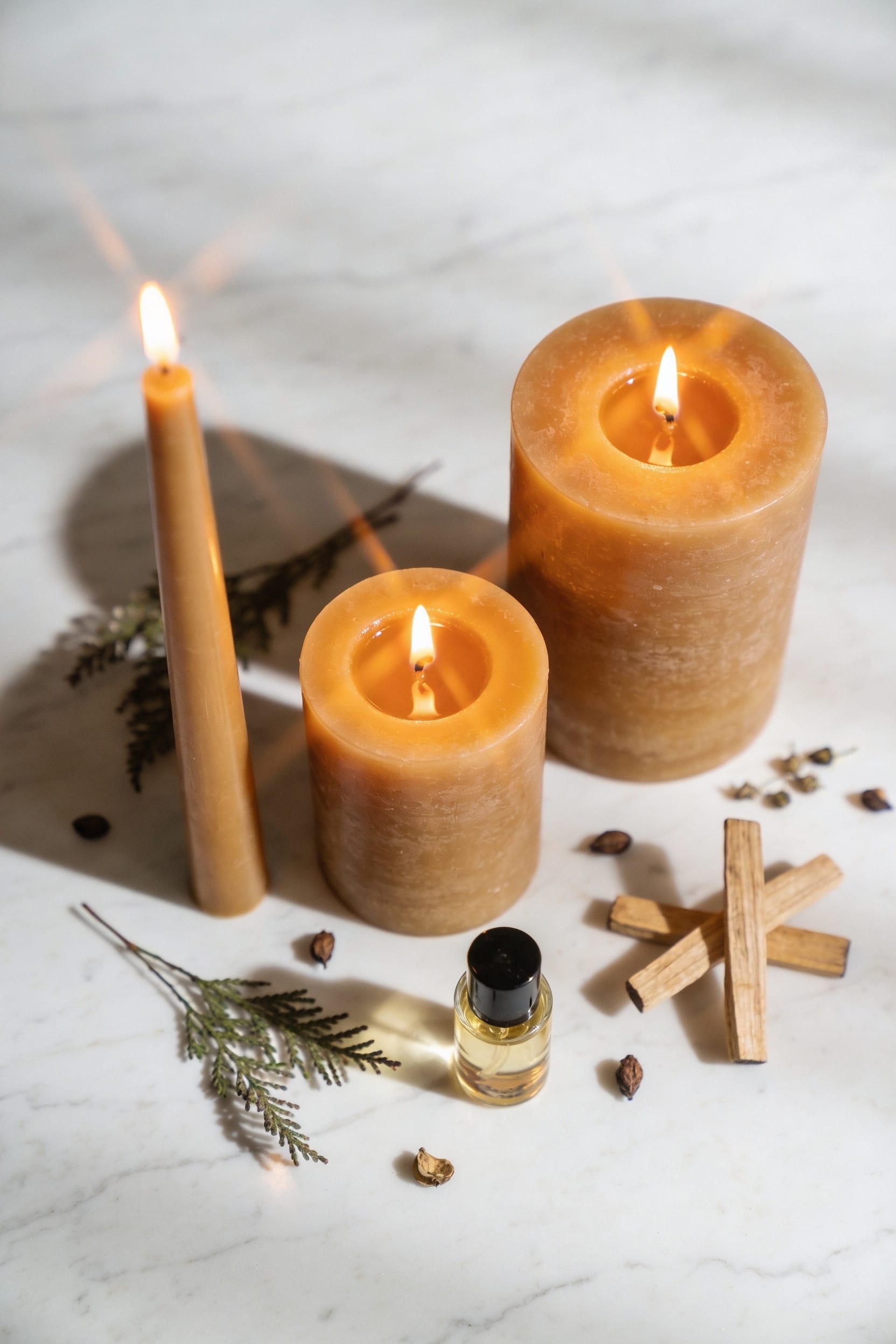
When you light a wider candle, you’re not just getting a bigger flame—you’re fundamentally changing how that fragrance travels through your room. Here’s the thing: larger diameter candles produce superior scent throw because they maintain a bigger, more consistent melt pool. That expanded surface area releases fragrance more evenly throughout your space.
Light diffusion works similarly. A 3-inch pillar generates considerably more illumination than a taper, and that glow spreads further. The wider the candle, the more ambient light you’re creating. I’ve noticed the difference is genuinely noticeable—it’s not just about brightness but how that warmth fills a room.
Now, container candles follow the same principle. A 12-ounce vessel outperforms an 8-ounce in both scent and light distribution. You’re investing in better performance when you go wider.
Recommended Products

Sculptural Design: Truly capturing a sense of fluidity and movement, this candleholder makes a striking centerpiece with its undulating, shiny surface


Religious Supply Center
How Candle Size Shapes Pricing and Perception
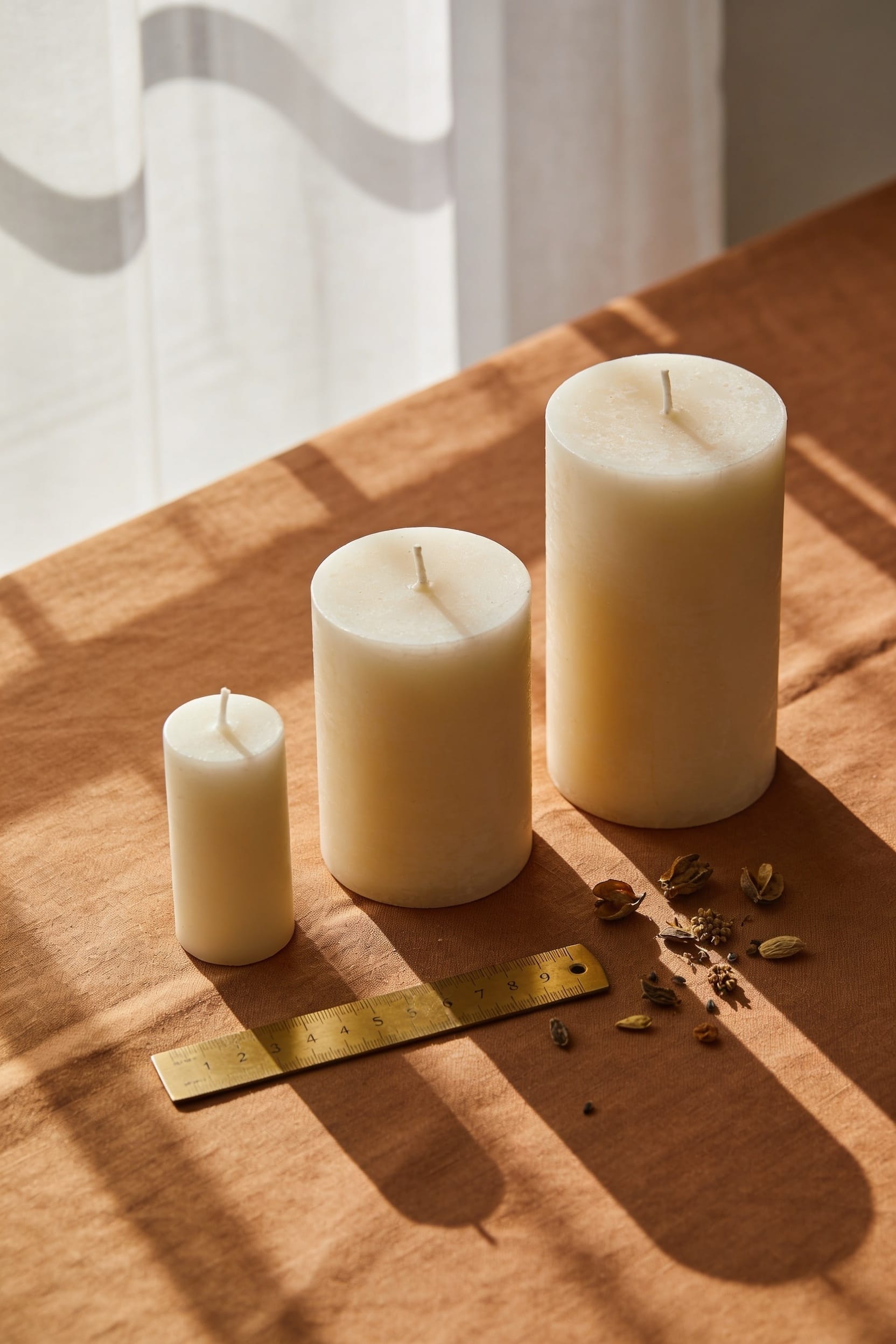
Because size directly signals value to your brain before you ever light the thing, diameter becomes one of the most powerful pricing tools in the candle business. You’ll notice smaller candles—those premium samples under 4oz—command disproportionately higher per-ounce prices. That’s intentional. Brands position them as discovery tools, letting you test before committing to a full-size pillar. Mid-range options around 8oz hit that sweet spot for gifting strategy, feeling substantial without the investment hesitation. Larger formats? They feel like permanent fixtures, worthy of shelf space and meaningful money. I’ve learned that consumers equate width with quality. A 6-inch pillar signals luxury differently than a skinny 0.25-inch taper. Your diameter choice shapes whether someone sees discovery or permanence.
Recommended Products

Value Pack: you will get 72 pieces of ivory white pillar candles in 3 sizes, 24 pieces for each size, which are securely packed in a sturdy cardboard box to ensure the candles arrive neatly packed and intact; Suitable for a variety of uses and ideal for setting the mood, these candles are sturdy, decorative and functional for your everyday needs

Sufficient for Demands: the package contains a total of 60 pieces of unscented white pillar candles in 3 sizes, 20 pieces for each size, offering a sufficient quantity for daily use and replacement needs, which can bring you both practical and decorative effects

Package Include: there 12 set of 36 pieces ivory white pillar candles, in 3 sizes of 2 x 3 in, 2 x 6 in and 2 x 8 in; These paraffin candles are over dipped for a really true color consistent finish; Decorative candles like these are both beautiful and practical
Frequently Asked Questions
Can I Use a Standard Taper Candle in a Non-Traditional Candlestick Holder?
I’d say yes, you can use a standard taper in a non-traditional holder if the holder fit is secure. Safety tips: make sure it’s stable, won’t tip over, and the holder won’t overheat. Always verify the diameter matches snugly first.
What Diameter Should Floating Candles Be for My Specific Bowl Size?
I’d love to tell you there’s a magic formula, but honestly? I’d go with 3″ diameter minimum—it’ll conquer your bowl’s surface tension and won’t disappear into deeper depths, giving you that visual pop you’re after.
How Does Candle Diameter Impact Burn Time Compared to Wax Quality?
I’d say diameter matters as much as wax quality for burn time. Larger candles distribute heat more evenly, improving wick compatibility and scent throw. Width directly affects your burn rate—bigger diameters mean longer-lasting candles than quality alone determines.
Are Mini-Votives Suitable for Outdoor Use or Decorative Purposes Only?
As the saying goes, good things come in small packages. I’d say mini-votives work best for decoration indoors, though they’ve got limited outdoor durability. Their concentrated, decorative versatility shines brightest in protected settings.
Which Candle Diameter Produces the Most Even Wax Pool During Burning?
I’ve found that larger diameter candles—particularly pillar candles ranging from 3″ to 6″—produce the most even melt pool. The wider base allows proper wick placement and heat distribution, so you’ll get consistent, symmetrical pooling every burn.
Conclusion
Look, I’ve learned that candle diameter isn’t just a technical spec—it’s everything. Here’s why I’m telling you this: studies show that candles with improper widths waste up to 25% of their fragrance and burn time. You’re literally throwing money away if you’re not matching diameter to your space. Get this right, and you’ll transform how your candles perform, smell, and last.