As an Amazon Associate, we earn from qualifying purchases. Some links on this site are affiliate links at no extra cost to you. Our recommendations are based on thorough research and editorial judgment.

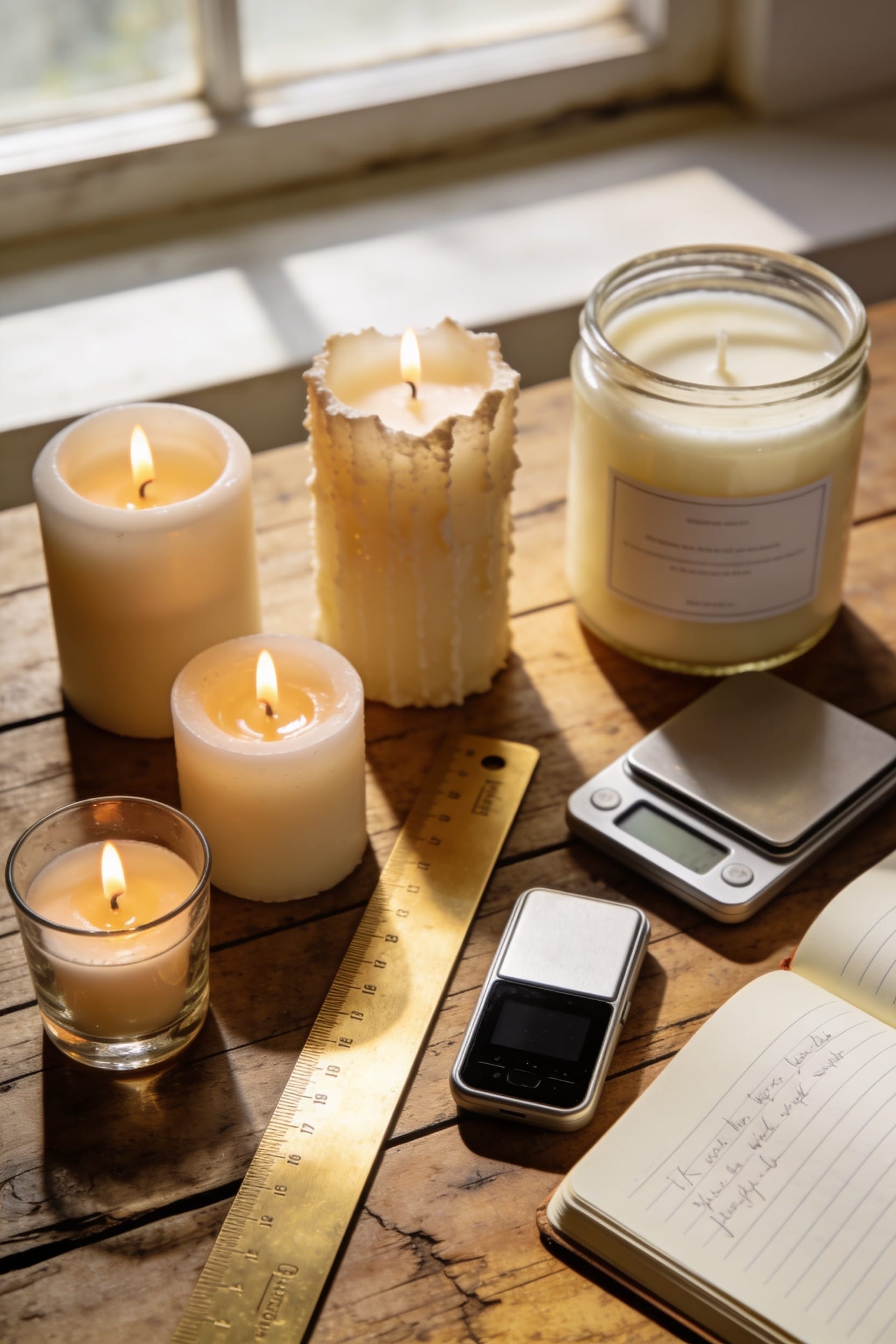
What Does Candle Oz Mean? Full Size & Burn Time Guide

when you buy a “16 oz” candle, you’re looking at fluid ounces—a volume measurement—not actual wax weight. That matters because real wax weight (roughly 86% of the fluid ounces) determines your burn time, scent strength, and whether the wick performs right. An 8 oz candle typically burns 40–50 hours, while 16 oz runs 80–100 hours, but only if you’ve nailed the wick size to match your actual wax weight. Stick around to figure out how to calculate yours precisely.
Key Takeaways
- Candle “ounces” typically refer to fluid ounces (volume), not actual wax weight, creating confusion about true candle size.
- Wax weighs approximately 86% of water, so 16 fl oz of wax ≈ 13.76 oz by weight, not volume.
- Burn time correlates directly with actual wax weight; 8 oz burns 40–50 hours, 16 oz burns 80–100 hours roughly.
- Accurate fragrance loading and wick sizing depend on actual wax weight, not jar volume or labeled fluid ounces.
- Weigh wax before pouring for consistency; density variations mean labeled jar sizes may contain 13.1–15.2 oz actual wax weight.
What “Candle Oz” Actually Means: Volume vs. Weight
All right, here’s where a lot of candle confusion starts: when someone says a candle is “16 ounces,” they’re probably not talking about what you think they’re talking about. That number refers to volume—how much space the wax fills in your jar—not the actual weight of wax you’re using. Here’s the thing: wax isn’t as dense as water, so 16 fluid ounces of wax weighs roughly 13.76 ounces (that 86% density factor at work). This distinction matters because scent loading and wick sizing depend on actual wax weight, not volume. You’ll get better results calculating fragrance oil ratios and selecting proper wicks by weighing your materials. Trust me, switching to weight-based measurements transformed how I formulated candles.
How to Convert Fluid Ounces to Wax Weight
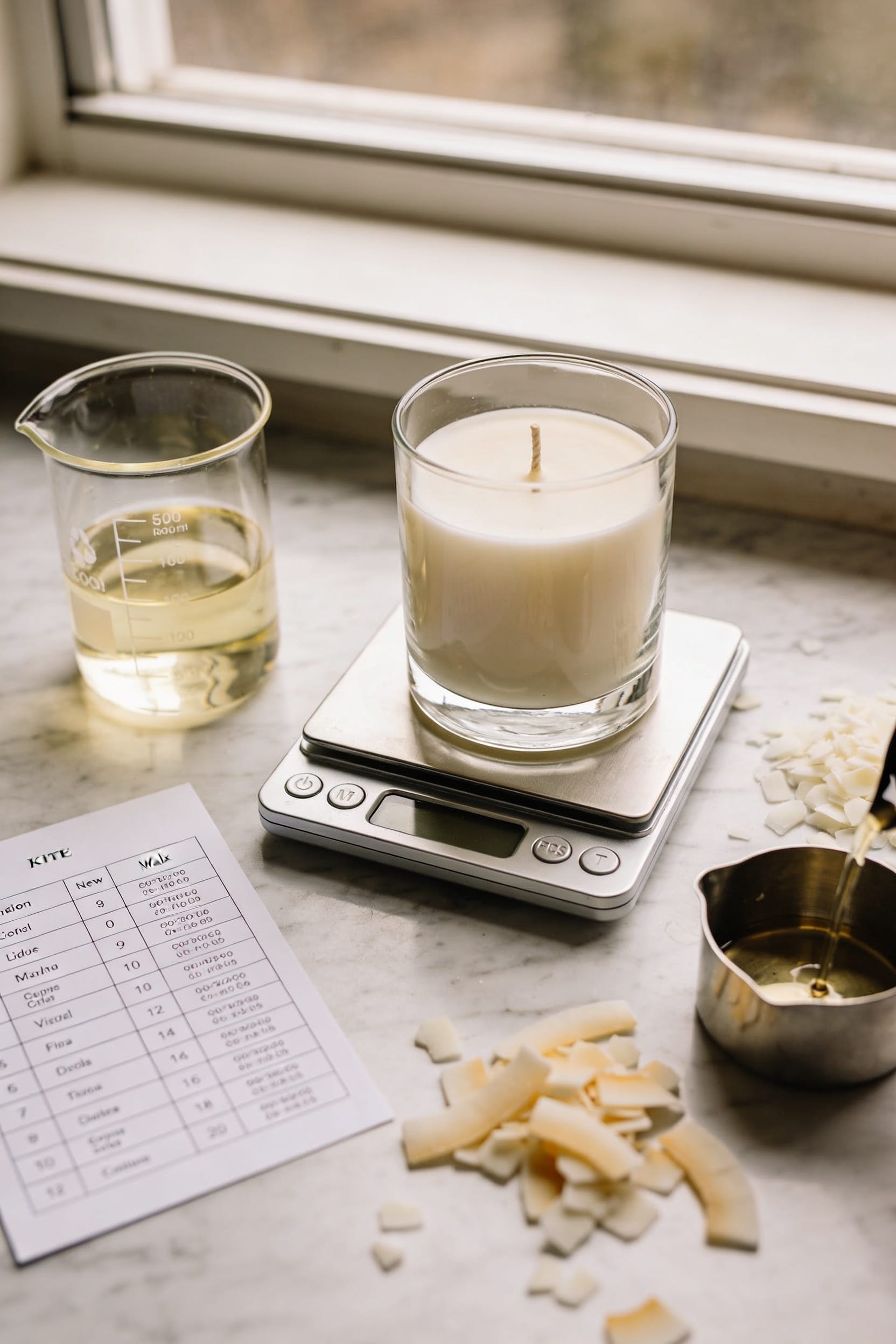
Now that you know the difference between volume and weight, let’s actually do the math—because converting fluid ounces to real wax weight is simpler than you’d think. Here’s the baseline: wax density averages 86% of water’s density. So multiply your jar’s fluid ounces by 0.86 to get your wax weight in ounces. A 16 fl oz jar? That’s roughly 13.76 oz of actual wax.
Need fluid ounces to grams? Multiply fl oz by 29.5735 for volume, then apply that 86% factor—you’ll land around 25.4 grams per fluid ounce of wax.
Temperature effects matter too. Wax expands and contracts slightly with heat, which is why weighing your materials beats guessing every single time. Accuracy wins.
Jar Capacity and Total Volume
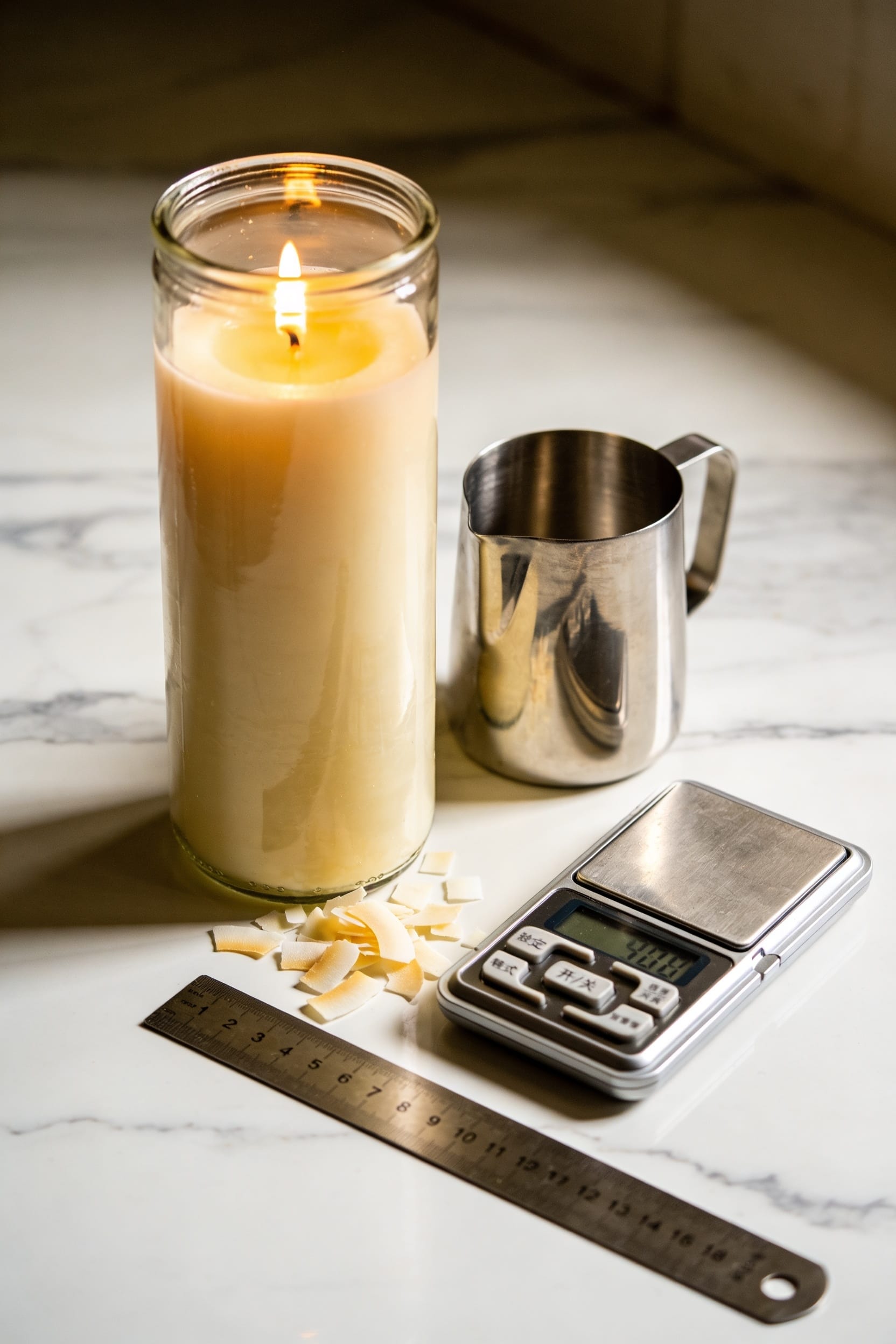
Understanding your jar’s true capacity is where theory meets practice—because a 16 fl oz label doesn’t automatically mean you’ve got 16 fl oz of usable space. Here’s the thing: jar capacity and total volume aren’t quite the same animal. When I measure total volume, I’m filling that jar completely to the top, accounting for its specific shape. A tulip-shaped vessel fills differently than a straight-sided one. That curved edge matters. Once you know your total volume, you subtract your reveal—that pivotal space you’re leaving for the wick and lid clearance. So if your jar holds 16 fl oz total but you need a 1/4″ reveal, you’re actually working with less usable wax. This distinction changes everything about your fragrance load calculations and burn time expectations.
How Reveal Measurements Affect Lid Fit
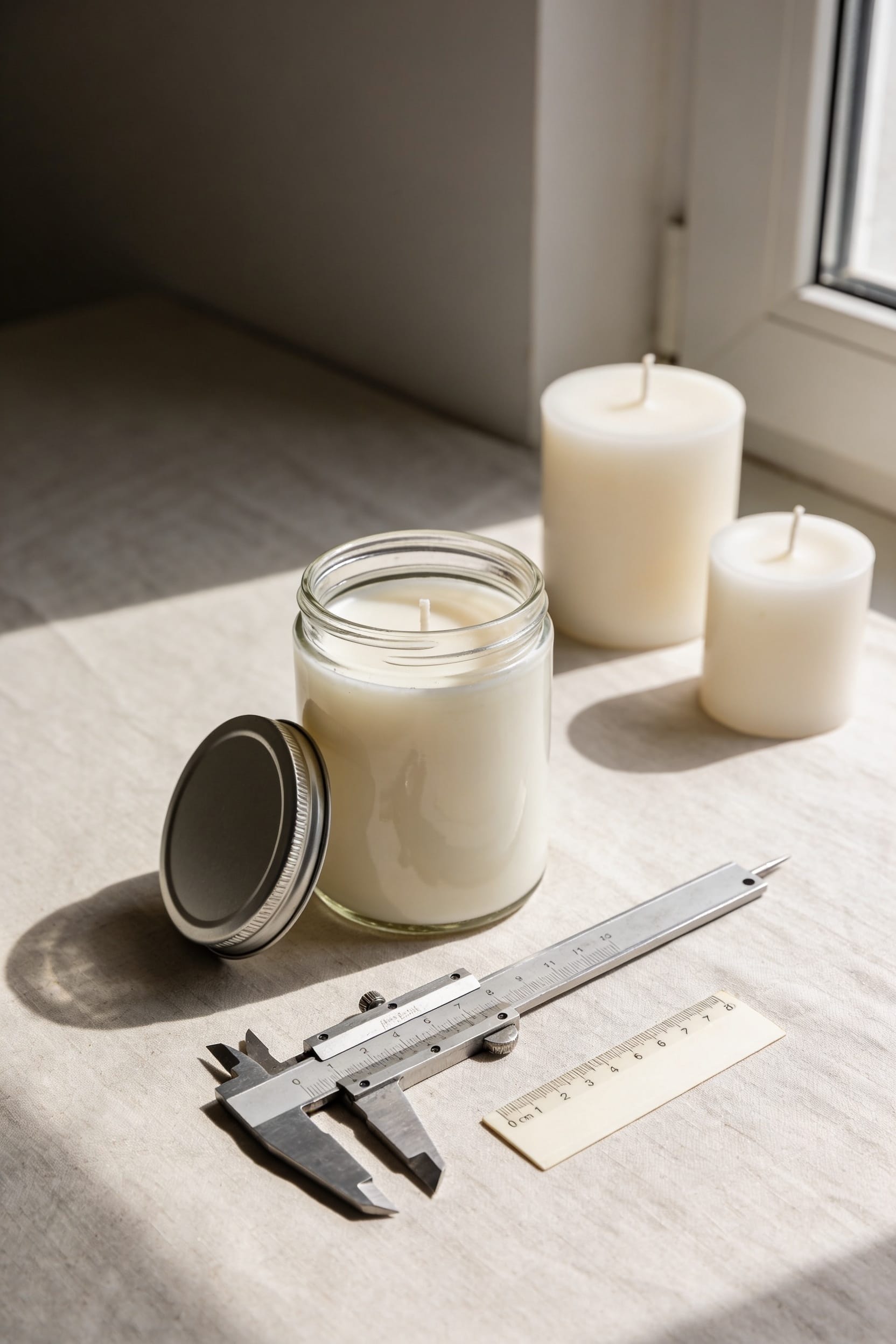
That reveal you’re leaving at the top of your jar? It’s doing more work than you might think. When you subtract that 1/4” from your total volume for lid clearance, you’re actually solving two problems at once. First, you’re giving your lid room to sit properly without wax interference. Second, you’re creating space for wick centering, which keeps your flame positioned exactly where it needs to burn. I’ve learned this the hard way—overfilled jars with poorly centered wicks create uneven burn patterns and guttering. A 3″ lid typically requires that 1/4″ drop. Subtract 3/8″ if you’re working with an 1/8″ reveal below the lid. This precision matters more than you’d expect for both function and aesthetics.
Calculating Wax Weight for Your Candle Size
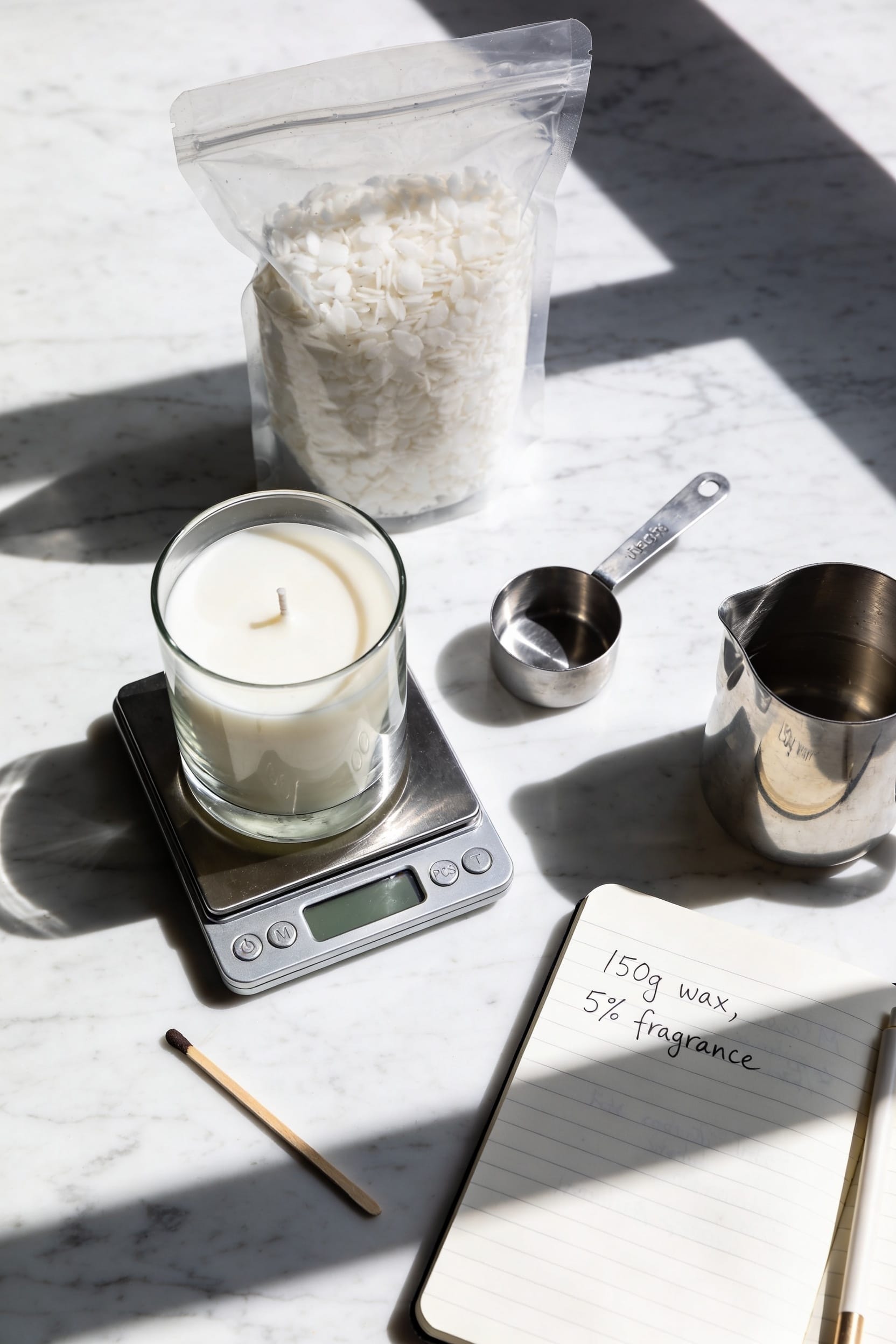
Once you’ve locked in your jar size and reveal measurements, the real work begins—converting that volume into actual wax weight. Here’s the thing: I weigh everything because density varies wildly between wax types. Take your total volume in fluid ounces and multiply by 86%—that’s your estimated wax weight in ounces. So a 16 fl oz jar holds roughly 13.76 oz of wax.
Now, accuracy matters here. Before you pour at your ideal pour temperature, weigh your wax on a scale. This guarantees consistent wick placement and prevents under or overfilling. I’ve learned the hard way that guessing volume leads to uneven burns and frustration. Weight gives you precision every single time.
Recommended Products

Lb/Oz/Kg/grams switchable, Easy Operating, NTEP Approved Legal for Trade, COC #22-007, NSF Certified

High Precision Lab Scale with 0.01g Accuracy:This digital lab scale provides up to 5000g capacity with 0.01g readability. Perfect for labs, schools, or research use. A reliable analytical balance and precision scale 0.01g for weighing powders, chemicals, or small parts.
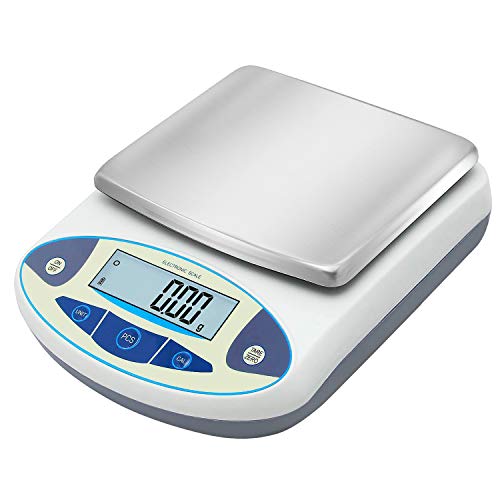
0.01g HIGH PRECISION-This analytical balance has 8 optional ranges from 200g-5000g with an accuracy of 0.01g. To ensure to get the results quickly and accurately, the precision scale is equipped with an upgraded high-sensitivity build-in sensor, adjustable feet, level bubble overload alarm, error indication, and external calibration.
Fragrance Load: How Much Scent Your Candle Can Hold?
Now that you’ve nailed down your wax weight, here’s where a lot of candle makers mess up: they dump in fragrance oil like it’s a free-for-all, and then wonder why their candles sweat, tunnel, or smell weak after the first burn. Your wax has a maximum fragrance load—a limit to how much scent it can actually hold without falling apart.
Start with 1 ounce of fragrance per pound of wax. That’s roughly 6.3%, and it’s a solid baseline. But here’s the thing: paraffin typically maxes out around 3%, while blended waxes can handle up to 12%. Check your wax manufacturer’s specs. Respecting these limits directly impacts scent diffusion and throw strength. Weigh everything consistently, follow guidelines, and test before committing to a full batch.
How Wax Weight Determines Burn Time
You’ve got your fragrance dialed in, your wick picked out, and your container’s looking good—but here’s what actually determines whether your candle burns for 20 hours or 60: the weight of wax you’re pouring. More wax means longer burn time, plain and simple. But it’s not just about dumping in extra pounds. Your wick diameter has to match that wax weight, or you’ll get tunneling instead of an even melt pool. I’ve learned this the hard way—too much wax with an undersized wick and you’re watching your candle waste half its potential. Weigh everything in ounces or grams for accuracy. A 16 oz candle burns differently than a 32 oz one, even with identical fragrance loads and wick sizes. Get the math right, and burn time follows.
Standard Candle Sizes and Burn Time Reference
If you’re standing in front of a shelf wondering whether that 8 oz votives will actually last through dinner or if you need to grab the 16 oz jar instead, understanding standard candle sizes and their typical burn times is the fastest way to stop guessing. Look, an 8 oz candle burns roughly 40-50 hours, while a 16 oz jar gives you 80-100 hours depending on wick sizing and wax type. The 26-32 oz three-wick candles? Those’ll run 100-150 hours easily. Here’s the thing—scent throw also factors in. A smaller candle with proper wick sizing performs better than an oversized one with wimpy flame. Match your jar size to your space and honestly assess how long you actually want it burning.
Recommended Products

LUXURY DESIGN: Hand-blown glass vessel featuring sophisticated marble-like patterns in refined colors, making each piece uniquely beautiful

Fine fragrances containing a high dose of natural ingredients can be subject to slight variations; In the same way wines vary from year to year, so can perfume; This is a natural occurrence and something that gives life to the perfume; If you're hesitant or unhappy with your purchase, we will gladly assist you
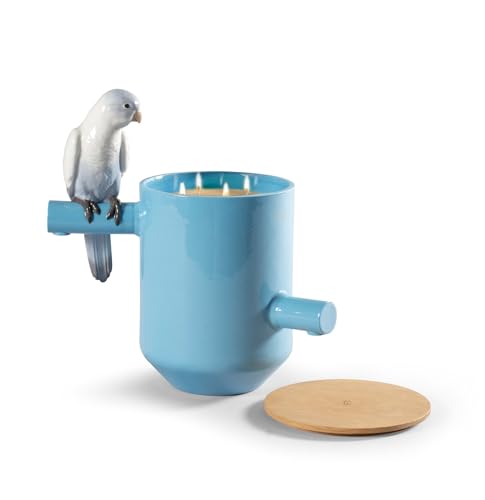
HANDMADE IN SPAIN: The highest-quality pieces handcrafted in Valencia, in the only LLADRÓ factory in the world. A team of expert artists and designers keep alive ancestral trades and techniques to turn porcelain into dreams. Sculptors, ornamenters, technicians, painters are all involved in the craftsmanship process... An endless number of hands that, one by one, leave their mark, an almost imperceptible imprint, making each artwork UNIQUE and EXCLUSIVE.
Why Density Variations Change Your Numbers
Because wax density isn’t a fixed number—it’s a range that swings between 82% and 95% depending on your wax type, temperature, and how it’s been processed—that innocent-looking “16 oz jar” might actually hold anywhere from 13.1 oz to 15.2 oz of actual wax, which means your fragrance load calculations, burn time estimates, and even whether that wick you picked performs properly can all shift unexpectedly.
Temperature expansion throws another wrench in. Warm wax takes up more space than cooled wax, so what looks right during pouring might shrink as it sets. Wax porosity also matters—some blends hold fragrance differently than others. That’s why I weigh everything instead of eyeballing volume. You should too. It’s the only way to nail consistent results across batches.
Weighing Candle Materials in Ounces and Grams
Now that you know density shifts your numbers around, the fix is straightforward: stop relying on volume and start weighing everything. I use a digital scale for all my materials—wax, fragrance, dyes, additives. Ounces and grams both work fine; just pick one and stick with it. This matters because packaging weights on fragrance bottles and wax suppliers use these measurements for a reason: accuracy. Scale conversions between ounces and grams are simple (28.35 grams equals one ounce), so don’t sweat the math. When you’re calculating fragrance load or checking if your wax batch matches expectations, weight never lies. Volume misleads you. That’s really the whole point here.
Frequently Asked Questions
Can I Use Volume Measurements Instead of Weight for Accurate Candle Making?
I’d recommend against relying solely on volume vs. mass for measuring accuracy in candle making. Since wax density varies, weighing materials in ounces or grams guarantees precision. You’ll achieve better results prioritizing weight measurements consistently.
What Happens if I Exceed the Maximum Fragrance Load Percentage?
If you exceed the maximum fragrance load, I’ll tell you what happens: you’ll experience scent overpowering the wax, causing wax instability, poor burning, and sweating. It’s not worth compromising your candle’s performance.
How Do I Choose the Correct Wick Size for My Candle?
I’d recommend testing different wick diameters to achieve peak flame stability and hot throw. You’ll want to match wick material to your wax type, then assess burn performance before finalizing your choice.
Does Wax Type Affect How Quickly a Candle Burns?
Yes, wax type’s like night and day different. I’ve found paraffin burns faster than blended waxes due to wax composition differences. Additives and melt pool size dramatically affect burn rate too.
What Temperature Should I Heat Wax Before Adding Fragrance Oil?
I’d heat your wax to around 170-180°F before adding fragrance oil. I recommend gentle warming rather than high heat—it helps the fragrance blend evenly without burning off. You can start near room temperature and gradually increase warmth for best results.
Conclusion
I’ve learned that understanding candle oz is like learning a language—once you speak it fluently, you’ll navigate every purchase and pour with confidence. You’re no longer just buying a candle; you’re decoding its promise. Weight tells the story wax weight reveals burn time, and burn time reveals value. Now you’re equipped to choose consciously, make intentionally, and gift meaningfully. That’s real mastery.