As an Amazon Associate, we earn from qualifying purchases. Some links on this site are affiliate links at no extra cost to you. Our recommendations are based on thorough research and editorial judgment.

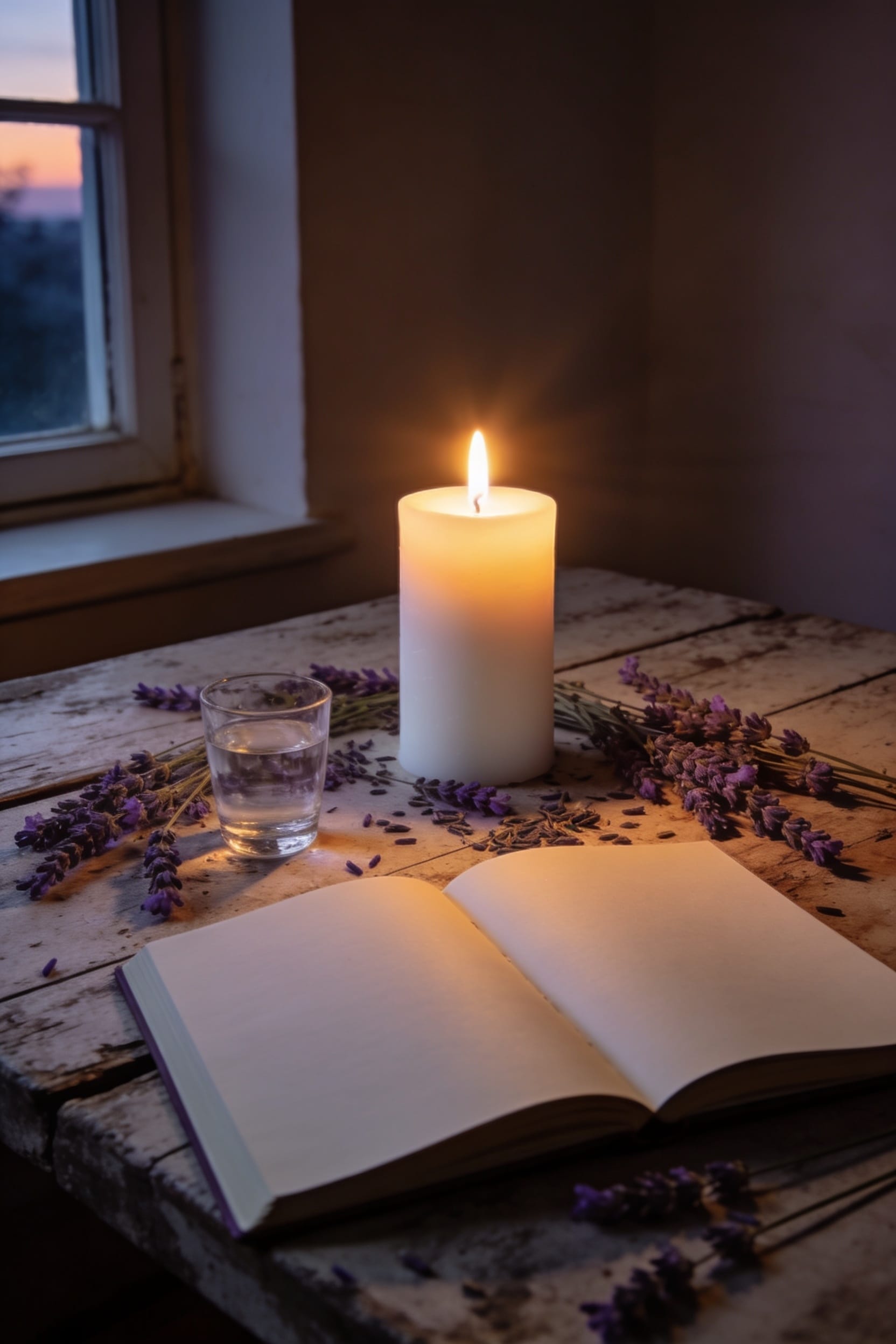
Why Is Candlelight So Calming? Science Has the Answer

Your nervous system interprets candlelight as an ancestral safety signal, triggering your parasympathetic system to downshift into calm mode. The warm amber wavelengths tell your brain it’s time to relax, while the flickering flame naturally entrains your brainwaves from busy beta into meditative alpha and theta states. Pair that visual pull with a grounding scent—lavender, vanilla, whatever speaks to you—and you’re effectively hacking your physiology faster than meditation alone typically gets you there. The more you understand how this actually works, the better you can use it.
Key Takeaways
- Candlelight triggers ancestral safety signals, activating your parasympathetic nervous system and slowing heart rate.
- Flickering flames entrain brainwaves from beta (thinking) into alpha and theta (relaxation and meditation) states.
- Warm amber wavelengths signal circadian wind-down, suppressing cortisol and promoting melatonin production for better sleep.
- Focused gaze on flame reduces internal distraction, providing productive attention outlet that accelerates relaxation response.
- Scent pairing with candlelight offers multimodal calming, reducing cortisol faster than meditation or visual focus alone.
Why Your Parasympathetic Nervous System Treats Candlelight as Safety
Look, your body’s been wired for thousands of years to interpret candlelight as a signal that you’re safe—and honestly, that’s not something you can logic away no matter how modern your life gets. When you gaze at a flame, ancestral signaling kicks in. Your brain recognizes that warm glow and thinks: *fire means community, protection, survival*. That’s when vagal activation happens. Your vagus nerve—the main highway of your parasympathetic nervous system—essentially gets the all-clear message to relax. Your nervous system downshifts. Heartbeat slows. Breathing deepens. It’s not magic; it’s neurobiology meeting evolutionary memory. That’s why even one candle in a dark room can shift your entire state faster than you’d expect.
How Candlelight Shifts Your Brain Into Alpha and Theta Waves?
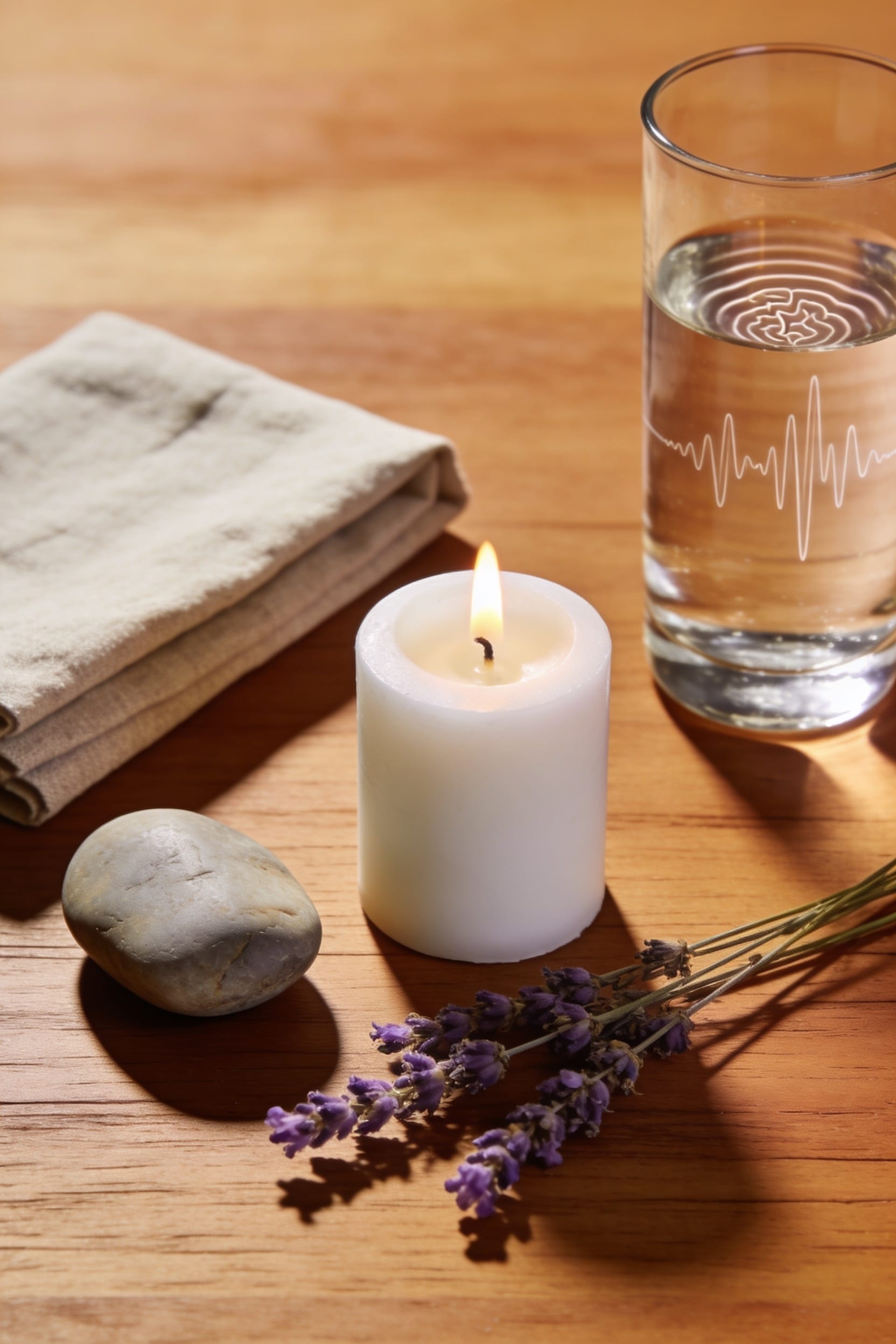
When you sit with a candle, you’re not just watching a flame—you’re fundamentally hypnotizing your brain into a different operating system. That flame fixation? It’s not accidental. Your eyes lock onto the flicker, and neural entrainment kicks in—your brainwaves literally sync with that dancing light. You shift from beta waves, where your brain’s locked in thinking mode, down into alpha. That’s where relaxation lives. Keep gazing, and you’ll drift deeper into theta, the meditative sweet spot where self-awareness blooms and mental chatter quiets. The hypnotic quality of candlelight isn’t mystical. It’s neuroscience. Your brain can’t help but follow that rhythm, and honestly, it’s one of the easiest ways I’ve found to slip into genuine calm without forcing it.
Recommended Products

PRODUCT: Cyan Design 10273 Hammond Pendant

Safer Ambience for Everyday Moments: Our sand wax candle design with self-extinguishing sand candle wicks minimizes fire risk if tipped and prevents hot wax spills; ideal for homes with pets or kids that won’t renounce stylish décor, offered in White, Red, Nude, and Black for cozy luxury

Product Details - Extra large bulk set of 100 lotus brass finish diyas in aluminium alloy, each approx 2.5 x 2.5 x 2.1 inxhes, 0.75 inch deep oil well, ideal as table deepam lamps for full venue indoor mandir and pooja decor.
Why Candlelight Cuts Your Cortisol Levels Faster Than Meditation?
Your cortisol—that stress hormone your body floods your system with when you’re running late or your inbox explodes—doesn’t care about your meditation app. Here’s the thing: candlelight works differently. Through visual entrainment, that flickering flame captures your attention so completely that your nervous system downshifts faster than sitting cross-legged breathing. The warm amber wavelengths signal safety to your brain. Add sensory grounding—the scent of lavender or vanilla hitting your olfactory system—and you’re getting a dual-pronged cortisol reduction. Studies show this combo drops stress hormones quicker than meditation alone. Your body registers the glow as sunset. It’s ancient. It’s hardwired. And honestly, lighting a quality soy candle takes thirty seconds versus finding twenty minutes for zen breathing.
How Candlelight Enhances Meditation: The Faster Path to Calm
If you’ve tried meditation before and found yourself wrestling with your own mind instead of calming it, candlelight might be the missing variable. Here’s the thing: a focused gaze on a flickering flame gives your restless brain something to do. That hypnotic movement captures your attention in a way sitting in silence doesn’t. You’re not fighting distraction anymore—you’re channeling it productively.
Add breath synchronization to the mix. As you watch the flame dance, naturally sync your breathing to its rhythm. Inhale as it brightens, exhale as it dims. This pairing accelerates your shift into alpha and theta brainwaves—the meditative states you’d normally chase for twenty minutes. You’re effectively hacking meditation’s timeline. Light a scented candle and you’ve stacked even more relaxation benefits on top.
Candlelight vs. Blue Light: Why Sleep Improves When You Switch
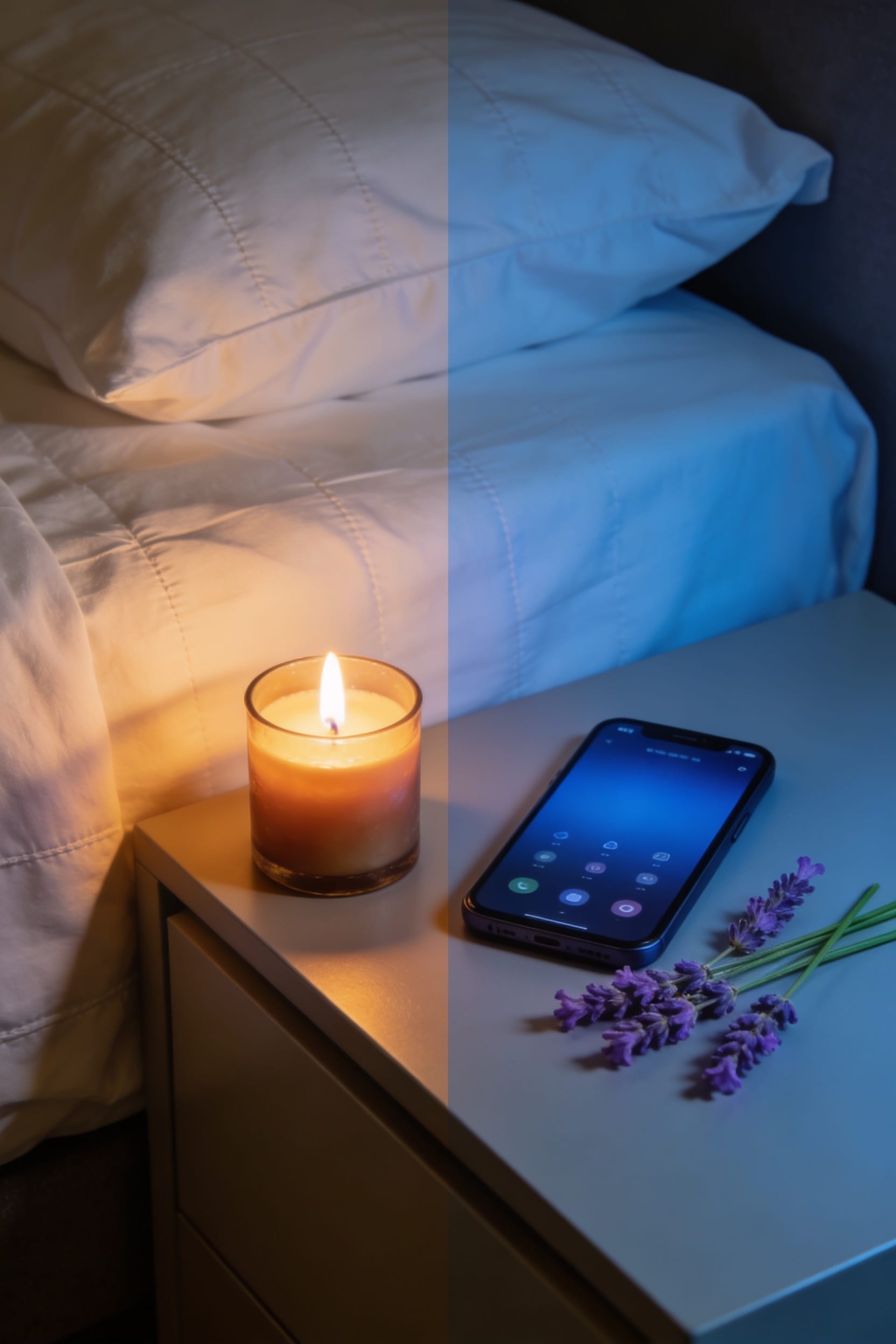
The blue light from your phone, laptop, and overhead LEDs is actively working against your sleep—and I mean that literally. That screen contrast keeps your brain wired, suppressing melatonin production when you need it most. Candlelight does the opposite. Its warm amber wavelengths provide circadian cues that tell your nervous system it’s time to wind down. Your body recognizes that golden glow as sunset, not stimulation. When you swap screens for a scented candle an hour before bed, you’re not just creating ambiance—you’re recalibrating your entire sleep cycle. The combination of soft light and calming scents like lavender genuinely shifts your physiology. I’ve noticed the difference personally. Your sleep quality improves because you’re finally working with your biology instead of against it.
Recommended Products

Fine fragrances containing a high dose of natural ingredients can be subject to slight variations; In the same way wines vary from year to year, so can perfume; This is a natural occurrence and something that gives life to the perfume; If you're hesitant or unhappy with your purchase, we will gladly assist you

SCENT - Chamomile Lavender features lavender with warm & enveloping bergamot. Calming chamomile melts into a heart of eucalyptus to create a feeling of well-being. Smoky patchouli is enhanced by hints of sage & rosemary for a quiet, relaxing finish.

THE ORIGINAL AND STILL THE FINEST. 100% FRENCH ARTISANALLY CRAFTED. The Rigaud family created THE WORLD’S FIRST SCENTED CANDLE in the 1960’s. All Rigaud candles are poured, prepared and packed by hand. Cyprès is a part of Rigaud's Aromatic Fragrance Family which brings the freshness of the Mediterranean forests into your home. Introduced to the White House by Jacqueline Kennedy in 1960, this is a blend of lavender, the woody, crisp notes of pine needles, and the aroma of cedar wood. This fragrance is deceivingly mild--not at all overwhelming-but a lovely, elegant, fresh scent suitable for any room or occasion.
Frequently Asked Questions
What Specific Wavelengths of Candlelight Trigger the Parasympathetic Nervous System Response?
I’ve found that candlelight’s warm amber wavelengths, combined with near infrared radiation, trigger your parasympathetic nervous system. These specific light frequencies mimic sunset, signaling safety to your body and activating its natural relaxation response.
Can Scented Candles Enhance the Calming Effects More Than Unscented Candles?
I’ve tested whether scented candles truly outperform unscented ones, and they do. Through careful aroma pairing and scent intensity calibration, I’ve found that lavender and vanilla amplify your parasympathetic response beyond candlelight alone, deepening relaxation substantially.
How Long Does It Take Candlelight Exposure to Measurably Lower Cortisol Levels?
I’ve found that cortisol kinetics typically show measurable timeline reductions within 10-15 minutes of candlelight exposure. You’ll notice physiological shifts like slower breathing occurring sooner, though peak stress hormone decreases take 20-30 minutes consistently.
Is Candlelight Effective for People With Certain Neurological Conditions or Sensitivities?
I’d say candlelight can help neurodivergent comfort, though you’ll want photosensitivity precautions first. It’s not universal—some find flickering triggering. I’d recommend testing gradually in dim settings to see if it calms you.
Can Artificial Candles Replicate the Same Physiological Benefits as Real Flame Candles?
While LED mimics offer convenience, I’d argue they can’t fully replicate real flames. True candlelight’s flame psychology—that mesmerizing flicker—triggers deeper neurological responses artificial lights simply won’t match.
Conclusion
I’ve discovered that you can harness candlelight like ancient humans scrolling through their smartphones—it’s primal technology meeting modern stress. Your nervous system recognizes that flickering flame as safety, triggering calm waves through your brain while cortisol plummets. You don’t need apps or pills. Just light a candle, sit with it, and let your body remember what it’s always known: you’re safe here.