As an Amazon Associate, we earn from qualifying purchases. Some links on this site are affiliate links at no extra cost to you. Our recommendations are based on thorough research and editorial judgment.

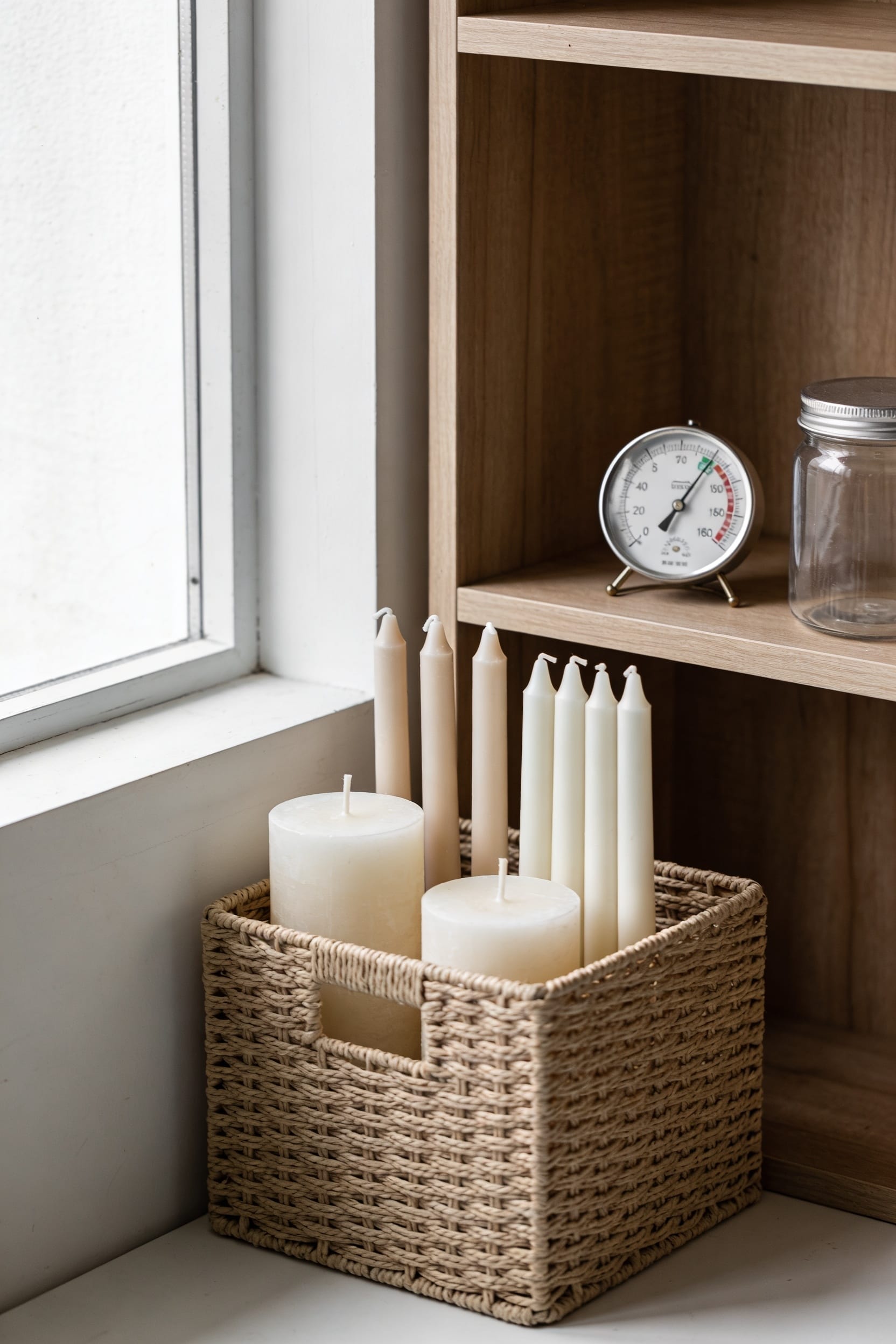
How Long Can You Keep an Unlit Candle? Storage Facts

All right, here’s the thing: unlit candles typically last one to two years on average, though paraffin can stretch to ten-plus years while soy and coconut degrade faster. Your wax type matters hugely, but so does storage—keep them in cool, dark places away from humidity and temperature swings, sealed in airtight containers if you want that scent to stick around. Fragrance naturally evaporates over time regardless, so burn your candles within that first year for the strongest performance. Want to know exactly what’s happening to your candles as they age?
Key Takeaways
- Unlit candles typically maintain quality for 1–2 years; paraffin lasts 3–10+ years, beeswax 3–5+ years.
- Store in cool, dark places with airtight containers away from sunlight, heat, and temperature fluctuations.
- Fragrance fades naturally over time; top notes diminish within 3–6 months even when unlit.
- Label candles with purchase dates and wax type to implement proper rotation and usage tracking.
- Burn candles within the first year for strongest fragrance and most vibrant color performance.
How Long Do Unlit Candles Actually Last?
Now, here’s the thing—if you’ve got a candle sitting on your shelf that you’re not burning, you’re probably wondering how long it’ll actually stay good. Unlit candles maintain their quality for about 1-2 years on average, though this timeline shifts depending on your wax type. Paraffin candles can last almost indefinitely with proper storage. Soy and coconut varieties? They’re best used within that 1-2 year window. Beeswax pulls ahead with 3-5+ years of solid performance. The real enemy isn’t time itself—it’s your storage conditions and how you’re handling scent layering or candle gifting. Keep them in cool, dark places with lids sealed tight, and you’ll maximize what you’ve got.
How Wax Type Affects Candle Shelf Life
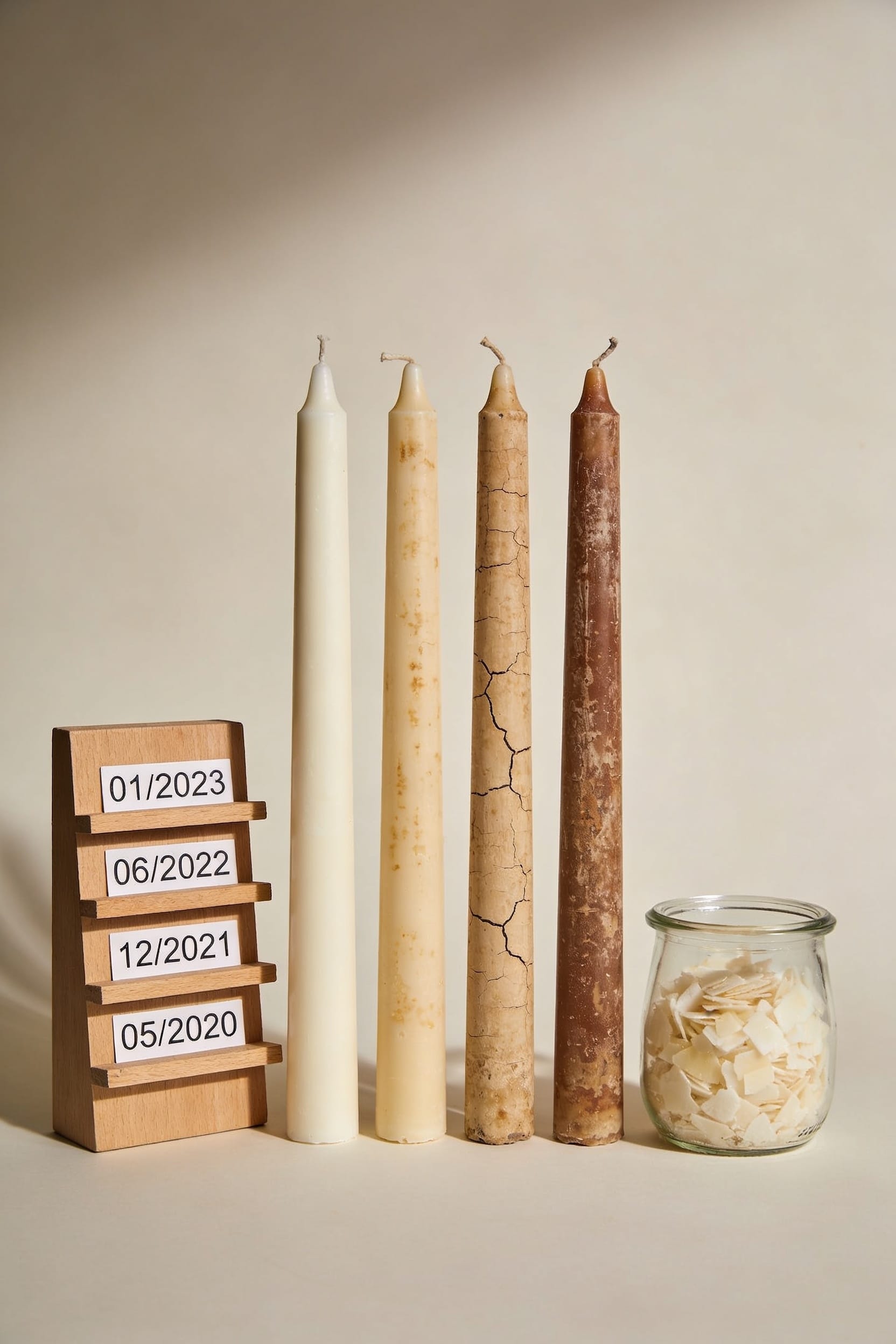
The wax type you’re working with—whether you’re buying candles or making them—matters way more than you’d think when it comes to how long they’ll actually last on a shelf. Here’s the thing: wax chemistry determines everything. Paraffin wax is practically bulletproof, lasting 3-10+ years because it’s chemically stable and resists degradation. Soy and coconut wax? They’re natural, which sounds great, but they degrade faster—stick to 1-2 years max. Beeswax holds up beautifully for 3-5+ years. Now, additive impacts matter too. The fragrance load and stabilizers you add (or that manufacturers add) either extend or shorten that timeline. A stronger fragrance percentage generally means better longevity. Choose wisely based on your storage situation and intended use.
Recommended Products

Storage: 2 drawers and 2 shelves
CLEAR STRAIGHT SIDED CANNING JARS: Smooth sided jars are ideal for branding and labeling your jams, jellies, candles, preserves and more. Keep your brand top of mind while your customers are enjoying your handmade products.
CLEAR STRAIGHT SIDED CANNING JARS: Smooth sided jars are ideal for branding and labeling your jams, jellies, candles, preserves and more. Keep your brand top of mind while your customers are enjoying your handmade products.
How Storage Conditions Preserve or Degrade Candles
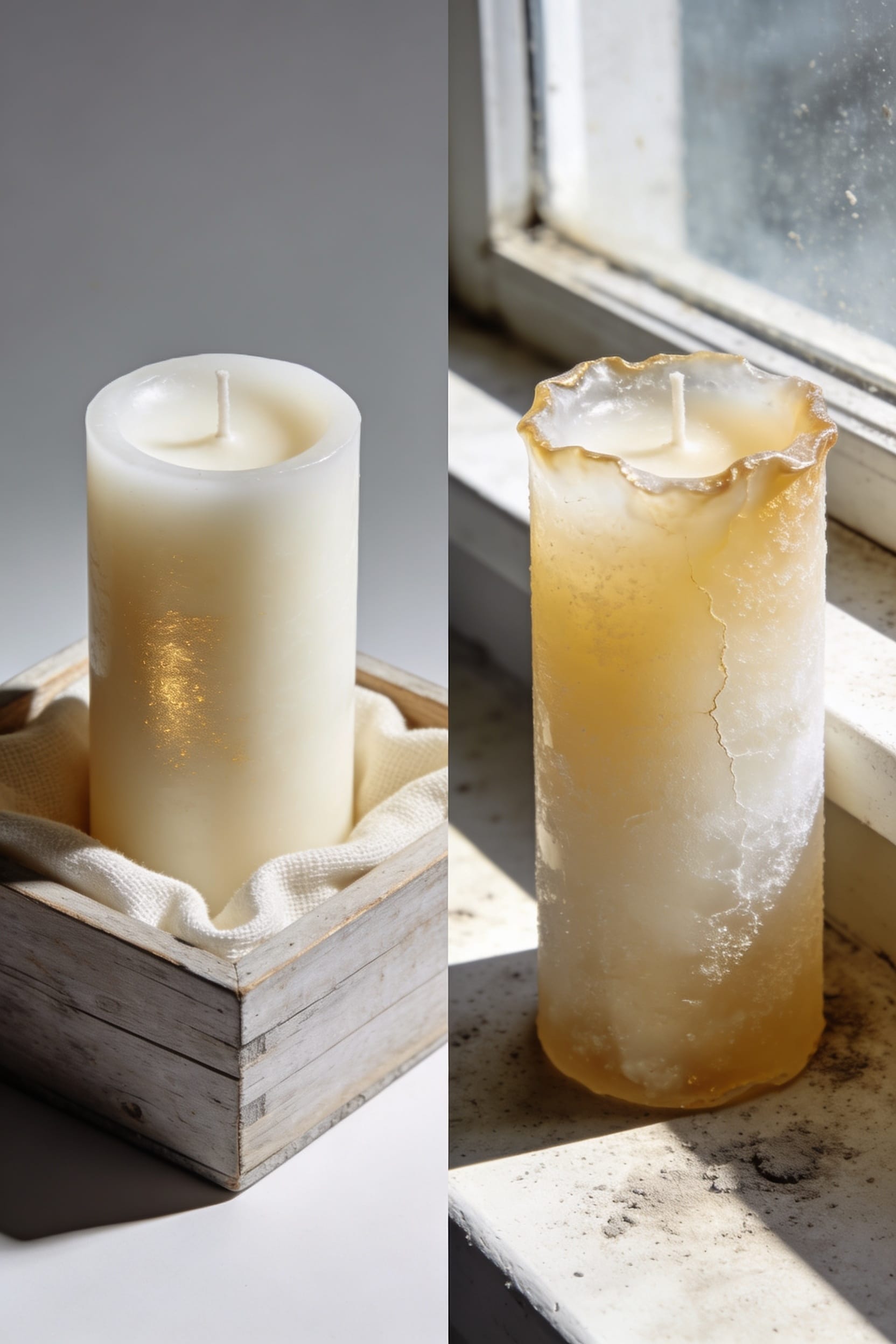
If you’ve ever pulled an old candle from the back of a closet and wondered whether it’s still any good, you already know that storage conditions matter—a lot. Climate controlled storage is genuinely your best friend here. Keep your candles in cool, dark places away from direct sunlight and UV light, which’ll fade colors and degrade fragrance oils faster than you’d think. Container selection matters too—airtight glass cloches or sealed boxes preserve scent integrity way better than leaving them exposed to air. Skip storing them near HVAC vents, fans, or bright indoor lights. Avoid humidity and temperature swings. Basically, treat your candles like you’d treat fine chocolate: stable environment, minimal disruption, and they’ll reward you with longer-lasting quality and scent.
Recommended Products

BRAND: Ucanpack | SIZE: 3x3x10 Inches | PACK: 500 Pcs

BLANK 4" x 2" MAILING LABELS - printable 10-up rectangle labels - roaded corners for easy peeling - customizable - for inkjet & laser printers
Blank 2.5 inch Round Labels - printable medium white circle labels, 12 labels per sheet, 60,000 blank labels total - compatible with inkjet and laser printers
Why Candle Fragrance Fades Over Time
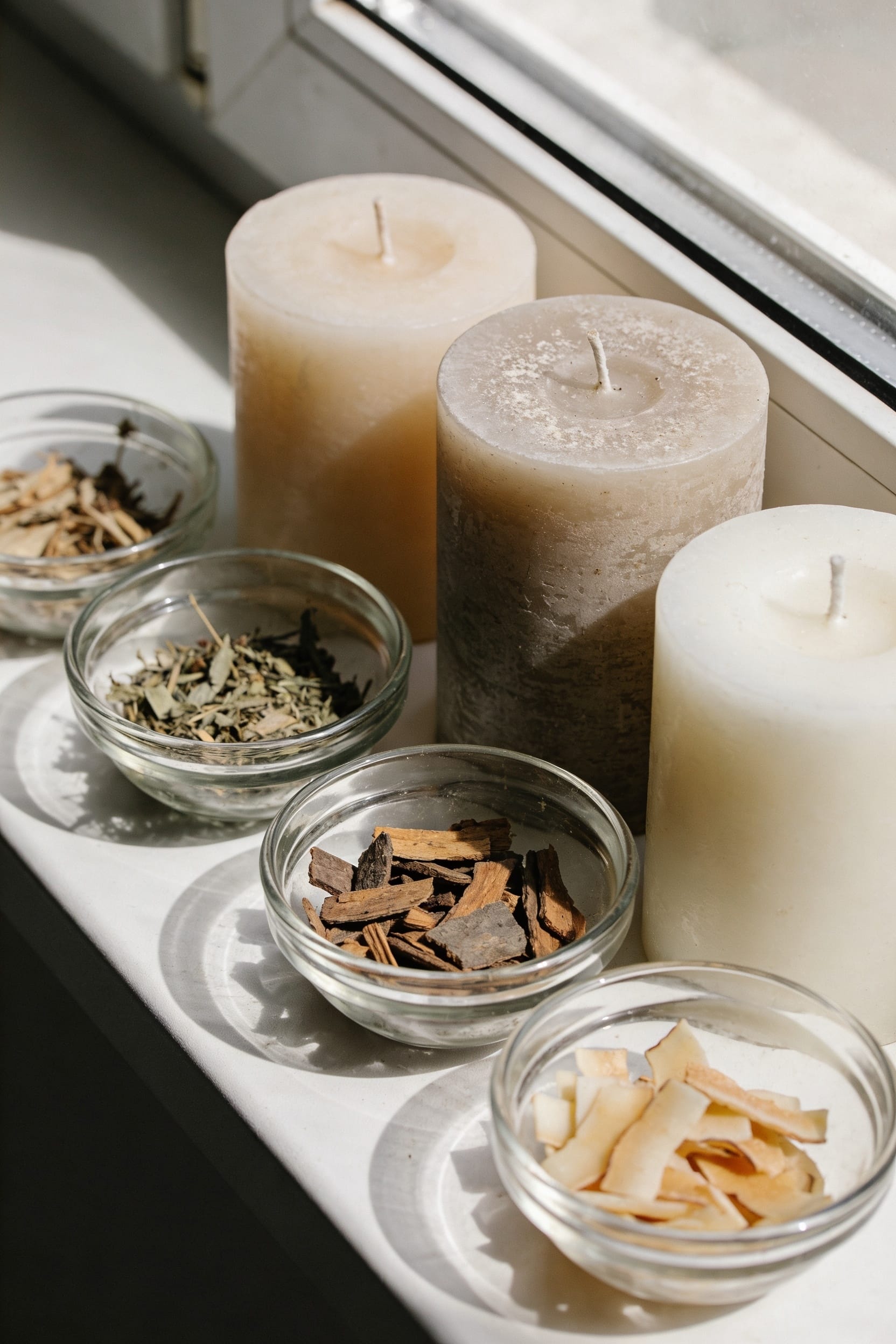
Even with perfect storage conditions, your candle’s fragrance won’t last forever—and that’s just chemistry at work. Here’s the thing: fragrance oils are volatile compounds that naturally evaporate over time, especially in your candle’s wax. That’s basic scent chemistry. Within 3-6 months, your candle loses its top notes—those bright, initial scents that hook you immediately. By year one, you’ll notice the overall potency has diminished considerably, even if it smells decent when lit. The wick interaction during burning accelerates this process too, which is why an unlit candle technically lasts longer than a burned one. A stronger fragrance load, like 8%, can extend things, but ultimately? Time wins. That’s not pessimism—it’s just how molecules behave.
What Happens to Candle Color and Appearance
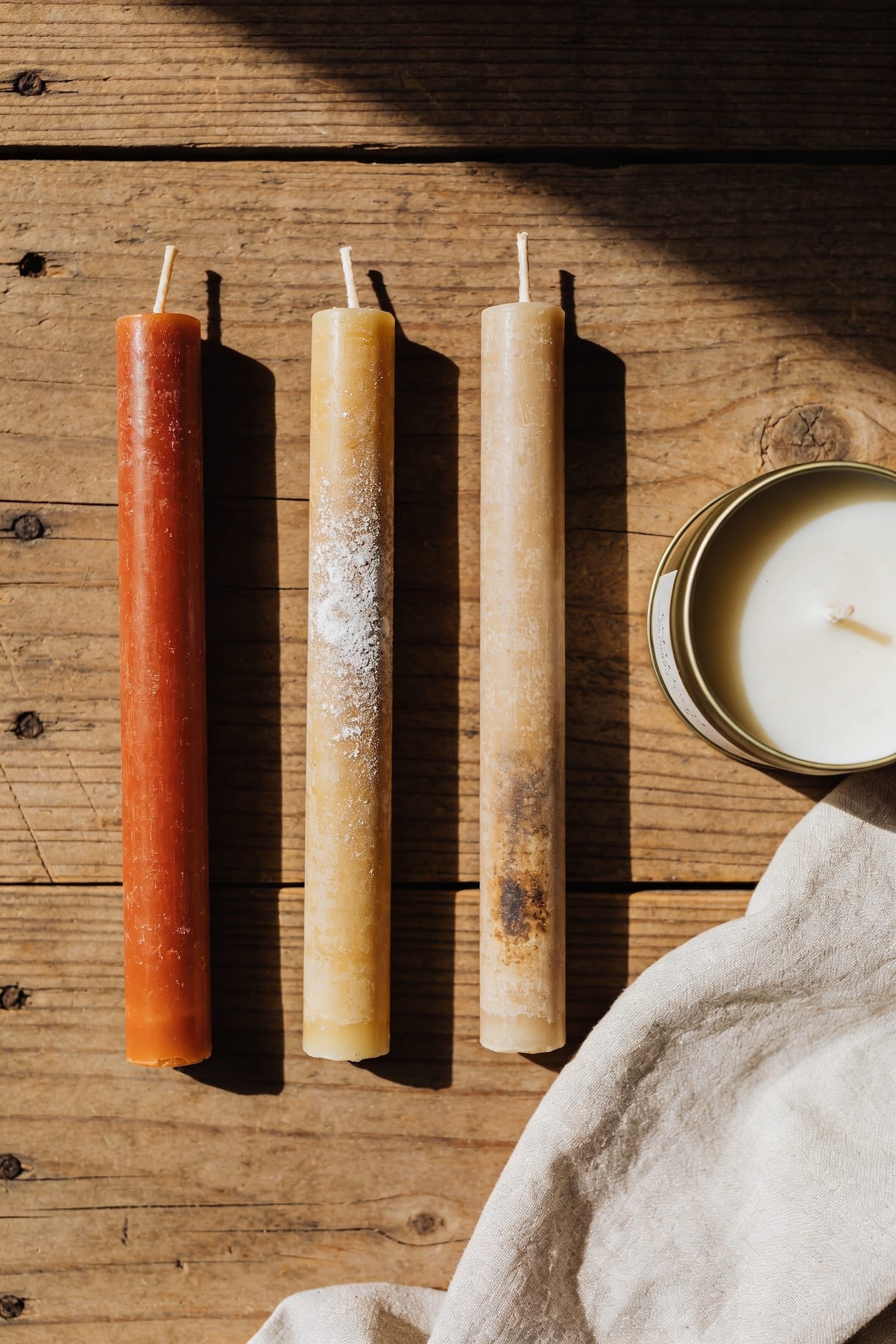
Discoloration creeps up on you when you’re not looking. I’ve watched beautiful colored candles fade to pale ghosts of themselves after sitting on a shelf. UV exposure and bright indoor lights are the culprits—they break down the pigments in your wax over time. Natural waxes like soy are particularly sensitive, developing uneven patches through what’s called wax mottling. Paraffin holds its color better, which is one reason I don’t dismiss it entirely despite its reputation. Beeswax might bloom with a white coating, but honestly, that doesn’t affect how it burns. Color fading doesn’t mean your candle’s ruined—it’ll still work fine. But if you want that vibrant appearance preserved, keep candles in cool, dark spots away from direct light for one to two years maximum.
How to Tell If Your Candle Has Expired
You can pick up on the telltale signs that your candle’s past its prime pretty quickly once you know what to look for. Start with label deterioration—if the packaging’s peeling or faded, that’s your first hint. Next, do a wick inspection; if it’s brittle, darkened, or crumbling when you touch it, the candle’s been sitting too long. Unlit candles that’ve lost their scent entirely are still burnable, but honestly, what’s the point? Check if the wax looks discolored, grainy, or developed that chalky white bloom (though that’s normal for beeswax). The real deal-breaker? When you crack it open and smell absolutely nothing. That’s your sign to let it go.
Recommended Products

Modern Round Coffee Table: The coffee table set is designed with faux mars marble pattern and featuring a simple modern design and no any frills, this circle coffee table can be naturally integrated into a variety of home decor

Beacon is a mixed material bohemian style console table with solid wood legs.
Best Practices for Storing Candles Long-Term
All right, once you’ve figured out whether your candle’s still worth burning, the next move is keeping it in tip-top shape for as long as possible—and I’m not just talking about tossing it in a drawer and hoping for the best.
I recommend creating a labeling system on your candles that notes the purchase date and wax type. This takes maybe thirty seconds but saves you from mysterious unmarked candles later. Pair that with a rotation schedule where you prioritize older candles first—use them before newer stock.
Store everything in cool, dark spots away from direct light and temperature swings. Keep lids sealed tight. I’ve learned the hard way that beeswax in a climate-controlled closet outlasts soy on a sunny shelf every single time.
Recommended Products

Blank 1.5 inch Round Labels - printable medium white circle labels, 30 labels per sheet, 150,000 blank labels total - compatible with inkjet and laser printers
Blank 2 inch Round Labels - printable medium white circle labels, 20 labels per sheet, 200 blank labels total - compatible with inkjet and laser printers

BLANK 2" x 2" SQUARE LABELS - printable square labels - rounded corners for easy peeling - 20 labels per sheet - for inkjet & laser printers
When to Burn Your Candles for Best Results
Now that you’ve got your candles stored properly and know how long they’ll last, the real question becomes: when should you actually light them? I’d recommend burning your candles within the first year of unpacking them—that’s when you’ll get the strongest fragrance and most vibrant color. Seasonal timing matters here. Light those cozy vanilla candles in fall and winter when they’ll feel most natural in your space. Summer? Go citrus and fresh. Think about ritual pairing too—burning a specific candle during your morning coffee or evening wind-down creates consistency. Honestly, don’t overthink it. Older candles are still perfectly safe to burn; they’ll just have weaker scent. The magic’s in actually using them, not collecting them indefinitely.
Are Old Candles Safe to Burn?
Because candles degrade over time, there’s understandably some concern about whether burning an old candle is actually safe—and I get it, especially if you’ve had something sitting in a closet for three years. Here’s the thing: older candles are generally safe to burn. The main fire safety consideration isn’t the age itself but the wick’s condition. Check that it’s intact and free from debris before lighting. Wax contaminants can theoretically accumulate over years, though proper storage minimizes this risk. What you’ll notice most is weakened scent and possibly faded color, not danger. That said, natural wax candles degrade faster than paraffin, so prioritize burning soy or coconut varieties within a year. Beeswax holds up longest. When in doubt, trust your instincts—if something seems off, toss it.
Recommended Products

100% Pure Beeswax Candle: Hand-poured from naturally filtered beeswax for a rich, golden glow. These clean burning candles are free from paraffin, soy, and synthetic fragrances. Each 1-wick dripless pillar candle features natural cotton candle wicks and pure candle wax for a long-lasting burn and warm, cozy candle light.

Industrial 67 Lbs Capacity Wax Melting Pot Pro Package Model: Includes Large Spout, Lid, Pouring Pot, Stirring Spoon. Cutting-edge technology ensures rapid melting of soy wax, paraffin, coconut, and beeswax for efficiency. It's perfectly suitable for most Wax types and Melt & Pour soap bases. Its user-friendly temperature guage allows temperature adjustment from from low to high temperature which maintains roughly 100 - 350 degrees Fahrenheit.

65 LBs Capacity Wax Melting Pot Pro Package Model: Includes Large Spout, Lid, Pouring Pot, Stirring Spoon. Cutting-edge technology ensures rapid melting of soy wax, paraffin, coconut, and beeswax for efficiency. While it can't be used for lye soap making due to aluminum's reactivity with lye, it's perfectly suitable for Melt & Pour soap bases. Its user-friendly temperature guage allows temperature adjustment from from low to high temperature which maintains roughly 100 - 350 degrees Fahrenheit.
Frequently Asked Questions
Can I Restore the Scent of an Old Candle That Has Faded Significantly?
I can’t truly restore a faded candle’s scent, but I’d suggest trying scent layering with reed diffusers nearby or repurposing the wax. You’re better off replacing markedly degraded candles for peak fragrance enjoyment.
How Does Humidity Specifically Affect Different Types of Candle Wax During Storage?
I’ll tell you that high humidity damages candles differently. Paraffin crystallization occurs when moisture causes texture changes, while soy wax absorption makes it soften and degrade faster. You’ll want to store both in dry environments.
What’s the Difference Between Bloom on Beeswax and Mold Growth on Candles?
I’ll tell you: beeswax bloom’s a harmless white coating that forms naturally and doesn’t affect burning quality. Candle mold, however, indicates moisture damage and shouldn’t be burned—it’s genuinely harmful to your health.
Can Sealed Candles in Original Packaging Last Longer Than Loose Stored Candles?
Yes, sealed candles in original packaging last markedly longer. I’d recommend keeping manufacturer seals intact because airtight packaging preserves fragrance oils and prevents scent evaporation that loose storage can’t protect against.
Does Freezing Candles Extend Their Shelf Life and Preserve Fragrance Better?
I’d love to tell you that freeze testing proves freezing’s a miracle cure, but honestly, I can’t recommend it. Cold temperatures won’t meaningfully extend shelf life or improve scent retention compared to cool, dark storage.
Conclusion
Look, I’ve learned the hard way that candles aren’t immortal—they’re more like fine wine than furniture. You’ve got years to burn them if you store them right, but fragrance fades and wax ages like the rest of us. Don’t let that old three-wick sit in sunlight for five years, then wonder why it’s lost its magic. Use them, enjoy them, and don’t overthink it.