As an Amazon Associate, we earn from qualifying purchases. Some links on this site are affiliate links at no extra cost to you. Our recommendations are based on thorough research and editorial judgment.

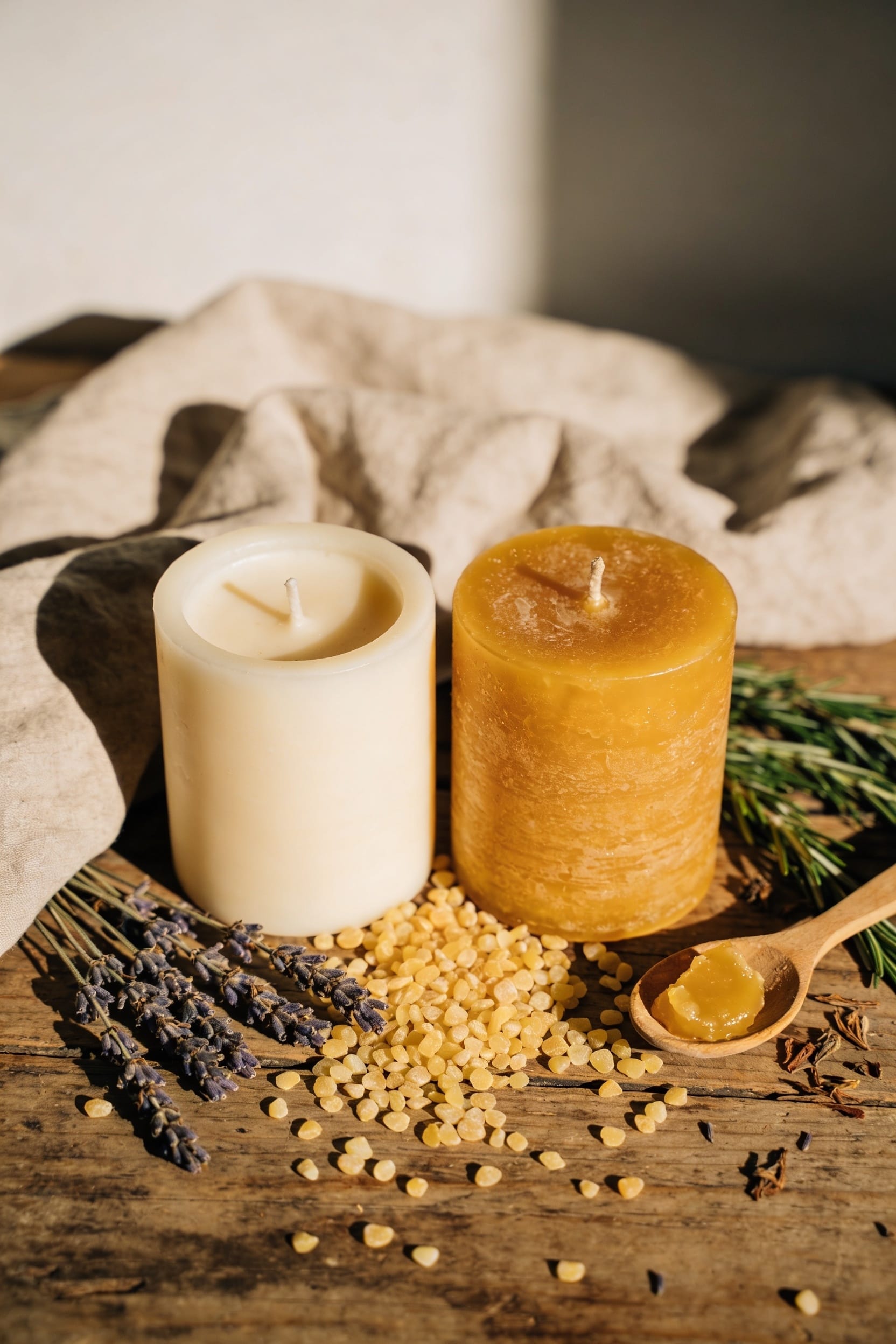
Soy Candle vs Beeswax: Which Is Better for Home Use?

All right, here’s the thing: beeswax burns 30–50% longer than soy and releases a natural honey scent without needing fragrance oils. It also burns cleaner with virtually no soot and reportedly releases negative ions that can help with air quality—a real advantage if you’ve got allergies. Soy’s your budget pick though; it holds fragrance better and costs less upfront. Your choice depends on whether you’re prioritizing burn time and air purity or bold scents and affordability. Stick around to see which actually wins for your specific situation.
Key Takeaways
- Beeswax burns 30–50% longer than soy, offering better long-term value despite higher upfront costs.
- Beeswax produces minimal soot and residue, requiring less maintenance than lower-quality soy candles.
- Soy candles excel at holding and throwing bold fragrances; beeswax offers subtle natural honey aroma.
- Beeswax releases negative ions that bind to allergens and pollutants, improving air quality naturally.
- Choose beeswax for efficiency and air purification; select soy for affordability and fragrance customization.
How Much Longer Does Beeswax Burn Than Soy?
if you’re weighing beeswax against soy purely on burn time, beeswax wins—and it’s not even close. I’m talking 30-50% longer lifespan. A 100-gram beeswax candle burns roughly 29 hours, while soy manages about 18 hours. That difference matters when you’re thinking energy efficiency and value.
The secret? Melting dynamics. Beeswax has a higher melting point—around 62-64°C—which means it burns slower and more deliberately. Soy’s lower density can’t compete with that density and composition. You’ll notice the ambient warmth and consistency too. Beeswax maintains a steadier flame, creating that reliable glow night after night. Soy’s perfectly respectable for occasional use, but if you want candles that genuinely last, beeswax’s longer burn justifies its premium price tag.
Recommended Products

Religious Supply Center

Religious Supply Center

Which Wax Burns Cleaner Without Soot?
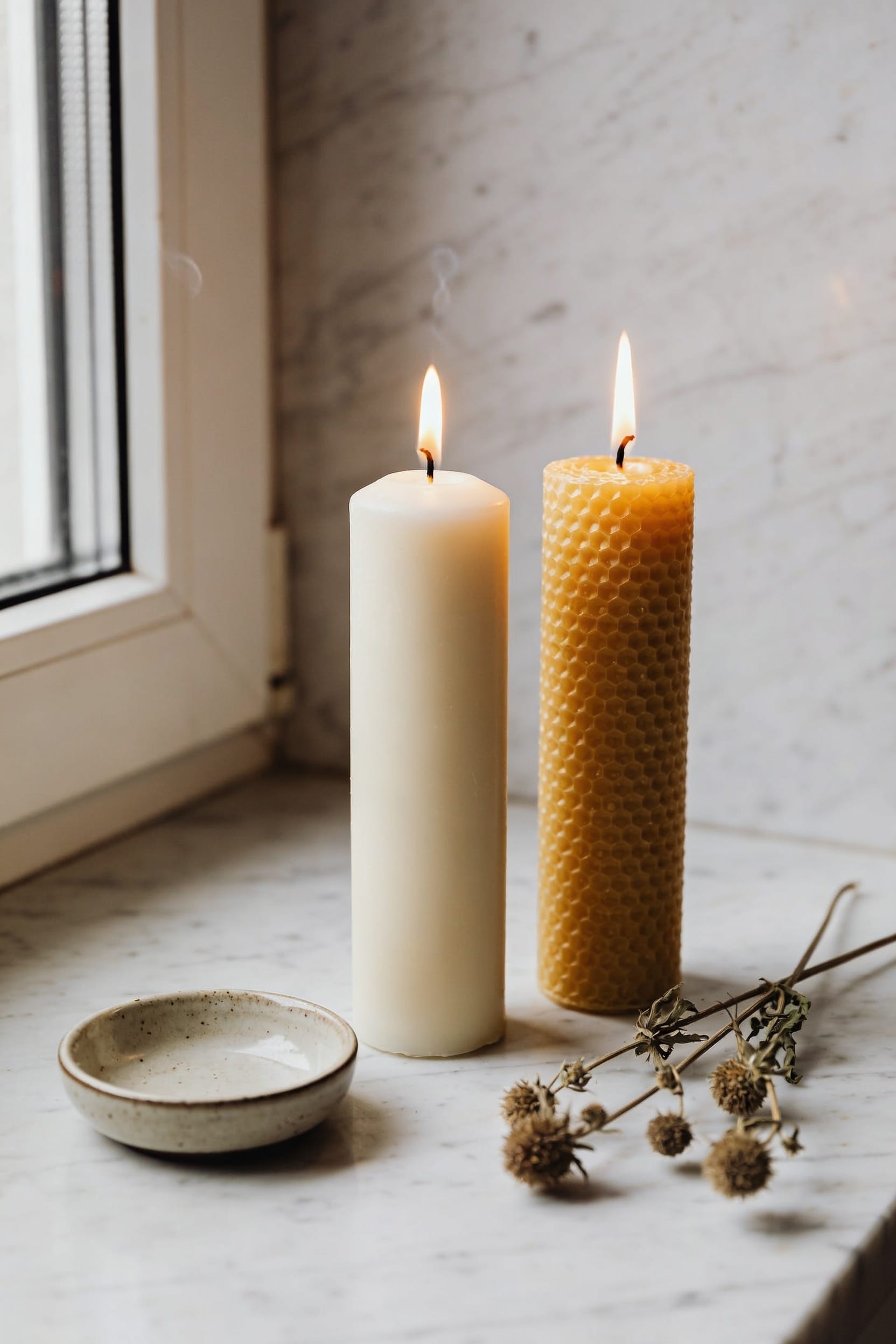
Now, when it comes to soot—that stubborn black residue that creeps up your walls and dims your ceiling—both soy and beeswax leave paraffin in the dust. Here’s the thing: beeswax burns cleaner with little to no soot, thanks to its higher density and molecular composition. You’ll notice minimal residue accumulating over time. Soy performs well too, burning cleaner than paraffin, though lower-quality soy candles may produce some combustion byproducts depending on additives. I’ve learned that the difference becomes obvious after weeks of burning. If air quality matters to you—especially with allergies or asthma—beeswax wins decisively. For everyday burning without worry about emissions buildup, soy remains a solid, conscientious choice.
Recommended Products
Religious Supply Center
Religious Supply Center

DIMENSIONS: 22cm x 5-6mm SKINNY (9" by 7/32 inch); Height: 22 cm (9 inches), thickness at base: 0.21 inch (5-6mm): 22cm x 7mm (9" by 5/16 inch); Height: 22 cm (9 inches), thickness at base: 0.28 inch (7mm); 27cm x 7mm (11" by 5/16 inch); Height: 27 cm (11 inches), thickness at base: 0.28 inch (7mm); 32cm x 7mm (13" by 5/16 inch); Height: 32 cm (13 inches), thickness at base: 0.28 inch (7mm);
How Do Scent and Natural Aroma Compare?
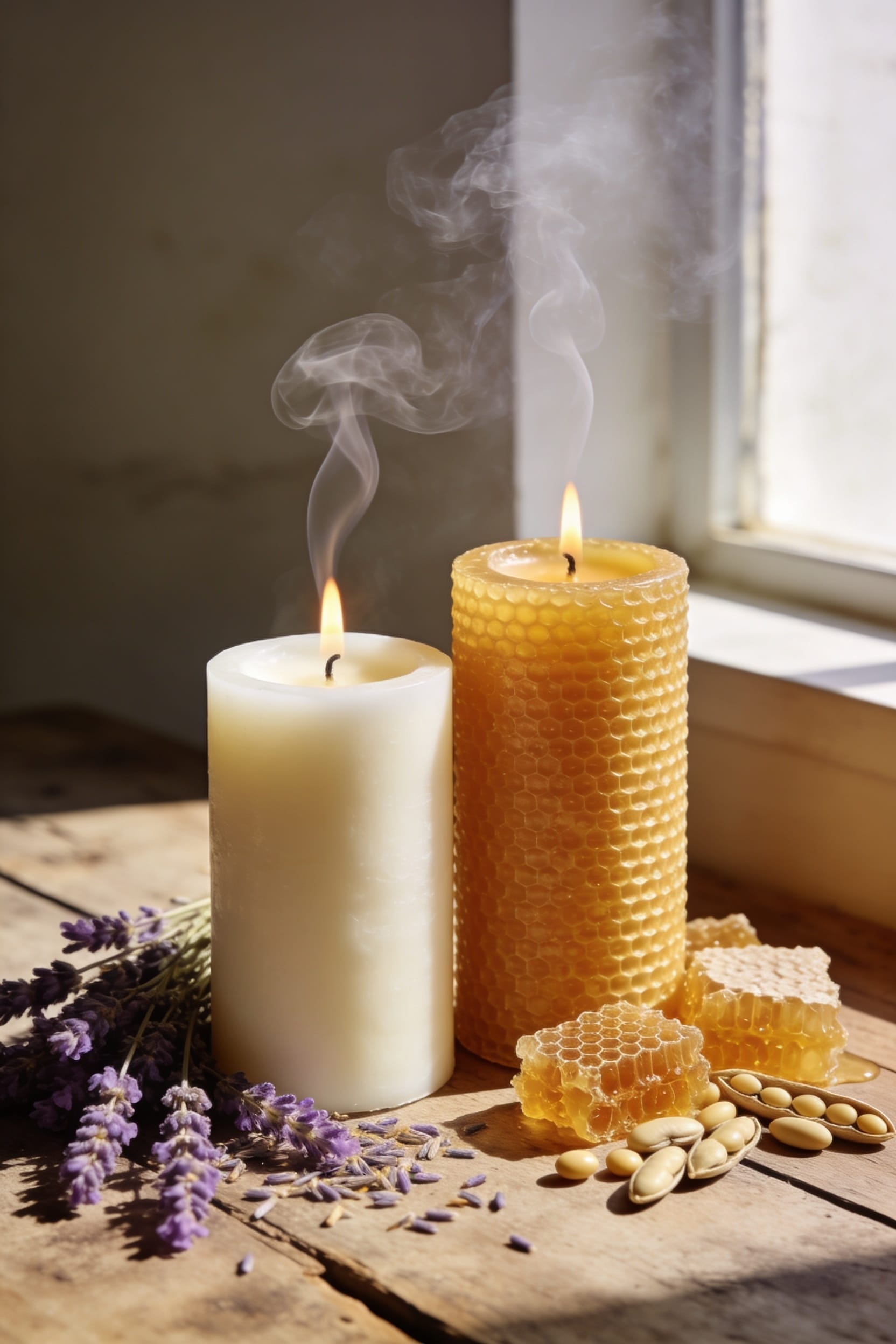
Scent throw is where these two waxes diverge in really interesting ways. Look, soy candles excel at fragrance retention. They hold fragrance oils beautifully, giving you that consistent, robust scent throw you’re after when you want your space smelling like vanilla or lavender or whatever you’re into. Beeswax takes a completely different approach. It emits this subtle natural honey aroma without needing added fragrance—and honestly, that’s kind of the point. When you do add fragrance to beeswax, the scent throw gets limited compared to soy. But here’s the thing: that natural honey character makes beeswax ideal if you’ve got sensitivities. You get a hypoallergenic experience. So pick soy if you want bold, layered aromas. Choose beeswax if you prefer understated, pure scent.
Recommended Products

SCENT - Chamomile Lavender features lavender with warm & enveloping bergamot. Calming chamomile melts into a heart of eucalyptus to create a feeling of well-being. Smoky patchouli is enhanced by hints of sage & rosemary for a quiet, relaxing finish.

MASSIVE 8" × 14" LUXURY CANDLE – 300 OZ OF NATURAL COCONUT SOY WAX Make a statement with this Classic Big Ass Candle—our largest candle. This luxury candle delivers bold presence, elegant style, and room-filling fragrance. Perfect as a centerpiece for living rooms, great rooms, and upscale spaces.

UNIQUELY HANDMADE: Perfect for a relaxing ambiance! Each scented candle is crafted from real wood, providing a unique and sustainable touch. Heart shape elevates aesthetic!
Does Beeswax Purify Air Better Than Soy?
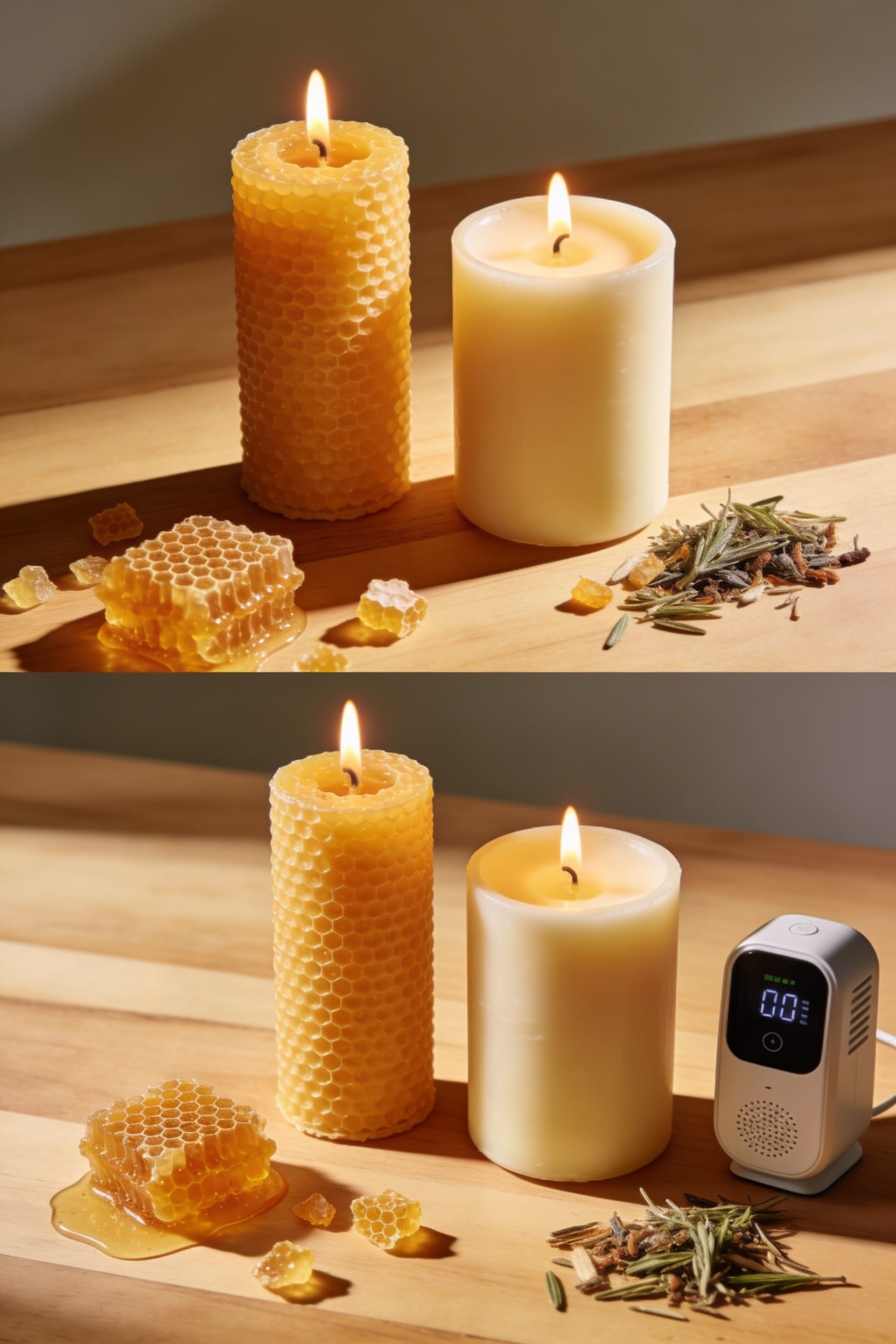
Diving into the air-purifying benefits of beeswax versus soy reveals a pretty stark difference between the two. Here’s the thing: beeswax actually releases negative ions as it burns, and those ions bind to allergens, dust, and pollutants floating around your space. If you’ve got allergies, asthma, or sensitivities, that’s genuinely helpful. Soy doesn’t do this. It’s non-toxic with low emissions, sure, but it won’t purify your air the way beeswax will.
Now, I’m not saying you need beeswax candles to breathe easier—that’d be overselling it. But if air quality matters to you, beeswax has a real advantage. You’re fundamentally getting a candle that smells amazing naturally while working quietly to clean things up.
Soy vs Beeswax: Long-Term Home Candle Costs
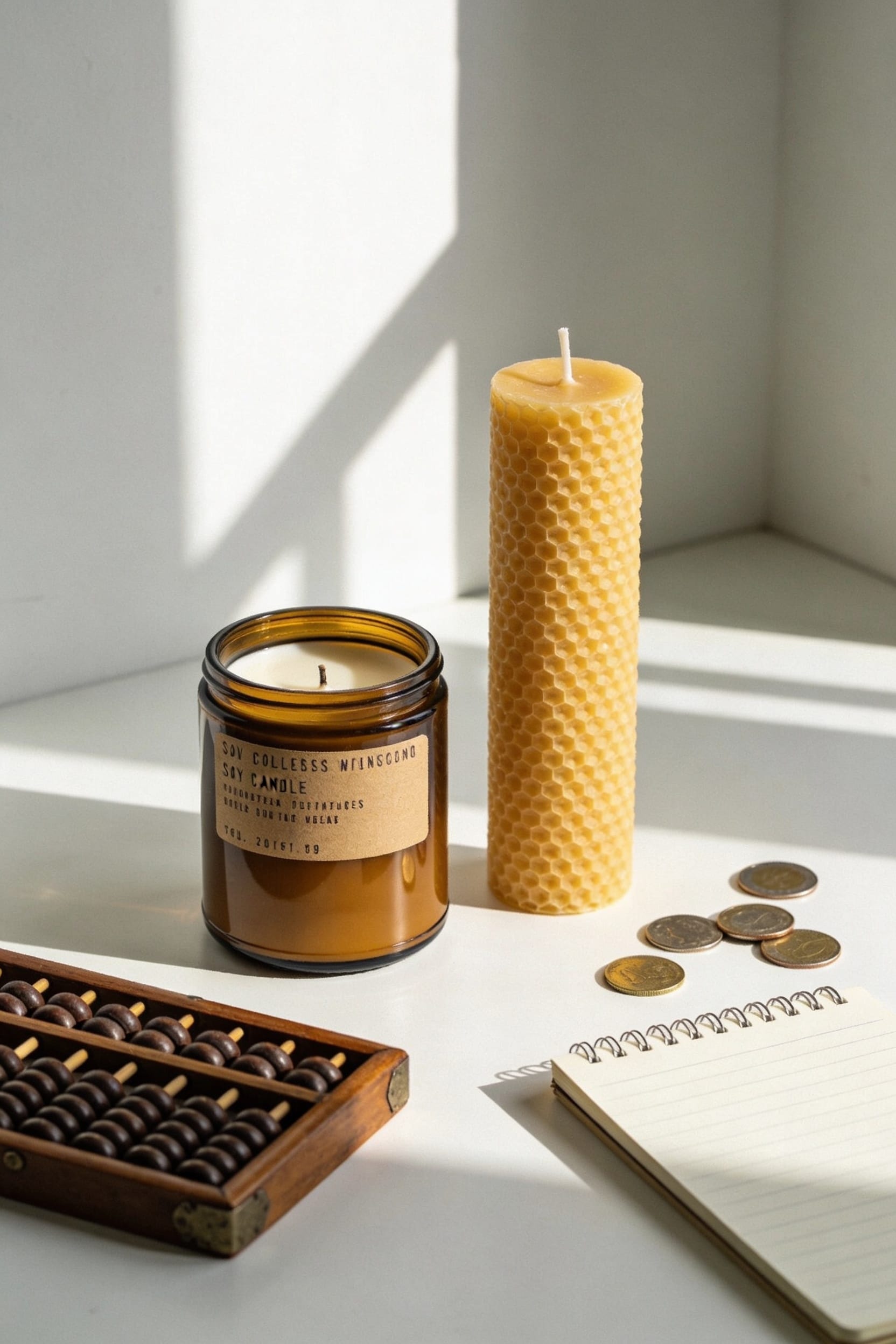
Let’s cut through the noise on this one: beeswax costs more upfront, but the math gets interesting when you’re thinking about keeping candles burning in your home month after month. Here’s the thing—that price comparison looks different over time. A beeswax candle runs you appreciably more per unit, yet burns 30-50% longer than soy. For a 100g candle, you’re getting roughly 29 hours from beeswax versus 18 from soy. When you factor in maintenance costs—meaning fewer replacements you’ll need—beeswax becomes surprisingly economical long-term. Soy wins for daily use on a tight budget. But if you’re serious about filling your space consistently, beeswax’s extended burn time eventually justifies the premium investment.
Recommended Products

🐝[Sustainable Alternative] Natural and sustainable alternative to traditional hunny bees wax melts. These melts offer a clean burn and a warm, inviting scent that's perfect for any home. 50 lbs white beeswax pellets available to fulfill all needs.

100% Pure Beeswax Candle: Hand-poured from naturally filtered beeswax for a rich, golden glow. These clean burning candles are free from paraffin, soy, and synthetic fragrances. Each 1-wick dripless pillar candle features natural cotton candle wicks and pure candle wax for a long-lasting burn and warm, cozy candle light.

BURNING TIME: 22cm (9 inches) SKINNY - approximately 1 hour; 22cm (9 inches) - approximately 1 - 1.5 hours; 27cm (11 inches) - approximately 1.5 - 2 hours; 32cm (13 inches) - approximately 2 hours; For maximum burn time place the candles in an area with minimal air movement. Avoid drafty areas such as near open windows, vents, or fans.
Which Candle Wax Is Right for Your Home?
The choice between soy and beeswax isn’t really about which one’s objectively better—it’s about what matters most in your specific space. Think about candle placement first. If you’ve got allergies or asthma, beeswax’s air-purifying properties make it worth the premium price. For everyday burn sessions in your bedroom or kitchen, soy’s affordability wins out. Consider maintenance tips too. Beeswax leaves minimal residue, while soy requires occasional cleanup. Decor compatibility matters when you’re styling shelves—beeswax’s natural honey glow pairs beautifully with minimalist setups, whereas soy candles showcase whatever vessel you choose. Finally, prioritize candle safety by keeping both away from drafts and curtains. Your choice really depends on whether you’re optimizing for air quality, budget, or aesthetic longevity.
Recommended Products

100% Pure Beeswax Candle: Hand-poured from naturally filtered beeswax for a rich, golden glow. These clean burning candles are free from paraffin, soy, and synthetic fragrances. Each 1-wick dripless pillar candle features natural cotton candle wicks and pure candle wax for a long-lasting burn and warm, cozy candle light.
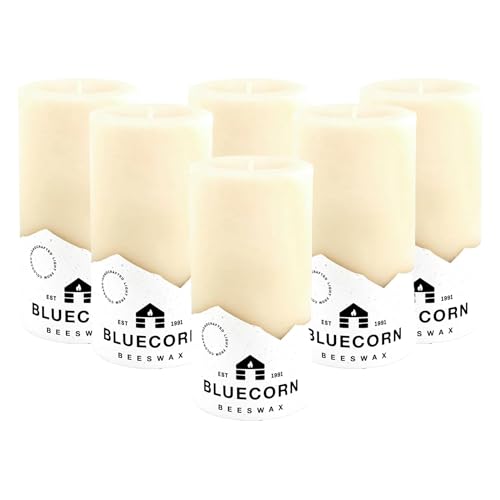
100% Pure Beeswax Candles — Non Toxic & Hypoallergenic: Hand-poured from naturally filtered beeswax for a truly unscented, hypoallergenic white beeswax candle. Each pure beeswax candle features a cotton wick for a clean, dripless burn, completely free from paraffin, soy and synthetic fragrances. A natural, non toxic candle alternative that adds warm, cozy candlelight to any setting.

Value Pack: you will get 72 pieces of ivory white pillar candles in 3 sizes, 24 pieces for each size, which are securely packed in a sturdy cardboard box to ensure the candles arrive neatly packed and intact; Suitable for a variety of uses and ideal for setting the mood, these candles are sturdy, decorative and functional for your everyday needs
Frequently Asked Questions
Are Soy Candles Environmentally Friendly Given Deforestation Linked to Soy Production?
I’d say soy candles aren’t entirely environmentally friendly. While they’re renewable and biodegradable, the soy industry’s land use impacts—particularly deforestation and habitat destruction—significantly undermine their sustainability unless you’re choosing sustainably sourced options.
Can You Add Fragrance Oils to Beeswax Candles Effectively?
I’d say you can add fragrance oils to beeswax, but they’re not ideal. You’ll find beeswax has a limited fragrance load and poor scent throw compared to soy. I’d recommend enjoying beeswax’s natural honey aroma instead.
Is Beeswax Suitable for People With Allergies and Sensitivities?
I’d say beeswax is nature’s gentle whisper for sensitive souls. It’s hypoallergenic, releasing negative ions that trap allergens while your immune response stays calm. You’ll find it’s ideal for allergies and asthma sufferers seeking relief.
How Does Soy Wax Compare to Paraffin in Burn Time?
I’d say soy wax delivers longer burns than paraffin—about 18 hours versus 15 hours for 100g candles. You’ll also notice soy produces less soot, making it cleaner for your home’s air quality.
Which Candle Wax Is Easier to Clean up After Use?
I’ll tell you straight: soy’s your winner for cleanup. It’s softer, so spill removal’s easier—you’ll scrape less than beeswax. Plus, wick trimming produces minimal residue. Beeswax hardens stubbornly, making both tasks messier and more tedious.
Conclusion
Look, I won’t sugarcoat it—neither wax is a silver bullet. You’re choosing between trade-offs: beeswax’s longevity and air-purifying claims versus soy’s sustainability and affordability. What works for your home depends on what matters most to you. I’ve burned both extensively, and honestly? The best candle is the one you’ll actually light. Start with what fits your budget and values, then adjust from there.