As an Amazon Associate, we earn from qualifying purchases. Some links on this site are affiliate links at no extra cost to you. Our recommendations are based on thorough research and editorial judgment.

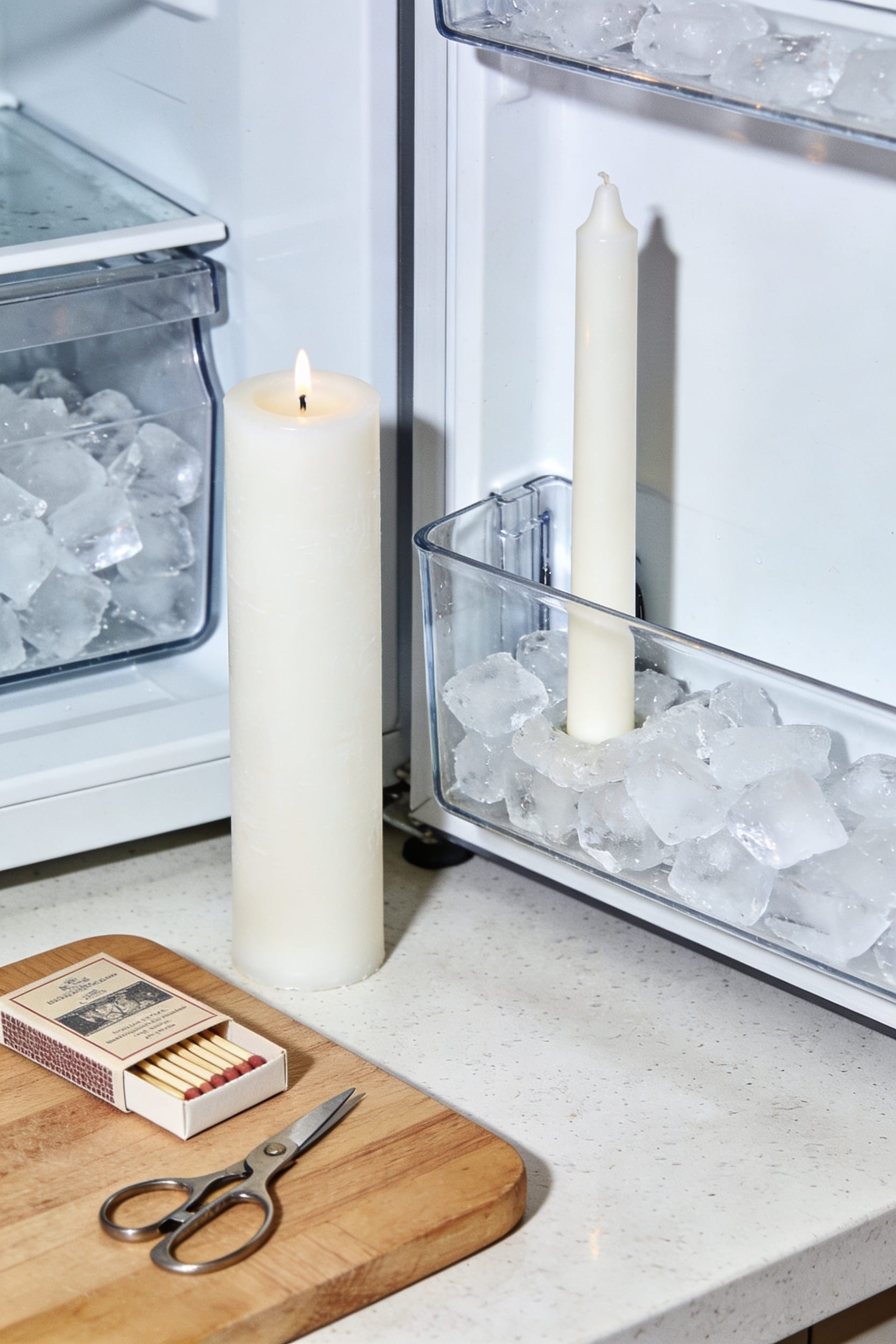
Should You Put Candles in the Fridge? The Real Answer

All right, here’s the thing: don’t refrigerate your candles. I learned this the hard way. Cold storage causes moisture buildup that weakens wicks, temperature swings crack wax, and your candles absorb food odors that tank scent throw. The myth that chilling extends candle life? It doesn’t work that way. Room temperature between 65–75°F in a dark cabinet keeps them pristine. Store them upright, keep them organized, and skip the fridge entirely—but there’s actually one brief exception worth knowing about.
Key Takeaways
- Refrigeration causes moisture buildup, wick deterioration, and wax cracking, damaging candles rather than preserving them.
- Room-temperature storage between 65–75°F maintains scent potency and consistent burn performance without compromising candle quality.
- Cold storage claims about doubling candle life are myths; longevity depends on ingredient quality and wick size.
- Store candles in cool, dark cabinets away from heat sources to prevent warping, sinkholes, and uneven shrinkage.
- Brief chilling during candle making aids mold release, but extended refrigeration causes surface defects and moisture damage.
Room Temperature Is Better Than Your Fridge
All right, here’s the thing—I know the fridge sounds appealing. But room temperature actually gives you something the cold can’t: ambient stability. Your candle thrives in steady conditions between 65-75°F, where wax holds its shape and fragrance oils stay put. The fridge? It messes with humidity control, introducing moisture that damages wicks and creates wet spots on your container’s interior. Cold also risks cracking the wax and glass. I’ve seen beautiful candles ruined by temperature swings. You want your storage spot dark, cool, and consistent—think a closed cabinet away from heat sources. That’s where your candles stay intact, scents stay potent, and you avoid the shrinkage and sinkholes that come with extreme temperature fluctuations.
Why Your Fridge Damages Candles

Now, I want to be straight with you—the fridge doesn’t just fail to preserve your candles the way you’d hope it does. It actively damages them. The moisture buildup inside your fridge creates real problems. You get wick deterioration almost immediately, with the fiber weakening and becoming unreliable when you finally light it. That humidity also causes surface damage—wet spots, sinkholes, and wax that shrinks unevenly as temperatures fluctuate. The extreme cold risks cracking your wax and compromising glass containers. Beyond the physical damage, your candle absorbs food odors unless you seal it in a container, which defeats the purpose. Your scent throw weakens too. Store your candles in a cool, dark cabinet instead. You’ll preserve everything that makes them worth burning.
Recommended Products

BRAND: Ucanpack | SIZE: 3x3x10 Inches | PACK: 500 Pcs

BLANK 4" x 2" MAILING LABELS - printable 10-up rectangle labels - roaded corners for easy peeling - customizable - for inkjet & laser printers

Blank 2.5 inch Round Labels - printable medium white circle labels, 12 labels per sheet, 60,000 blank labels total - compatible with inkjet and laser printers
The Myth About Cold Storage Making Candles Last Longer

You’ve probably heard someone claim that chilling a candle before you burn it makes it last twice as long, and I get why that sounds plausible—cold wax is denser, so theoretically it should burn slower and more evenly, right? Here’s the thing: that’s not how scent chemistry or wax crystallization actually works. While cold does temporarily compact the wax, it doesn’t fundamentally change how your candle burns. The real problem? Refrigeration damages the wick, encourages moisture buildup, and can crack the wax itself. Your candle’s longevity depends on quality ingredients, proper wick size, and room-temperature storage—not a cold shock. Skip the fridge. Store your candles cool and dark instead, and they’ll perform exactly as intended.
Recommended Products

The White Pearls: The White Pearls scented candle, inspired by the purity and symbolism of pearls often regarded as "tears of the gods," features light pink and white fragments, reflecting their association with love and perfection

LUXURY DESIGN: Hand-blown glass vessel featuring sophisticated marble-like patterns in refined colors, making each piece uniquely beautiful

Fine fragrances containing a high dose of natural ingredients can be subject to slight variations; In the same way wines vary from year to year, so can perfume; This is a natural occurrence and something that gives life to the perfume; If you're hesitant or unhappy with your purchase, we will gladly assist you
How to Store Candles Properly
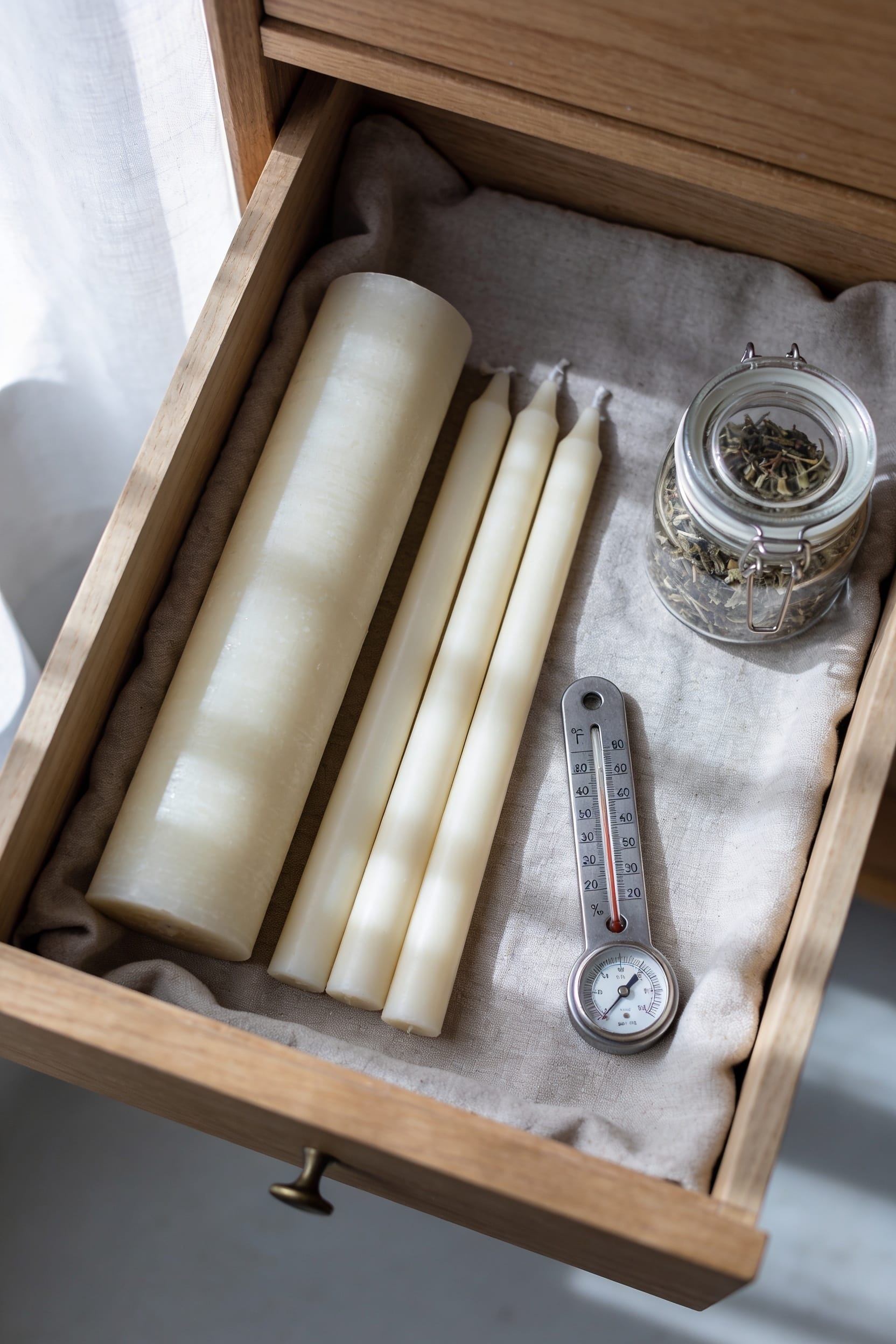
So we’ve established that the fridge isn’t your candle’s friend—but that doesn’t mean you should just leave them anywhere and hope for the best. Look, proper storage is genuinely simple. Find a cool, dark cabinet away from heat sources like radiators or sunny windowsills. Keep your candles upright; stacking them invites bent wicks and warped shapes. For container selection, choose sturdy boxes or shelves that protect from dust and light exposure. I’d recommend storing them between 60-75°F for ideal preservation. If you’re experimenting with scent layering across multiple candles, organize them by fragrance family so you’re not accidentally blending competing notes. Room temperature beats refrigeration every single time—your candles will thank you with consistent burns and lasting scent throw.
Recommended Products

🔥 SMART DIGITAL CONTROL: The smart 28 inch electric fire box fits perfectly into the mantel surround and also pairs with the Tuya Smart App or with Amazon Alexa. Remote control included.

PRODUCT: Hosley's Storage Memory Book Boxes Set of 3 Red Gold Decor Accents Large 12", Medium 10" Small 8" High Geo Euro Farm Pattern

Tune: 18 note movement (please choose above option for available song titles)
The Exception: When Brief Chilling Actually Helps
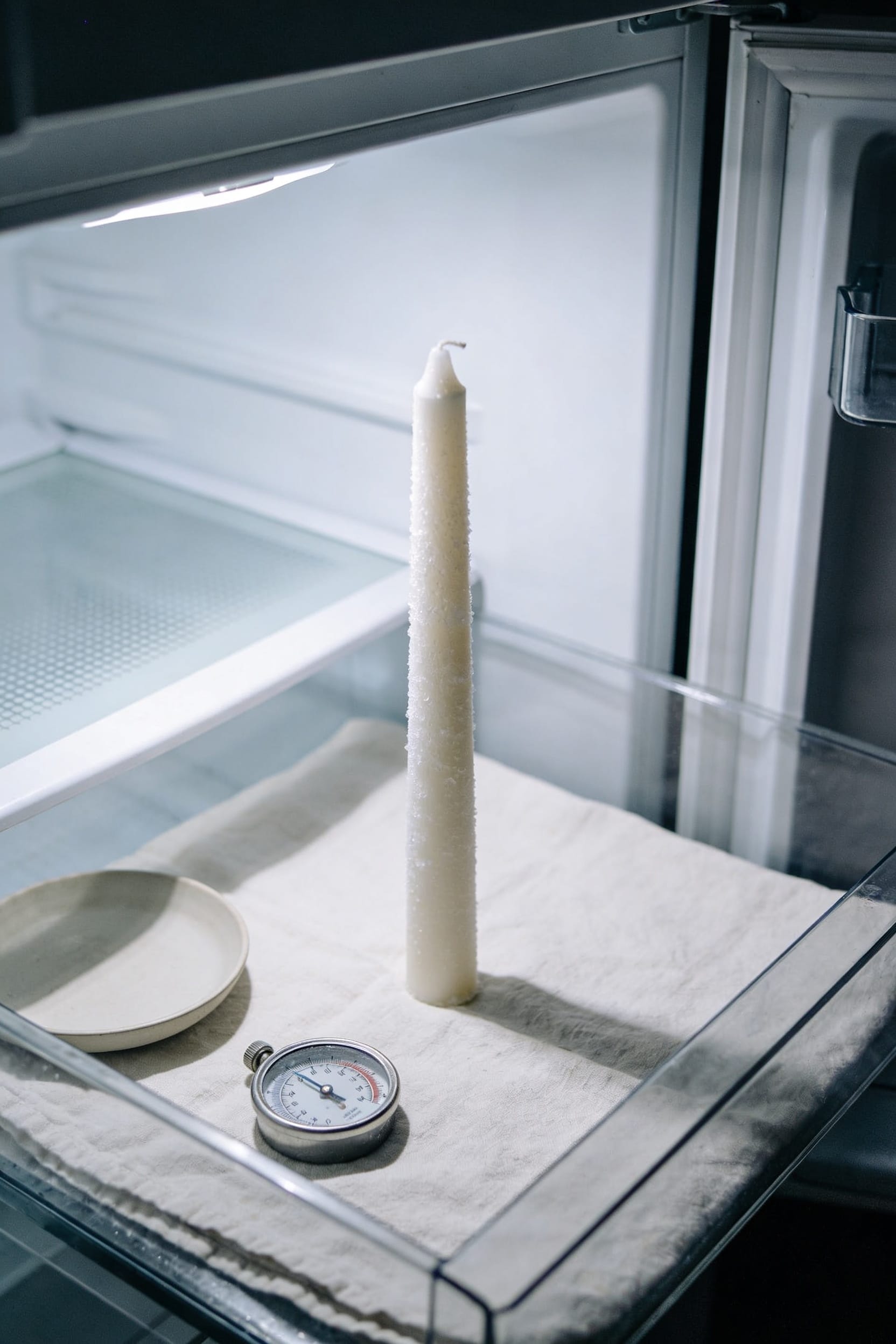
While the fridge isn’t ideal for long-term candle storage, there’s actually one scenario where brief chilling can work in your favor—and I’m talking about candle making, not the finished product sitting on your shelf. When you’re pouring pillar or votive candles, a quick 5-10 minute chill helps with mold release, making it easier to pop your creation out without damage. The cold firms up the wax just enough. Here’s the thing: you’re also giving yourself a window to check wick alignment before the wax fully sets. That matters. Just don’t overdo it. Extended refrigeration causes moisture buildup, wax cracking, and surface defects you’ll regret. Treat the fridge as a precision tool during making, not storage.
Frequently Asked Questions
Can I Store Scented Candles in the Freezer Instead of the Refrigerator?
I’d strongly advise against freezer storage. The extreme cold risks freezer bloom, wax cracking, and wick damage. You’ll compromise scent preservation and potentially ruin your candles. Room temperature storage’s your best bet for longevity.
How Long Can Candles Be Safely Stored at Room Temperature Without Quality Degradation?
I’d love to tell you candles last forever at room temperature, but they don’t. I’ve found that proper storage indefinitely preserves scent longevity and prevents wick degradation—if you maintain cool, dark conditions consistently. That’s your real challenge.
Will Refrigerating Candles Before Gifting Them Improve Their Appearance or Performance?
I wouldn’t refrigerate candles before gifting them. While you might see a temporary appearance boost, you’ll risk moisture damage, wick integrity issues, and weakened burn performance that’ll disappoint your recipient.
What Temperature Range Is Considered Ideal for Long-Term Candle Storage?
I’ll keep your candles’ lifespan burning bright by recommending cool storage between 60-75°F with stable humidity levels. This temperature range prevents wax softening, fragrance loss, and moisture damage while preserving your candles indefinitely.
Can I Recover a Candle That Absorbed Food Odors From Refrigerator Storage?
I’d recommend odor masking through remelting your candle with fresh fragrance oils, though complete wax purification isn’t practical. Prevention’s easier—store candles sealed in bags or containers to avoid absorbing food odors initially.
Conclusion
I used to think cold storage was the secret. Turns out, I was wrong—and your fridge? It’s actually your candle’s enemy. Room temperature keeps wax stable while refrigeration causes cracking and bloom. Yet sometimes a brief chill helps with even burning. The paradox is real: what seems logical isn’t always best. Store yours cool and dark, away from heat, and you’ll finally stop second-guessing yourself.