As an Amazon Associate, we earn from qualifying purchases. Some links on this site are affiliate links at no extra cost to you. Our recommendations are based on thorough research and editorial judgment.

When Were Candles Invented? A Complete History Timeline

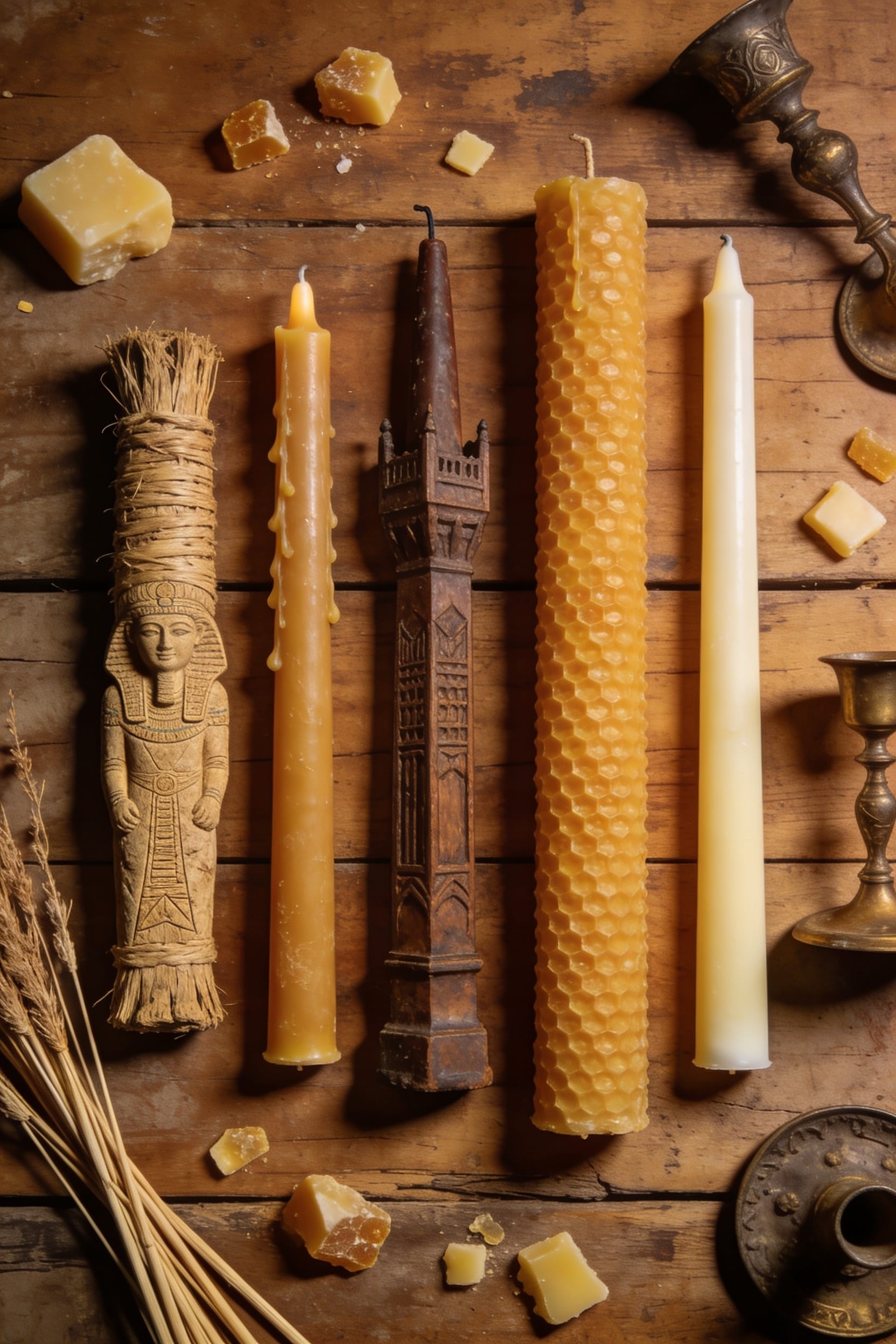
All right, candles didn’t just appear—they evolved over roughly 5,000 years. Ancient Egyptians started with reed torches soaked in animal fat around 3000 BC, then Romans added wicks for better control. For centuries, most people burned cheap, smoky tallow while the wealthy enjoyed beeswax. The real shift? Chemistry and industry. Spermaceti from whaling, then stearic acid and paraffin in the 1800s made quality candles affordable for everyone. By the late 1900s, candles went from luxury to everyday essential—and that’s just the foundation for what modern candle culture became.
Key Takeaways
- Ancient Egypt (~3000 BC) first used reed torches soaked in melted animal fat for ritual and nighttime lighting purposes.
- Romans invented the wick by rolling papyrus and dipping it in tallow or beeswax for controlled flames.
- Paraffin wax (1850s) emerged as affordable, clean-burning alternative derived from crude oil refinery byproducts.
- Joseph Morgan’s 1834 machine produced 1,500 candles hourly, enabling mass production and democratizing candle accessibility.
- Candles transitioned from luxury items reserved for wealthy households to everyday essentials by the late 1800s.
The Earliest Candles: Ancient Egypt and Beyond (3000 BC)
Before you ever light a luxury soy candle or hand-pour paraffin into a mould, understand that we’ve been burning stuff for light for roughly 5,000 years—and honestly, those ancient Egyptians were working with what they had. Around 3000 BC, they created the first known candles by soaking reed torches in melted animal fat and tallow. These weren’t pretty or efficient by today’s standards. What mattered was light during Egyptian rituals and nighttime. The Romans later upgraded this concept, dipping rolled papyrus in tallow or beeswax to create actual wicked candles. So when you’re choosing between coconut wax and paraffin, remember—our ancestors would’ve been thrilled with either option.
How Romans Reinvented the Wicked Candle
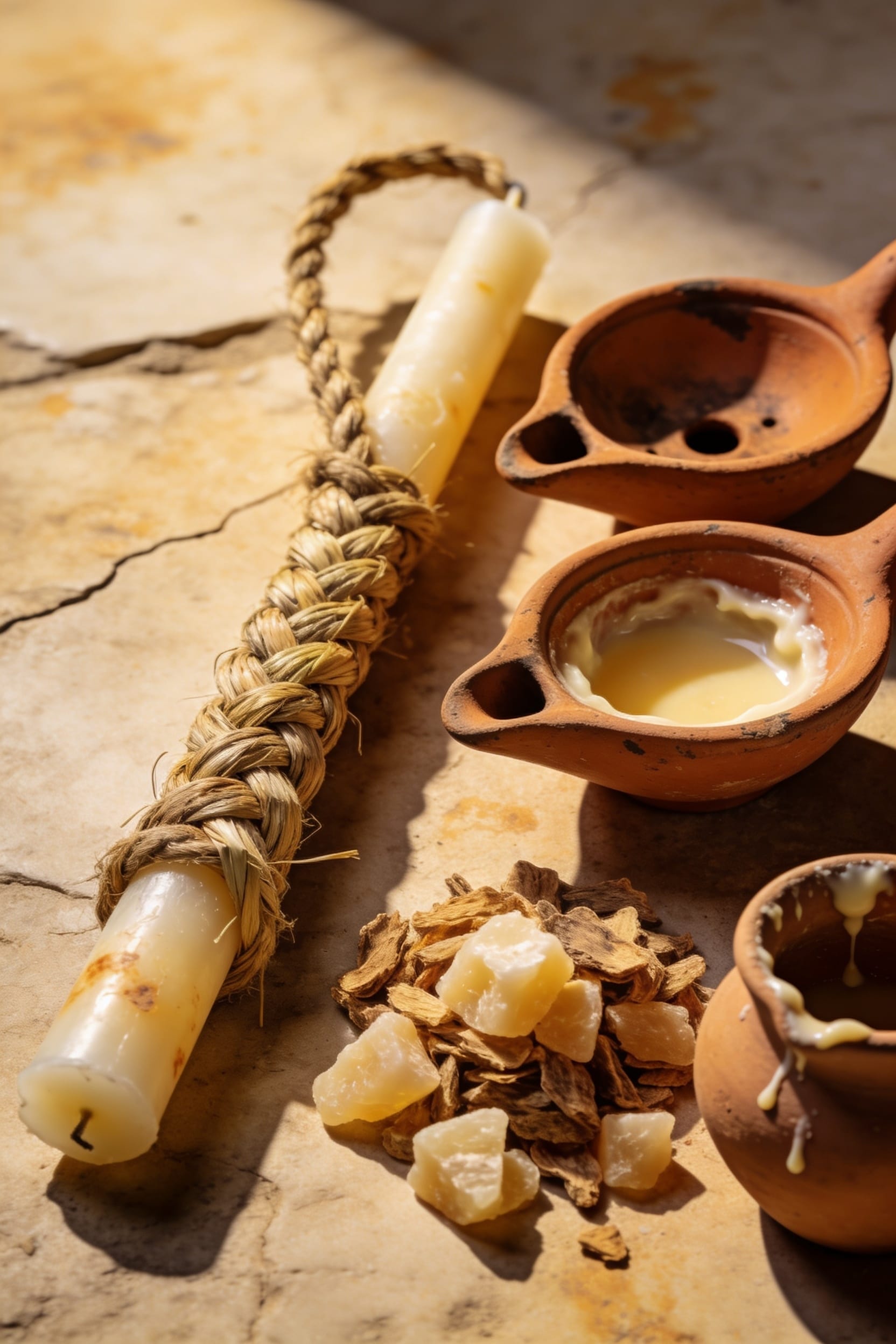
While the Egyptians figured out that you could burn stuff in melted fat for light, the Romans actually solved one of the biggest problems with those early attempts: they invented the wick. All right, here’s what changed everything. Instead of just soaking reeds in animal fat, the Romans rolled papyrus and dipped it into tallow or beeswax. That simple innovation gave you a controlled flame—no more constantly poking at burning reeds. The wicked revival transformed candles from unreliable fire hazards into something genuinely usable. Roman rituals, home lighting, and nighttime travel all became easier because of this breakthrough. You’re looking at the moment candles stopped being a desperate workaround and started becoming practical illumination. That’s real progress.
Tallow Candles: Why Europe Burned Animal Fat for Centuries
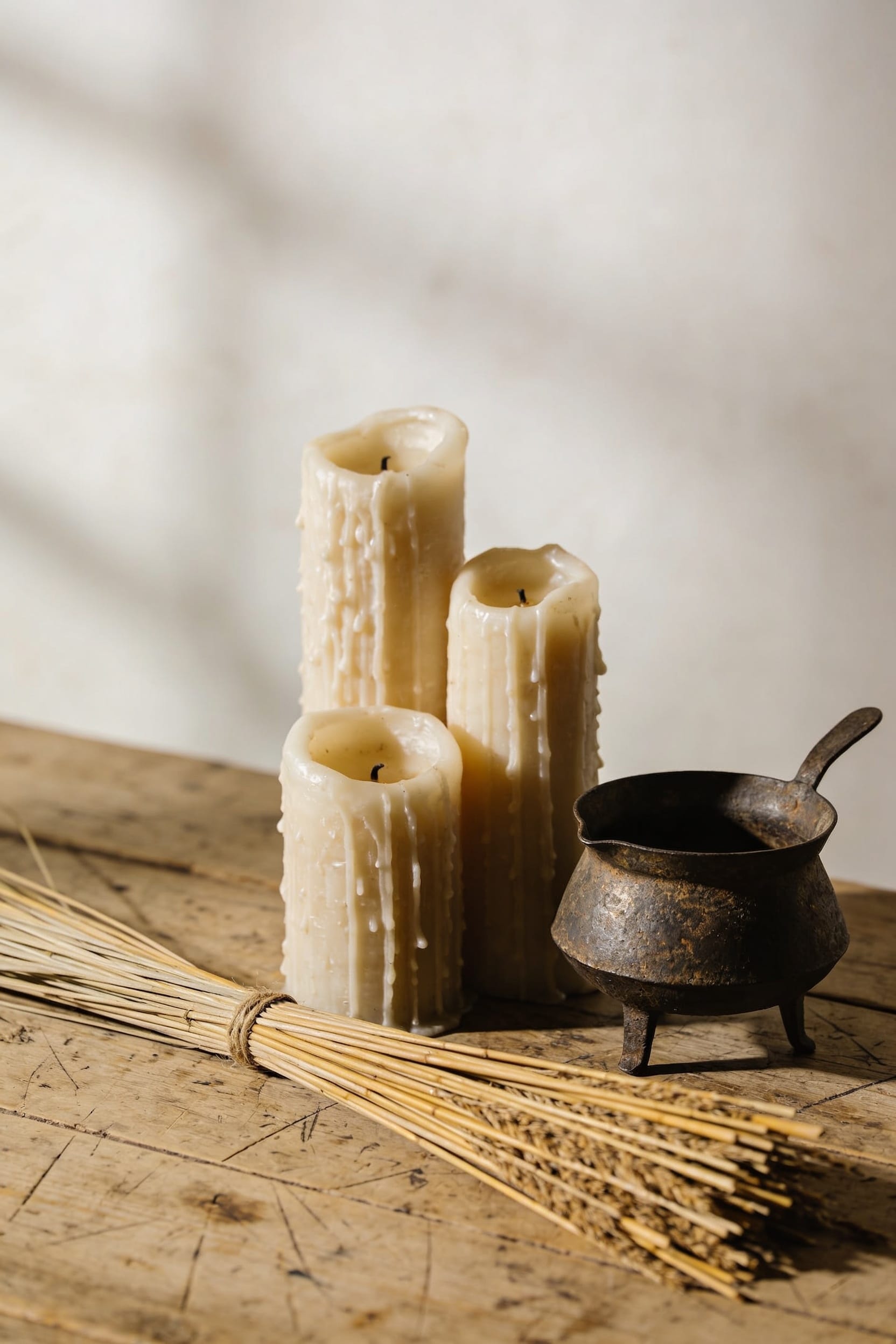
As the Roman wicked candle spread through Europe, it faced an immediate practical problem: beeswax candles were expensive, and most people couldn’t afford them. So they burned tallow instead—rendered animal fat that stunk, smoked, and dripped everywhere. Look, tallow was cheap and plentiful from butchers and kitchens, which made it the obvious choice for common folk. You’d find tallow candles lighting European streets by 1415, illuminating urban festivals and taverns. The culinary uses of animal fat meant chandlers had steady supplies. Sure, beeswax burned cleaner and brighter, but only the wealthy and churches could justify that expense. Tallow candles defined medieval and Renaissance life despite their awful smell and unreliable flames.
Regional Adaptations: How China, India, and Beyond Innovated Materials
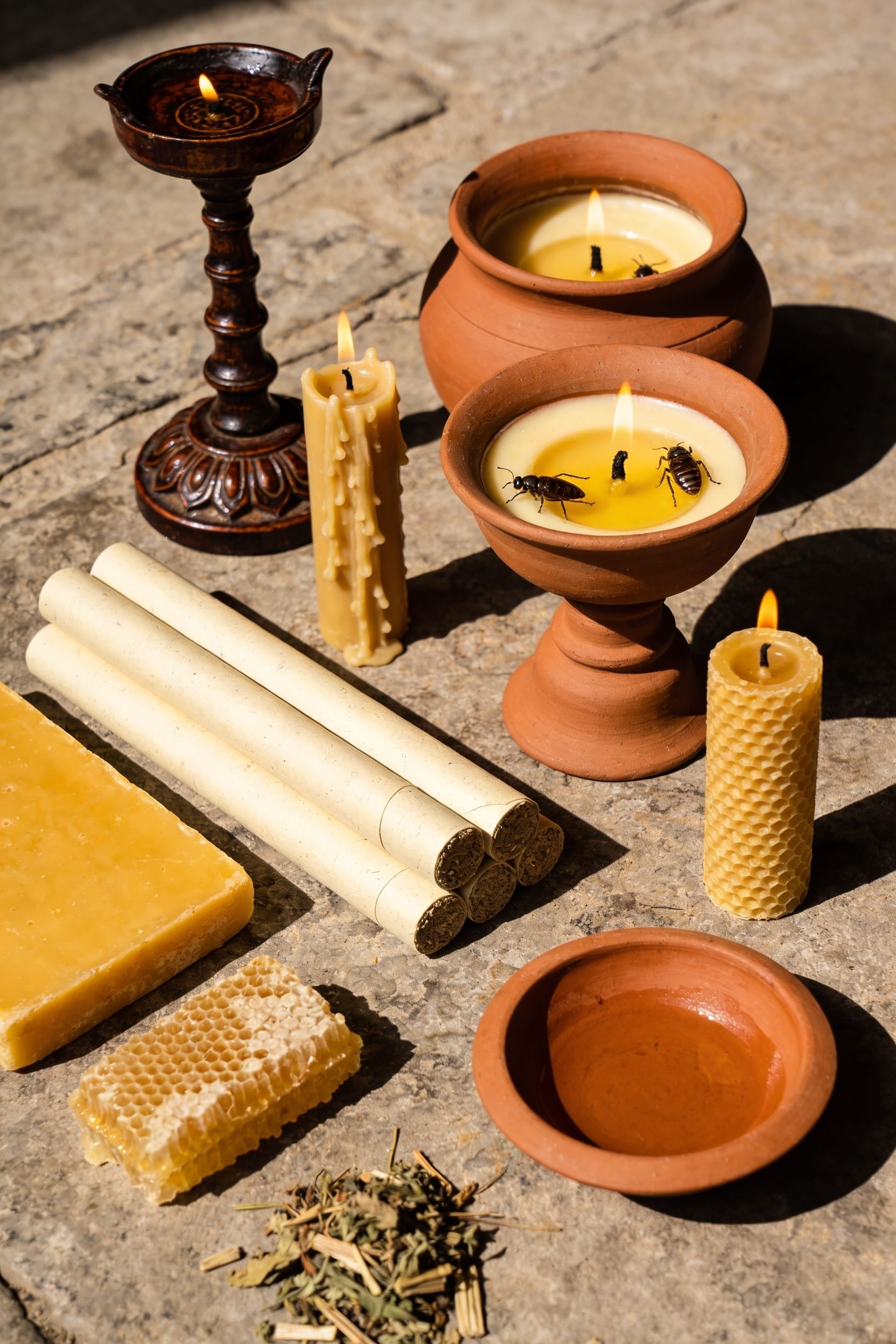
When Europe was stuck burning smelly tallow, other parts of the world had already figured out better alternatives using what they had available locally. The Chinese got creative with rolled rice paper burned in wax extracted from crushed insects and seeds—rice wax that actually worked. Meanwhile, Indians boiled cinnamon tree fruit to produce cinnamon wax for their candles, which you can imagine smelled infinitely better than tallow. Other civilizations followed suit, crafting candles from whatever plants, insects, and animal fats they could source. These regional innovations show you something important: people everywhere wanted better light and were willing to experiment. This experimentation across cultures eventually led to the breakthroughs that transformed candles from survival necessities into the refined products we enjoy today.
Spermaceti Candles: The Whaling Industry’s Bright Innovation
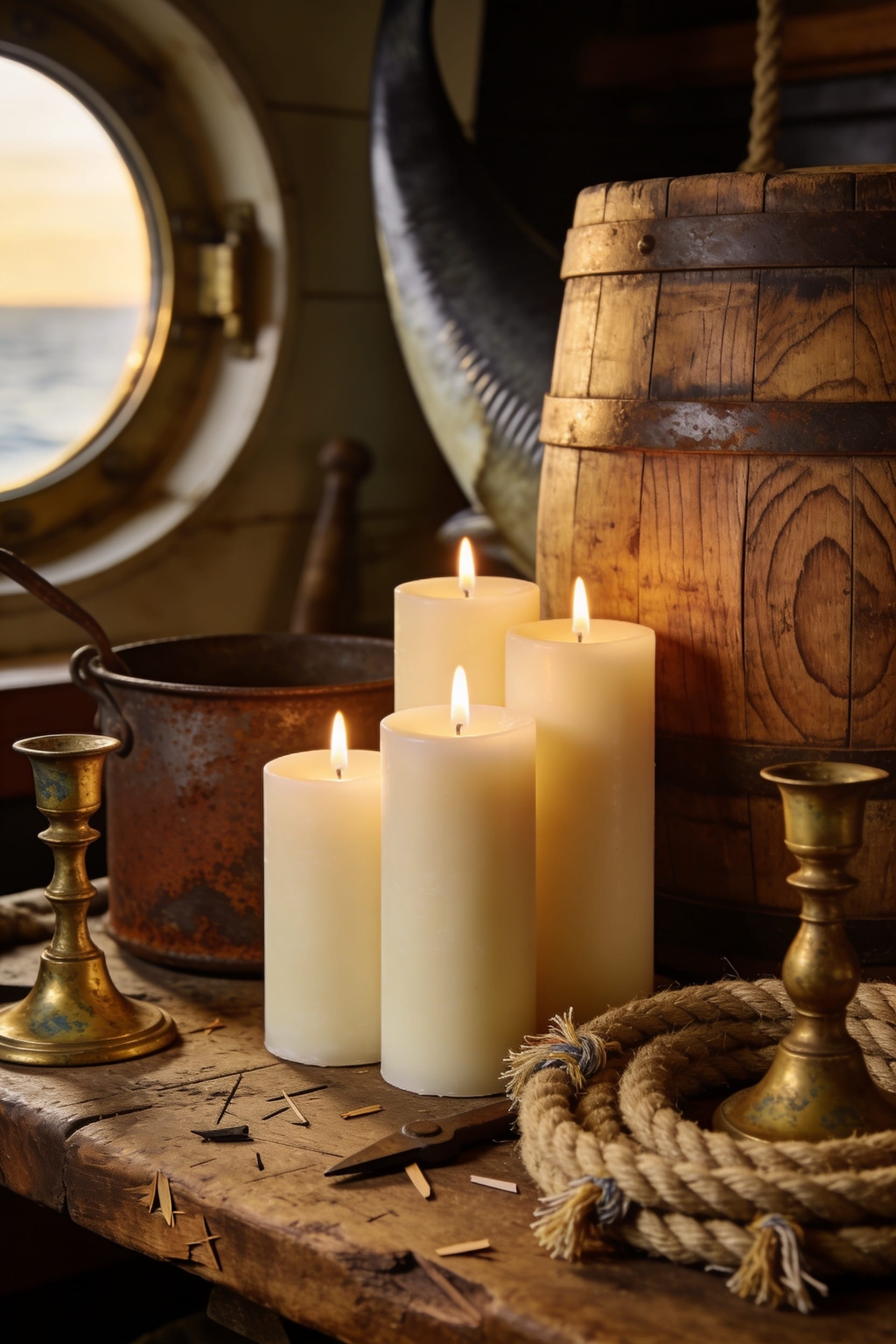
The late 18th century whaling boom handed candlemakers something they’d been chasing for thousands of years: a material that actually worked. Spermaceti wax—harvested from sperm whale oil and crystallized—changed everything. You got a candle that burned without that acrid, lingering stench tallow produced. The light? Brighter and steadier. The texture? Hard enough to resist melting during summer heat, which meant your candles wouldn’t turn into puddles on the shelf.
The whaling economics driving this innovation were brutal, sure. Maritime labor pushed ships across oceans for months hunting these massive creatures. But from a candlemaking perspective, spermaceti represented the gold standard before paraffin came along. These candles were expensive—only wealthy households could afford them—yet they set the bar for what quality illumination could be.
From Stearin to Paraffin: Why Wax Chemistry Transformed Affordability
Spermaceti candles might’ve been magnificent, but they weren’t exactly democratic—only the wealthy got to enjoy that clean, bright burn while everyone else made do with smoky tallow. Then chemistry changed everything. In the 1820s, Michel Eugene Chevreul cracked stearic acid from animal fats, creating a harder, cleaner-burning wax that transformed wax economics. By the 1850s, James Young’s paraffin revolution—extracting that bluish-white byproduct from crude oil—made affordability real. Paraffin offered production scalability that earlier methods couldn’t touch. What really mattered? The chemical stability meant consistent quality at lower costs. Waste valorization meant those oil refinery byproducts became premium illumination. Suddenly you could own quality candles without being royalty.
Joseph Morgan’s Machine: When Candle Manufacturing Went Industrial
Chemistry solved the affordability problem, but here’s what really democratized candles: making them fast. Joseph Morgan‘s 1834 machine changed everything. His cylinder with a moveable piston could produce 1,500 candles per hour—roughly two tons in twelve hours with just three men and five boys. That’s factory automation at its finest, though the labor conditions weren’t exactly stellar by today’s standards. What mattered then was scale. Suddenly, candles weren’t luxury items anymore. Morgan’s innovation removed the bottleneck that’d plagued chandlers for centuries. Combined with paraffin’s affordability, his machine meant every household could access reliable, consistent lighting. You could finally afford something that’d once been reserved for the wealthy. That’s when candles became truly common.
Why Paraffin Became the Standard Candle Wax
While chemists were solving the affordability problem with stearic acid, James Young was quietly distilling something that’d reshape the entire candle industry: paraffin wax. In the mid-1850s, Young discovered this bluish-white byproduct of crude oil burned cleanly without odor—a game-changer for everyday households. Here’s the thing: paraffin was cheap. Dramatically cheap compared to beeswax or tallow. You could finally afford quality candles without health concerns from smoky tallow fumes or environmental impact worries about whale hunting. By late century, manufacturers blended paraffin with stearic acid, creating the affordable, reliable standard you’d recognize today. That combination solved a centuries-old problem: making decent light accessible to everyone, not just the wealthy.
From Ritual Light to Everyday Essential: The Democratization of Candles
For most of human history, you couldn’t have a candle unless you were either wealthy enough to afford beeswax or willing to tolerate the choking smoke and rancid stench of tallow—which meant that for centuries, candlelight remained a luxury reserved for the privileged few. Then paraffin changed everything. By the late 1800s, affordable candles flooded the market, transforming community lighting and labor shifts dramatically. Factory workers could now afford light after dark. Families gathered around candles instead of sitting in darkness. The democratization wasn’t just about access—it fundamentally reshaped how people worked, socialized, and lived. Candles went from ritual luxury to everyday essential, finally reaching everyone’s pocket and home.
Frequently Asked Questions
What Were the Main Health Hazards of Burning Tallow Candles Indoors?
I’ll tell you that tallow candles’ main hazards included sooty inhalation from their open flame, causing respiratory irritation through particulate exposure. You’d experience significant indoor air pollution, smoke buildup, and unpleasant odors from burning animal fat.
How Did the Invention of Electricity Impact the Candle Industry’s Decline?
I’ll cut to the chase: electric lighting snuffed out candle demand in urban centers. You’d see nightlife shift indoors under bulbs, manufacturing automation become obsolete, and paraffin’s dominance evaporate as homes abandoned flickering flames entirely.
What Specific Scents or Fragrances Were Added to Candles Historically?
I’d tell you that historically, scented candles weren’t widely documented in ancient times. However, I found that rose attar and cedarwood oil were likely used by wealthy individuals, though most candles remained unscented due to production costs.
How Long Did a Typical Candle Burn Compared to Modern Alternatives?
I’ll tell you—ancient candles burned far shorter than your smartphone’s battery life. Traditional tallow candles lasted merely hours, while improved wick engineering and stearin extended candle lifespan substantially, though they’re still outmatched by today’s LED alternatives.
Were Candles Ever Used as Currency or Trade Commodities in Ancient Times?
I don’t find evidence in the knowledge provided that candles served as candle money or used in wax barter systems. The sources focus on candle production methods and materials rather than their role as ancient currency or trade commodities.
Conclusion
You’ve journeyed through millennia of flickering flames—from Egypt’s rushlights to your modern paraffin pillar. What strikes me is how candles transformed from sacred ritual into everyday comfort, each innovation making light more accessible to everyone. That’s the real story here. Now you understand the path that brought flame into your home, and honestly, that knowledge makes lighting a candle feel a little more magical.